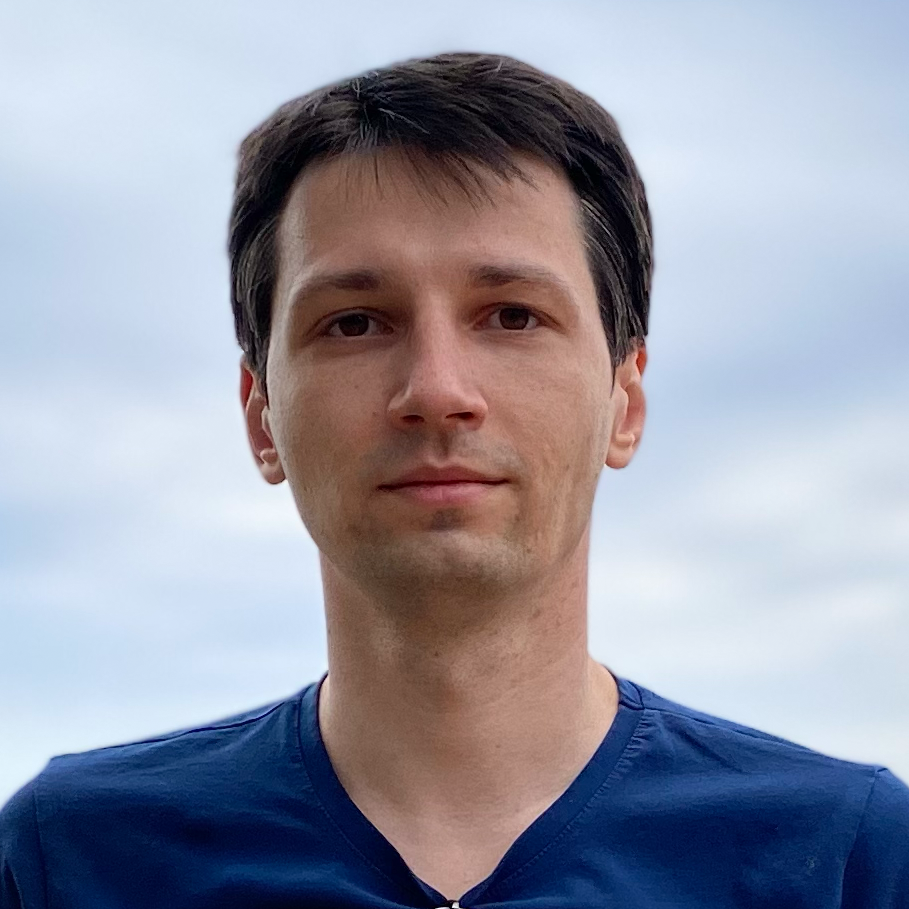
Bogdan Apostol grew up in Romania with the particular obsession of someone who sees systems everywhere. At Gheorghe Asachi Technical University in Iasi, he spent years studying how a computer could look at a human hand - its angles, its depths, the subtle geometry of fingers mid-gesture - and understand what it was doing. His doctoral research on hand pose estimation using HOG features from RGB-D data was good enough that Intel and LG cited it. Then he looked around at organizations and noticed that companies had no idea how to see their own people.
That insight became Nestor, a people intelligence platform that Bogdan co-founded in 2018 with Raluca Apostol - who is also the company's CPO, and whom he met fifteen years earlier as a fellow student in Iasi. They went from sharing textbooks to sharing a cap table. It is either a great love story or an extremely efficient talent matching outcome, depending on whether you're reading this for the romance or the case study.
Nestor's core premise is blunt: most organizations don't know what skills their employees actually have. HR systems are full of job titles and years of experience and performance scores - none of which tell you whether the person in seat 47-C could lead the digital transformation project that's been stalled since Q3. Bogdan built Nestor to close that gap, using AI to map a company's actual skills landscape across a library of 20,000+ skills, then connecting that map to career paths, succession planning, performance reviews, and internal talent mobility.
Every employee receives the right opportunity at the right time to continually learn and improve the skills that will help them succeed.
- Bogdan Apostol, Founder & CEO, NestorFour Hundred Conversations Before a Single Line of Code
What makes Bogdan's path to product interesting is what he did before touching his IDE. He ran over 400 customer discovery calls before writing a line of Nestor's code. Four hundred. In an industry where "talk to your customers" is advice routinely given and rarely taken, that number is an audit. He has said publicly that customer feedback from the beginning is essential - because the alternative is building a perfect product that nobody needs. The 400 calls weren't just research. They were his anti-slop test.
The pattern that emerged was consistent: HR leaders wanted to be strategic. They were drowning in operational tasks, unable to answer the questions that actually mattered to the C-suite. Which internal candidate has the skills to fill this critical role? Where are our top skills gaps compared to where we're heading? Which employees are flight risks because their growth has stalled? Nestor is the answer that kept appearing, call after call.
The approach worked well enough to get Nestor into Y Combinator's Summer 2018 batch - one of the most competitive acceptances in startup-land. Bogdan has credited the YC admission to demonstrating a clear vision and deep market understanding, combined with what evaluators could see in him and Raluca: a team that already knew each other well, had complementary skills, and wasn't going to fracture under pressure. The three-month program shaped how Nestor thinks about execution and customer focus in ways that have outlasted the batch itself.
From Iasi to San Francisco via the Orange Fab
The road from Romania to Silicon Valley ran through the Orange Fab accelerator program, another early milestone in Nestor's formation. By the time Bogdan landed in San Francisco's tech ecosystem, he had already absorbed what it meant to operate in resource-constrained environments where every move had to count. That background shows in the way Nestor competes - not by marketing its way to visibility, but by shipping a product that earns a 4.9/5 G2 rating and a 100% Net Promoter Score.
The December 2022 seed round - $2M led by Eleven Ventures, with Underline Ventures participating and prominent Bay Area angels joining in - gave Nestor the capital to scale what the team had already proven. Eleven Ventures Managing Partner Vassil Terziev framed the investment in terms that cut to the heart of Nestor's thesis: the platform provides "workforce visibility over non-linear assets such as employee skills and capabilities, engagement, performance, culture, and career mobility." Underline Ventures GP Bogdan Iordache (different Bogdan - Romania is a small country) committed to help identify global scaling partners.
The Skills-Based Organization Isn't a Trend - It's the Destination
Bogdan has been remarkably consistent in his articulation of where workforce management is heading. The conventional model - hire for role, manage by title, promote by tenure - is already breaking under the weight of a labor market that moves faster than job descriptions. Skills-based organizations treat the capabilities employees actually have (and are building) as the real unit of value, not the boxes they occupy on the org chart.
This isn't abstract theory at Nestor. The platform handles skills mapping, AI-powered skills inference, dynamic skills profiles, succession planning beyond the C-suite, internal talent mobility, and learning recommendations - all connected so that the insights from one module inform the others. When an employee takes a new certification, the succession plan updates. When a skills gap is detected, a learning recommendation appears. The system doesn't just observe the workforce; it reacts to it.
Bogdan has extended this logic into how he thinks about succession planning, arguing publicly that most organizations make the mistake of limiting succession coverage to executives. Middle management and technical specialists are the actual bottlenecks when a company loses institutional knowledge. His platform is built to plan at that granularity - which is one reason Nestor earns high marks from companies in finance, healthcare, telecommunications, IT services, and retail, sectors where the stakes of losing a specialist are immediate and operational.
Advisory Connections and the Larger Mission
Beyond Nestor, Bogdan has taken on an advisory role with Romania's Ministry of Research, Innovation and Digitalization - a signal that his interest in skills development isn't purely commercial. He has also mentored through StepFWD and at Startup Spinner Makeathon, and he was a speaker at How to Web 2023, the largest startup and innovation conference in southeastern Europe. The trajectory suggests someone who is, at least in part, trying to export a methodology, not just a product.
The Andreea Baciu connection is worth noting too: the former Chief Culture Officer at UiPath serves as an advisor to Nestor, bridging the world of large-scale tech organization-building with what Bogdan is building. UiPath is itself a Romanian success story of global scale, which makes the mentorship a natural fit - and a useful signal about the network Nestor has assembled around its mission.
What Bogdan has built is a platform for a problem that is genuinely hard to see until you're inside it. Skills are invisible. Career potential is invisible. The gap between what a company needs and what it has is invisible until someone leaves, or a project fails, or a competitor moves faster. Nestor is, in a sense, an attempt to make the invisible legible. That's not such a different problem from what a PhD student in Iasi was trying to solve when he taught a computer to read the position of a human hand. Same instinct, different scale, considerably higher stakes.