people-analytics
(37)
The Spreadsheet That Couldn’t Keep Up With the Company
ChartHop began with a deceptively simple complaint: the org chart was out of date before anyone finished drawing it. The company now sells a live model of the workforce - and a way for HR and Finance to make plans from the same numbers.
The Survey That Refused to Stay in HR's Drawer
Peakon turned the annual employee survey into a recurring conversation. Workday paid about $700 million for the idea; the harder part is getting managers to answer back.

Elif Bıkmaz Is Learning the Company from the CEO's Office Outward
Her route through analytics, talent programs, and the CEO's office is a compact lesson in how an operator learns: count carefully, build collectively, then step closer to the decisions.

John Schwarz Left the Tower for a Hot Townhouse
After 35 years inside enterprise software's established institutions, John Schwarz started again in a rented Vancouver townhouse. The wager was simple: business data should answer a question before the questioner loses patience.
Culture Amp wants your employee survey to have consequences
Thousands of companies use Culture Amp to ask employees what they think. Its next bet is AI that helps managers do something with the answers - while the company faces hard questions about its own workplace.

Gupy got Brazil hiring. Then came the rest of the job.
The Brazilian software company turned recruiting into a business spanning training, engagement and performance. Its harder assignment is making that expansion work for the people on both sides of the hiring screen.

AdviserPlus wants to take HR off speed dial
At Currys, managers took on 88% of employee relations tasks with AdviserPlus. The UK company’s proposition combines guided software, human advisers and a surprisingly practical idea: help the person closest to a problem handle more of it.
Orgvue lets you rehearse the reorganization
Before a company moves people, it needs to understand the work. Orgvue turns workforce data into costed scenarios - and gives HR and finance a common picture to argue over.

The Weekly Check-In Grew a Brain
15Five began with one humane idea: ask people how work is going before the annual review arrives. Now it wants to turn that weekly pulse into an operating system for managers - AI included.
WorkTango Got Acquired Twice - Then Taught AI to Run the Meeting
A bootstrapped Toronto survey startup sold to a larger rival, watched the buyer take its name, and four years later joined a global rewards company. The useful lesson is not the dealmaking - it is how WorkTango closes the expensive gap between asking employees what is wrong and doing something about it.

Culture Amp or EmployeeXM Is Really a Bet on Scope
Culture Amp goes deep on the employee loop. Qualtrics EmployeeXM reaches across the enterprise - and the better choice depends on whether HR needs a focused operating system or a bridge to customer, product, and brand data.
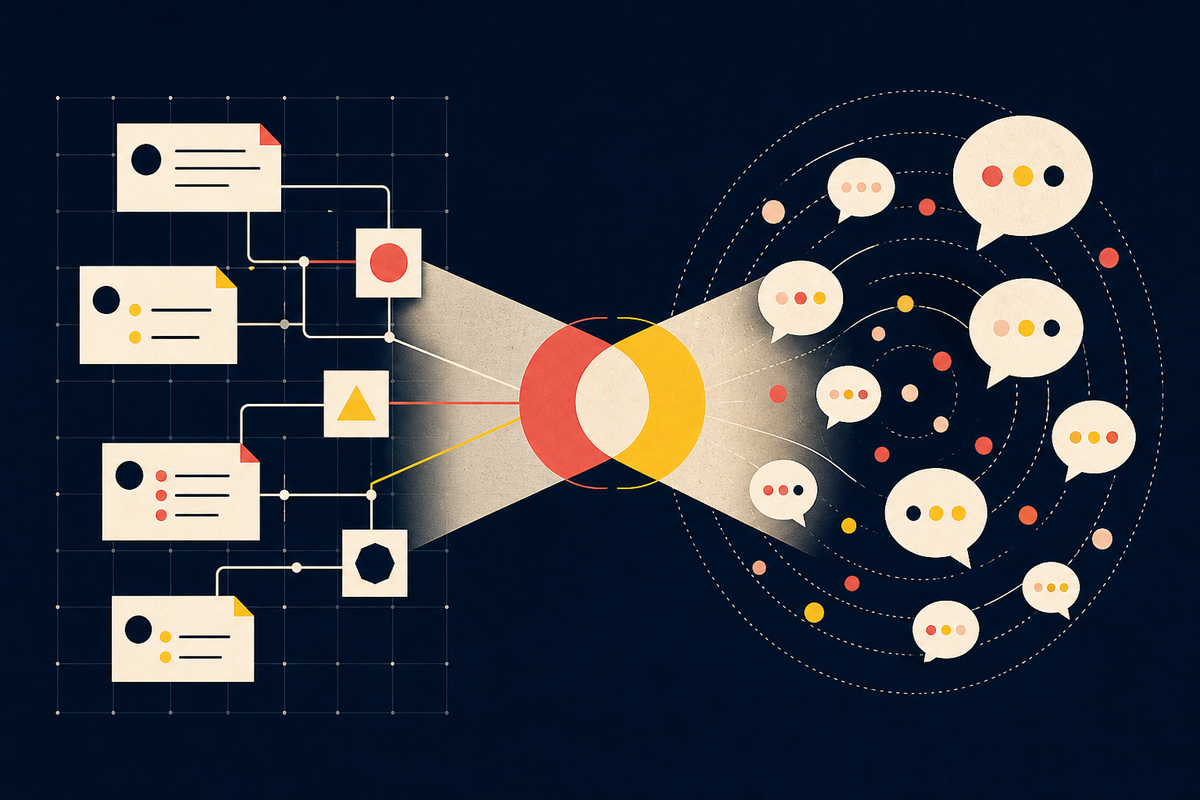
Lattice and Culture Amp Built the Same Suite Backwards
The two people platforms now sell strikingly similar toolkits. Their opposite starting points still reveal which one belongs in your company.
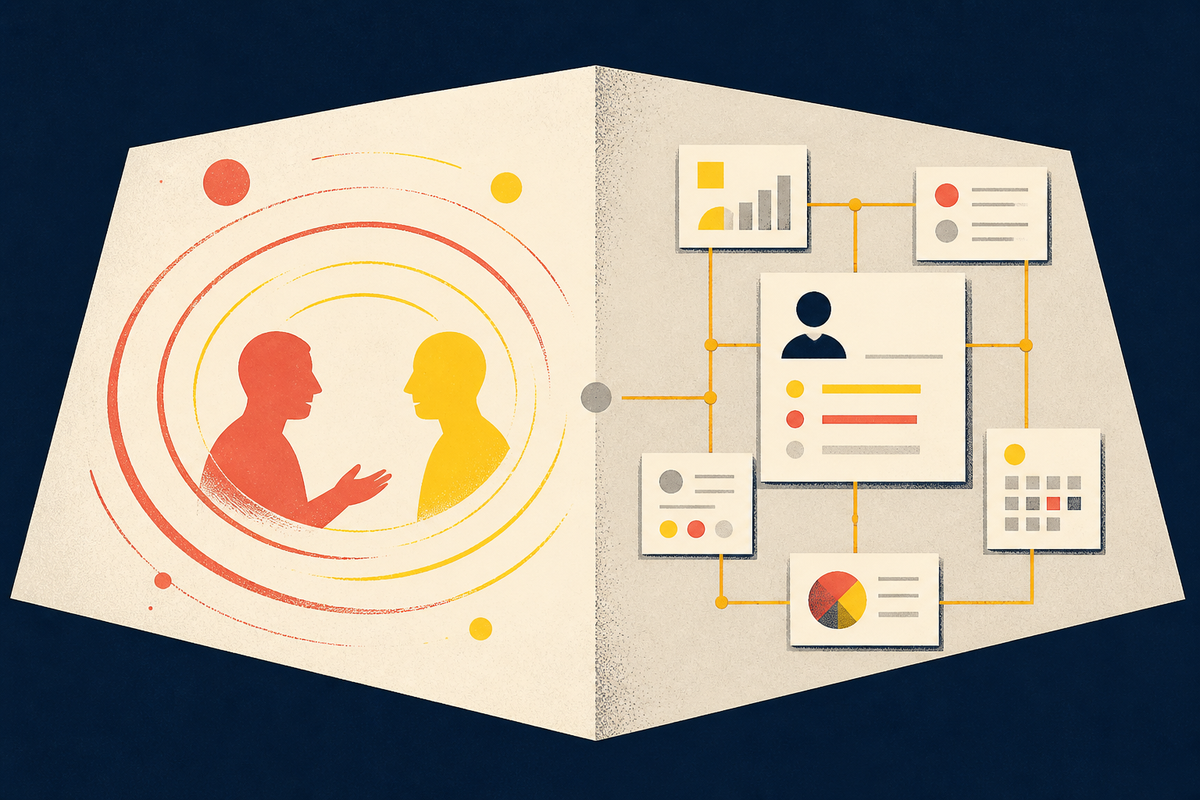
Your Performance Software Is Quietly Choosing Your Management Style
Lattice and 15Five now overlap on nearly every feature. The useful difference is the behavior each platform makes easiest: running a connected talent system or coaching managers week by week.

The HR Software Choice Hiding in Your Meeting Calendar
Culture Amp and 15Five overlap on features, but they organize work around different centers of gravity. The better choice starts with who owns the rhythm: HR running the system or managers living in it.
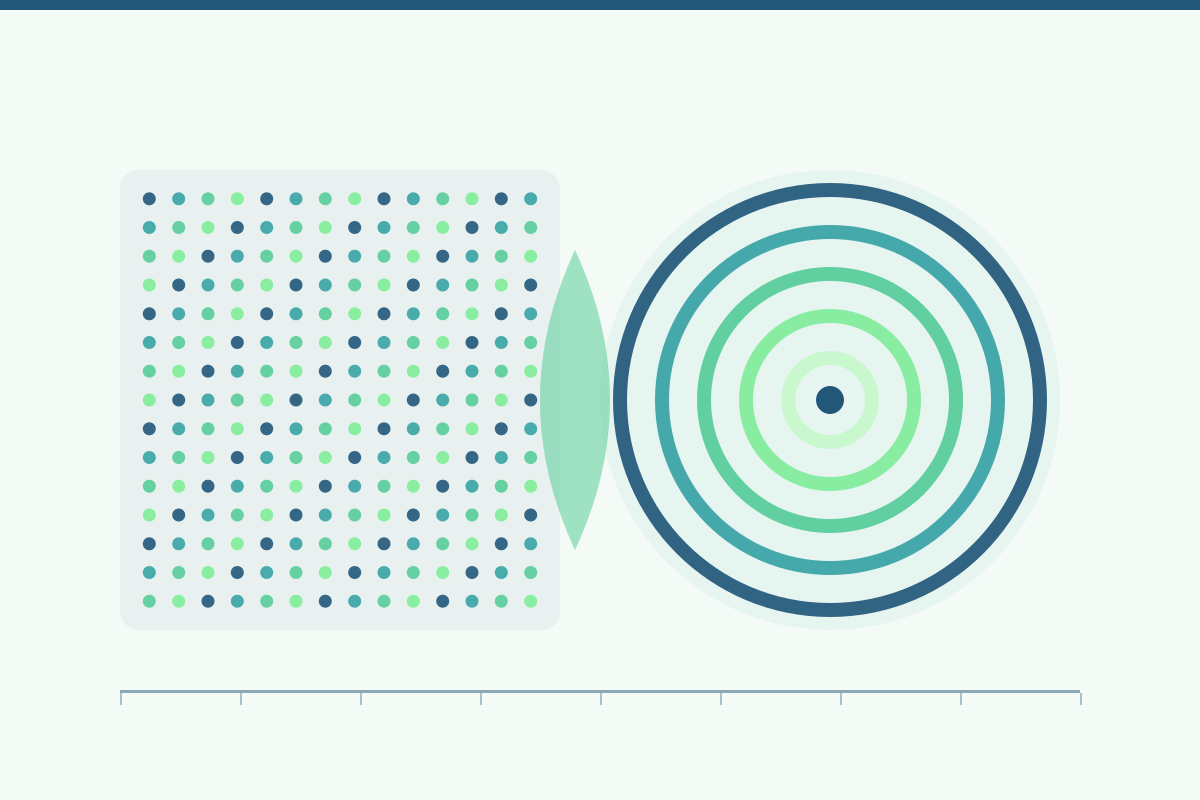
The Salary Benchmark Fight Hiding In Your Cap Table
Pave and Carta both promise to tell you what to pay people. The real question is whose paychecks are in the sample - and the two tools answer it very differently.

You Can't Buy Glint Without Letting Microsoft In
One of these employee-survey platforms you can still purchase on its own. The other now lives inside Microsoft's Viva suite, with a fifty-seat minimum and a Global Admin required before anyone answers a single question.

The Employee Survey Choice That Changes Your Whole Stack
Culture Amp, Viva Glint and Qualtrics EmployeeXM all listen to workers. The real difference is what each platform expects you to buy, connect and operate around that survey.
Workhuman
Workhuman turned two decades of thank-you notes into a data business. The Irish-American company behind the 'thank you economy' now reaches 8 million workers and mines their gratitude for what HR software usually misses.
EngageRocket
EngageRocket is a Singapore-based HR technology company that turns continuous employee feedback into actionable people-analytics. Founded in 2016 by two former Gallup leaders, its cloud platform runs engagement, lifecycle and pulse surveys (BELONG), 360-degree and multi-rater feedback (GROW), and performance workflows (PERFORM), pairing survey software with people-science advisory. It serves enterprises across 30+ countries - including Toyota, Sephora, Nikon, Epson and CGS-CIMB - to improve engagement, reduce turnover and support data-informed HR decisions.
eQ8
eQ8 is a Sydney-based SaaS company building a dedicated end-to-end platform for Strategic Workforce Planning (SWP). Founded by Alicia Roach and Chris Hare, the platform lets organizations model dynamic scenarios, forecast the size, shape and skills of the workforce they will need, identify skills gaps, and align talent decisions with business strategy. Its stated mission is to democratize strategic workforce planning so it is accessible to any organization, not just those able to afford lengthy consulting engagements.
inFeedo AI
inFeedo AI is an employee experience company built around Amber, a conversational AI that acts as a Chief Listening Officer for enterprises. Amber checks in with employees, surfaces sentiment and disengagement in real time, predicts attrition, and automates HR support. Founded in India and backed by Y Combinator, Tiger Global and Jungle Ventures, inFeedo serves 175+ enterprises across 60+ countries, helping CHROs at companies like Sony, Lenovo, Tata and Samsung understand how their people really feel.
HelloTeam
HelloTeam is a Boston-based HR technology company that builds an all-in-one employee engagement and performance management platform aimed at improving employee retention. Founded in 2016 by Tanya Bakalov, the software combines performance reviews, goals and OKRs, recognition and rewards, surveys, learning, a dynamic org chart, and people analytics into a single system so managers and HR teams can keep employees connected, engaged, and productive.

Censia
Censia is a San Francisco-based talent intelligence company that uses AI to turn billions of workforce data points into skills-based profiles of employees and candidates. Its platform enriches HR systems - most notably Workday - so enterprises can see hidden internal talent, plan their workforce around skills rather than job titles, and make faster, fairer hiring and mobility decisions. Founded in 2017 and led by CEO Joanna Riley, Censia sells to large enterprises and pitches itself on ethical, bias-aware AI applied to talent data.
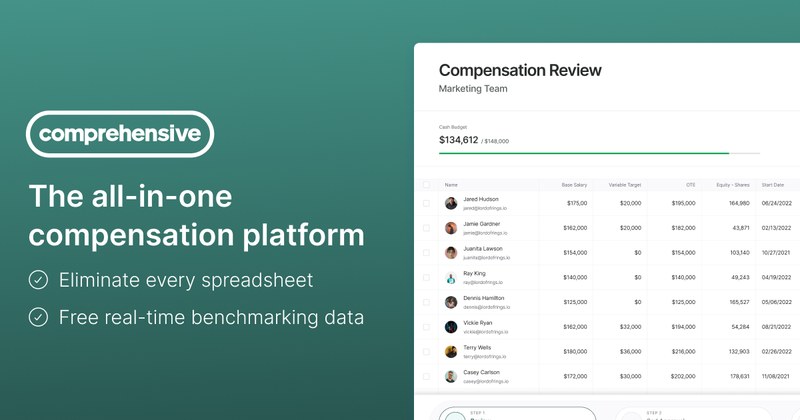
Comprehensive
Comprehensive is a San Francisco-based, AI-powered compensation management platform that lets companies plan, communicate, and benchmark employee pay without spreadsheets. Founded in 2021 by Roger Lee and Teddy Sherrill, it combines real-time salary benchmarking data from thousands of tech companies with configurable pay-range management, pay-equity analytics, and HRIS integrations so HR and finance teams can run compensation cycles and make data-driven pay decisions in one place.
Textio
Textio is a Seattle-based software company that uses augmented writing - natural language processing and machine learning - to help managers and recruiters write clearer, less biased workplace language. Born from a linguistics PhD's research into how word choice shapes who applies for jobs and how feedback lands, Textio turned bias into something measurable: it scores job posts and performance reviews in real time and suggests fixes. In 2026 it extended that thesis into hiring with Lavalier, an interview-intelligence product.
CPOHQ + Knoetic AI
CPOHQ + Knoetic AI is a New York-based company building an AI-powered 'second brain' for Chief People Officers. It pairs a people analytics platform that integrates with 60+ HR systems - surfacing insights on attrition, DEI, performance, compensation and headcount - with CPOHQ, a private community of 2,000+ Chief People Officers and CHROs. Founded in 2020 by Joseph Quan (originally as Twine Labs), the company combines hard workforce data with the collective judgment of top people leaders so HR executives can make faster, more strategic decisions.
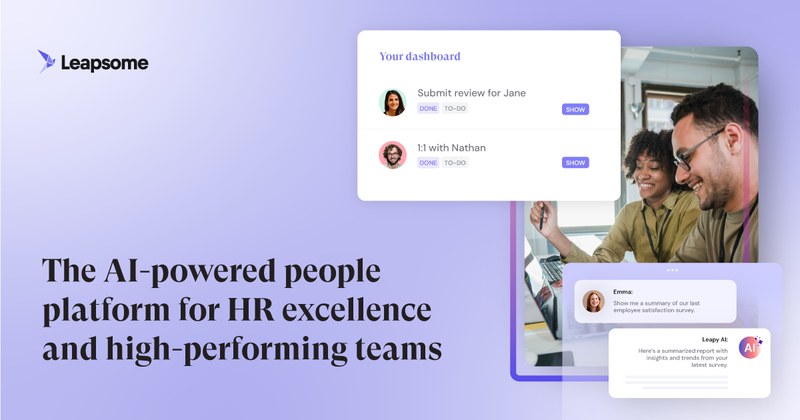
Leapsome
Leapsome is an AI-powered people enablement platform that unifies the HR stack - performance reviews, goals and OKRs, engagement surveys, learning, compensation, and a core HRIS - in one place. Founded in Berlin in 2016 by Jenny von Podewils and Kajetan von Armansperg, it helps managers and HR teams run feedback, development, and alignment processes without juggling spreadsheets and disconnected tools. The company bootstrapped to profitability before raising a $60M Series A in 2022, and today serves more than 1,500 organizations including Spotify, Unity, and monday.com.

Joseph Quan
Joseph Quan is the founder and CEO of Knoetic, the people-analytics platform and CPOHQ community that bills itself as the AI 'Second Brain' for Chief People Officers. He started the company in March 2020 with 25 HR leaders trading notes through the COVID crisis, then turned that group into a 2,000+ member network and a software business backed by $54M+ from Accel, Menlo, EQT and 150+ angels including Adam Grant. A two-time founder, Wharton/Berkeley graduate and Inc. 30 Under 30 alum, he returned as CEO to build Knoetic's AI product suite.
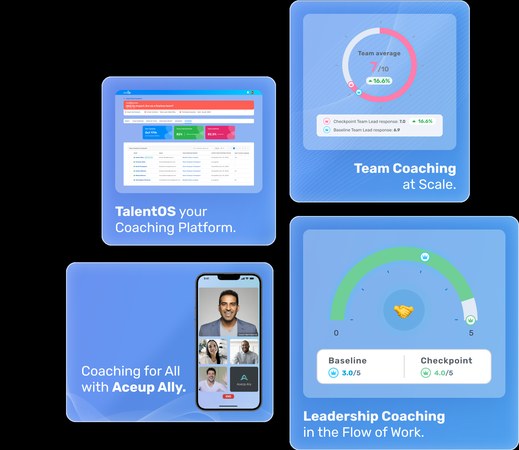
AceUp
AceUp is a Boston-based leadership development company that pairs human coaches with AI-powered people analytics to make executive and team coaching measurable and scalable. Through a network of thousands of ICF-certified coaches and a data platform it calls Ally, AceUp helps enterprises like IBM, L'Oreal and LVMH turn coaching - long treated as a perk for the C-suite - into a quantifiable driver of engagement, alignment and performance.
Natter
Natter is an enterprise AI conversation intelligence platform that runs thousands of honest, one-to-one video conversations across a workforce at once, then uses AI to surface the themes, sentiment, tensions and priorities leaders actually need to hear. Pitched as the replacement for surveys and focus groups, it turns a seven-minute conversation into more than a thousand words of usable data and delivers organised, anonymised insight within hours rather than weeks. Founded in 2021 by former BBC and Uber operators, the company raised a $23M Series A in April 2026 and counts Accenture, ServiceNow, PwC and Philip Morris International among its users.