The limousine outside the townhouse was an excellent joke, though nobody had hired it for comic effect. Visitors from a very large company had flown in by private jet to inspect a very small company. Inside the rented Vancouver home, the young Visier team cleared away Coke cans and takeout containers. The boardroom was an upstairs bedroom. The product was mostly a click-through prototype, a handsome sequence of ideas waiting to become software. John Schwarz gave the demonstration.
He was an incongruous person to be pitching mock-ups from a bedroom. Schwarz had spent 25 years at IBM, watching software detach itself from hardware and become a business of its own. He had run a digital-commerce company, served as president and chief operating officer of Symantec, then become chief executive of Business Objects. There, he doubled revenue to more than $1.5 billion, completed seven acquisitions and negotiated the company's sale to SAP. Afterward he sat on SAP's executive board and managed the integration of its business-intelligence unit.
The range began early. At the University of Manitoba he studied computer science, while political science also entered his academic life. One field examined how formal systems behave; the other asked what people do once power, incentives and institutions complicate the plan. He later completed an MBA at the University of Toronto. The combination proved apt for enterprise software, where elegant code must survive budgets, reporting lines and the occasional executive appetite for a merger. Dalhousie University awarded him an honorary Doctor of Laws in 2004 for lifetime achievement and service to the industry. By then, Schwarz had already seen several generations of corporate computing arrive with the confidence of permanent weather.
His CV belonged in a glass conference room. Instead, in the summer of 2010, he was in a townhouse of roughly 1,500 square feet, presenting pictures of a product his team hoped to build. The absurdity was useful. It stripped the enterprise-software business down to a durable ritual: a person with a problem, another person with a promise, and a demonstration between them.
The customer who bought it and the customer who used it
The idea for Visier had been hiding inside a contradiction. Business Objects and SAP together served about 35,000 customers and conducted the sort of satisfaction research large software companies conduct. The technology buyers in IT were pleased. The systems worked, reliability was respectable and the machinery did what its custodians expected.
The business users were less cheerful. Their answers arrived late. Data quality was disputed. The cost of reaching a conclusion was high, and the technical skill required to operate the tools exceeded what most managers could reasonably be expected to possess. The product had satisfied the buyer while exhausting the beneficiary.
Schwarz had reached an awkward conclusion about the field in which he had prospered: business intelligence often delivered tools when people needed answers. A tool requires assembly. An answer can change a decision before lunch. The distinction sounds modest until one remembers how many software fortunes have been built by charging for everything between the two.
“The reason we founded Visier is to fix this problem. It's to get business answers to business people.”John Schwarz, on leaving SAP to start Visier
He believed the repair required an independent company. An incumbent has customers to preserve, products to support and quarterly expectations to honor. A promising new technology that weakens the old revenue stream is less an invitation than a family argument. Schwarz left SAP in 2010 with the intention of starting fresh. His phrase was a “clean sheet of paper,” which is business language for a rare and expensive freedom.
One career, four scales of software
Hardware gives way to software and services
President and COO during expansion
Scale, acquisition and integration
A clean-sheet workforce platform
A market that barely had a name
Schwarz and Ryan Wong, an engineering leader he knew from Business Objects and SAP, chose workforce data as their first proving ground. Human-resources systems held plenty of information, yet reporting largely stayed inside individual applications or spreadsheets. Predictive work was scarce. Data from recruiting, payroll, performance and operations lived in separate rooms and rarely introduced themselves.
The early team called its project “Workforce Analytics.” Even “people analytics” had not settled into the corporate vocabulary. The opportunity was precisely this lack of definition. A general business-intelligence tool asked customers to construct their own analytical machinery. Visier would arrive with the data models, questions and workflows already shaped around the people decisions a company actually makes.
That choice joined Schwarz's operating experience to Wong's product and engineering depth. It also enlisted a small founding group that included Schwarz's sons, Jan and Brett. The company was familial without being cozy. Its first workspace had no air conditioning, an unfortunate feature once servers and as many as 13 people began producing heat.

The townhouse test
Construction across the street added noise. Opening a window traded heat for racket. Tables were made from old doors bought at auction, and servers occupied the kitchen counter with the confidence of appliances. Fridays brought a barbecue, Mexican lagers and demonstrations of the week's work. Whiteboards filled. Arguments improved ideas. The small indignities of startup life served as an unusually strict editing process.
Schwarz remembered the place in two clipped words: “Hot and noisy.” Then he supplied the reason people stayed. It was productive. The team met constantly, changed designs, tested visualizations and worked in weekly sprints with functioning code. Scarcity made the feedback loop visible. Nobody could mistake a long planning document for a customer answer when the engineers were sitting a few feet away.
The limousine visit captured that loop in theatrical form. Important prospects were upstairs. The prototype contained visualizations the company might build. The team had credibility enough to secure the meeting and humility enough to show unfinished work. Between those qualities sits useful invention: expertise without the upholstery.
Visier's first product launched in 2011. Its earliest institutional round brought in $6 million. A decade of customer building followed, less photogenic than the townhouse and far more consequential. In 2021, Goldman Sachs led a $125 million Series E round that valued the company above $1 billion.
From squeeze to scale
The discipline of handing over
In May 2020, Schwarz passed the chief executive role to Wong, who had served as president for three years and had been the founding chief technology officer. Schwarz remained chairman. Founder successions are often described as departures, which flatters the drama and misses the craft. This one preserved the founding partnership while moving operating authority to the leader prepared for the next stretch.
The transition also suited a company built around evidence. Wong had product history, company history and two decades of business-intelligence experience. Schwarz could continue shaping the board while contributing another of his long-running specialties: governance. He has served on the boards of Synopsys and Teradata since 2007 and 2010, respectively. He also spent more than a decade on the Avast board, including as chairman, through its sale to NortonLifeLock.
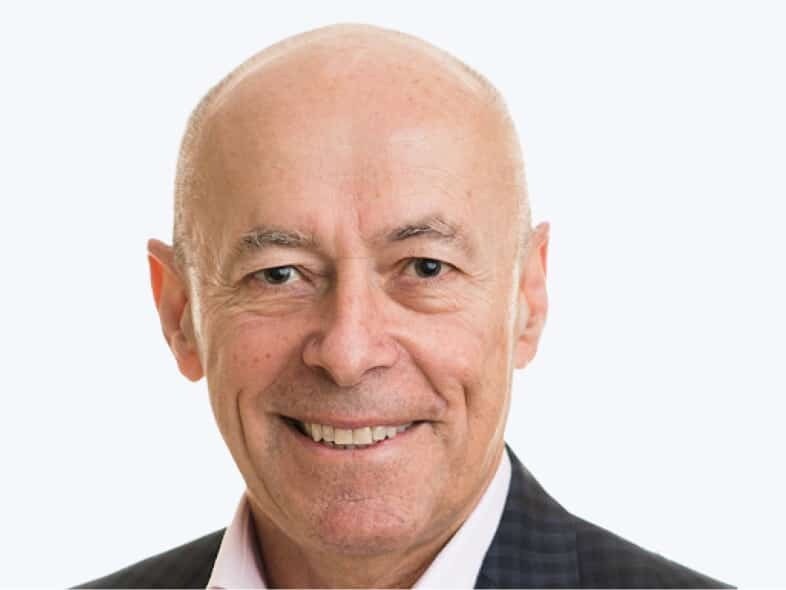
When Visier received its unicorn label, Schwarz allowed that it felt “pretty special.” Then the operator returned. Other companies had done better, he said. Visier should keep its aspirations lofty and avoid resting on its laurels. A billion-dollar valuation makes a handsome headline and a poor product roadmap.
Warm water, hard questions
Austere ambition is only part of the portrait. Visier's own biography calls Schwarz a “water baby,” happiest on, in or within a few feet of a preferably warm ocean. Sailing appears among his longtime pastimes, alongside environmental interests and the evolution of social systems. His public professional profile places him in Marathon, Florida, a location that suggests the warm-ocean requirement was less whim than specification.
There is a tidy line from those interests to his work, though tidy lines should be treated with suspicion. Sailing rewards attention to systems one does not control. Organizations are social systems pretending to be charts. Workforce analytics tries to make some of their movement legible without claiming that people are merely rows in a database.
Schwarz's long career has moved in the opposite direction of most technology diagrams. The systems became larger, then his central question became smaller: can the person making a decision get a trustworthy answer? At IBM, he watched software become an industry. At Business Objects, he helped expand that industry's reach. At Visier, he returned to the business user who had been waiting at the far end of it.
The townhouse is now company folklore. The bedroom boardroom has been replaced, the kitchen counter liberated from server duty. What survives is the clean-sheet test. Remove the familiar tooling, the inherited revenue and the handsome conference room. Leave the question on the table. If the software cannot help a person answer it, all the rest is furniture.