workforce-intelligence
(10)
John Schwarz Left the Tower for a Hot Townhouse
After 35 years inside enterprise software's established institutions, John Schwarz started again in a rented Vancouver townhouse. The wager was simple: business data should answer a question before the questioner loses patience.

Robin Streit Built a Marketing Career for the Long Game
Before workforce software spoke the language of AI and predictive analytics, Robin Streit was already doing the slower work: making a complex product understandable. Her career is a study in range, patience and the quiet advantage of staying long enough to see a category change.

UKG Wants to Run the Workday - From the First Shift to the Final Paycheck
A $22 billion merger joined the time clock to the employee record. Now UKG is betting that its decades of workforce data - and a layer of carefully governed AI - can turn the machinery of HR into an operating system for work.

meQuilibrium Wants to Catch Burnout Before It Hits the Payroll
The workplace mental-health company spent years teaching people to handle stress. Now it is selling employers an early-warning system for the expensive moment when stress becomes absence, attrition or a claim.
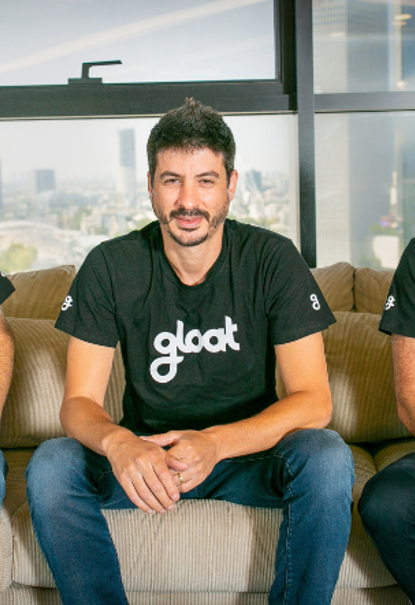
Ben Reuveni Wants Your Résumé to Stop Defining You
A talent algorithm in an intelligence unit gave Ben Reuveni the question. Getting lost inside IBM gave him the problem. Gloat is his decade-long attempt to make opportunity visible before good people have to leave to find it.

Phenom Turned a Recruiting App Into the AI Layer for How Big Companies Hire
The Philadelphia-area company escaped the point-solution trap by expanding from a mobile recruiting app into a talent operating layer used by more than 700 organizations. The bet is compelling at enterprise scale - and much harder to justify without the data, integration budget and change management to feed it.

The Staffing Company Trying to Turn Hospital Chaos Into a Control Panel
Cross Country Healthcare spent four decades putting people into hard-to-fill shifts. Its next act is to make the whole labor system visible - and, under new private ownership, prove that staffing data can be as valuable as staffing itself.
Gloat
Gloat is an enterprise HR-technology company that pioneered the internal talent marketplace: an AI platform that maps a company's people by their skills rather than their job titles, then matches them to internal roles, projects, gigs and mentorships. Founded in 2015 in Tel Aviv (originally as Workey) by Ben Reuveni, Amichai Schreiber and Danny Shteinberg, Gloat now runs on a proprietary Workforce Graph and has expanded into skills intelligence and agentic HR tools used by global enterprises such as Mastercard, Unilever, Novartis, Spotify and HSBC. It has raised roughly $190 million, including a $90M Series D led by Generation Investment Management.

Reejig
Reejig is an enterprise workforce-intelligence company that has repositioned itself as a Work Operating System for AI-powered work. Founded in Sydney in 2019 and now headquartered in New York, it maps every job, task and workflow inside an organisation into a structured Work Ontology and Work Context Graph, then uses independently audited Ethical AI to help companies redesign work, deploy AI agents, and measure the hours and value unlocked. It works with large enterprises such as Salesforce, Microsoft, Johnson & Johnson and Mastercard, and pursues a mission it calls Zero Wasted Potential.

Skan AI
Skan AI is a Menlo Park-based enterprise software company that uses computer vision and AI to observe how work actually gets done inside large organizations. Its zero-integration platform combines process mining and task mining, mapping every click and handoff to surface bottlenecks, automation opportunities, and compliance gaps for banks, insurers, and healthcare companies.