The easiest way to get lost in an HR software demo is to begin with the feature list. Lattice and Culture Amp can both show a buyer reviews, goals, feedback, one-on-ones, surveys, analytics and a growing collection of AI assistance. The screens appear to answer the same brief. Procurement can put tidy check marks in two nearly identical columns. Then the software reaches Monday morning, where products reveal what they were built to make habitual.
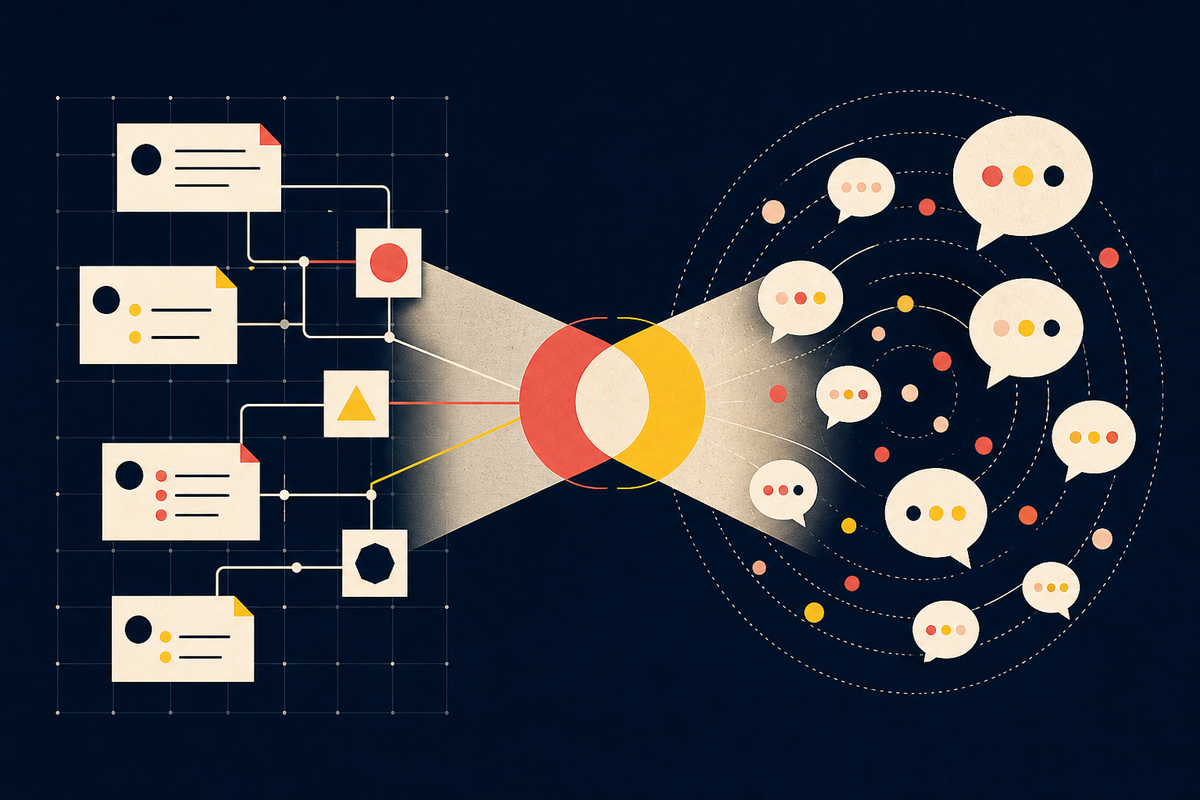
Lattice was built around performance management. Culture Amp was built around employee listening. Each later crossed into the other's territory. Their overlap is real, but so is the pull of their origins: one organizes the recurring work of setting expectations and evaluating performance; the other begins by asking how work feels, comparing the answer and deciding what to change.
That is the useful frame. A buyer does not need an abstract winner. A buyer needs to know which operating problem should sit at the center of the system.
The origin story is the product map
Lattice says it started in 2015 with an employee-centered approach to performance management. In September 2018, it introduced Engagement, describing surveys as a way to measure the cultural outputs of the management practices its existing performance product was designed to improve. In the company's own language, performance came first; listening made the effect visible.
Culture Amp traveled in the other direction. The company describes itself as an early pioneer of real-time employee feedback, powered by behavioral science and data analytics. In January 2019 it acquired Zugata, a continuous performance management company. Culture Amp's announcement framed the deal as a way to move from understanding what employees said toward helping them develop and perform.
Two suites can contain the same nouns and still put the verbs in a different order.
This history is not a verdict on current capability. Products change, teams ship, and acquired technology can become deeply integrated. It is a clue about emphasis. Lattice's current performance material leads with configurable review cycles, calibration, promotions, succession planning and performance improvement plans. Culture Amp's Engage offer leads with surveys, benchmarks, comment summaries, retention insight and action plans informed by its People Science tradition.
Where each platform started
What Lattice makes easier
Start with Lattice when the missing habit is managerial cadence. A company may need to launch a consistent review cycle, connect goals to those reviews, run calibration, collect feedback throughout the year and make one-on-ones less dependent on a manager's private notebook. Lattice treats those pieces as neighboring rooms.
Its published pricing reinforces the modular shape. As of this writing, Lattice lists Performance at $10 per seat per month, Goals & OKRs at $8, and a Foundations package at $13, billed annually. Engagement is available within the broader product menu. The important detail is not the sticker alone - enterprise scope, minimum spend and chosen modules change the bill - but the ability to name the operating layer being purchased.
For HR teams, that can mean less reconstruction at review time. Goals, feedback and prior conversations can supply context. For managers, the value is procedural: reminders arrive, forms follow a shared design, calibration has a home, and the cycle becomes observable. The system is most persuasive when inconsistency is the enemy.
What Culture Amp hears first
Start with Culture Amp when the hard problem is interpretation. Running a survey is easy. Asking defensible questions, protecting confidence in the process, slicing the results without turning small groups into identification puzzles, comparing scores with useful peers, and turning comments into action is harder. Culture Amp's long investment in feedback and people science is aimed at that chain.
The platform now reaches well past questionnaires. Culture Amp's Perform package includes reviews, calibration, continuous feedback, goals, one-on-ones, development plans and performance insights. Its published plans do not post a simple per-seat rate; the company says annual pricing depends on employee count, products and service tier. That makes a like-for-like quote essential.
Culture Amp also has scale behind its listening claim. It reports more than 6,000 customers, and its homepage says 25 million employees across customer organizations use the platform. Its 2025 sustainable performance study analyzed more than 560,000 employees at more than 1,500 companies. Vendor research deserves scrutiny, but the direction is revealing: Culture Amp argues that performance emerges from leadership, feedback and environment, not only from the machinery of a review cycle.

Choose the obligation, not the dashboard
Every people platform creates an obligation. A survey asks leaders to explain what they heard and what they will change. A performance system asks managers to set clear expectations, document evidence and speak honestly. Buying either tool without accepting its obligation turns software into theater.
Lean Lattice
When formal review cycles, goals, calibration and manager consistency are the first problems to solve.
Lean Culture Amp
When survey design, benchmarks, employee voice and action planning are the strategic center.
The dividing line is not company size. Lattice says it works with more than 5,000 organizations; Culture Amp says it serves more than 6,000. Both court serious HR teams. A 400-person company with a disciplined listening program but chaotic reviews may reasonably lean Lattice. A 4,000-person company with established performance infrastructure and a weak read on employee experience may lean Culture Amp.
Nor should AI settle the decision. Both vendors now promote assistants that summarize, draft and coach. These features may save time, but their usefulness depends on the data and workflow beneath them. An elegant summary of a poorly designed survey remains weak evidence. A polished review draft cannot repair vague goals or a manager who avoided feedback for eleven months.
A demo that exposes the difference
Skip the grand tour. Give each vendor the same real scenario. Use a review cycle your company actually runs, including an exception, a calibration step and a manager who is late. Then use an engagement survey your company would actually send, including segmentation, comments, confidentiality rules and an action plan. Watch where administrators leave the main workflow, where exports appear, and where a manager needs training.
- Pick one recurring pain. Name the behavior that is failing today, in plain language.
- Bring real complexity. Test permissions, reorganizations, incomplete data and awkward exceptions.
- Invite a manager. HR administrators should not be the only people judging daily usability.
- Price the whole year. Include required modules, implementation, support and the minimum commitment.
- Define action. Decide who must do what after a review or survey closes.
Also ask how performance and engagement data can be combined without creating irresponsible conclusions. A low survey score does not prove a manager caused it. A high rating does not prove an employee is engaged. Connected data can reveal a question worth investigating; it rarely supplies causality on its own. The better vendor is the one that helps your team use evidence carefully.
References matter here, but ask precise questions. Do not ask whether a customer likes the product. Ask how long the first cycle took, which reports still require a spreadsheet, how many managers needed direct help, and what happened when the organization changed reporting lines midstream. Ask what the customer stopped using after the first year. Adoption figures can flatter a rollout; abandoned workflows show where the product and the organization failed to meet.
Finally, inspect the exit. Employee data contains comments, judgments and career history that cannot be treated like an ordinary marketing database. Confirm export formats, deletion rules, regional hosting, access logs and what happens to AI features when a contract ends. A buying committee choosing a system of record should understand how it can leave before deciding how enthusiastically it will enter.
The market's convergence is good for buyers. Lattice had to become better at listening. Culture Amp had to turn listening into an operating response. Each pressure made the products broader. Breadth, however, is not the same as fit.
So choose from the inside out. If the week revolves around goals, feedback and a dependable performance rhythm, let Lattice prove it can carry that work. If the organization needs a sharper instrument for hearing employees and deciding where to intervene, let Culture Amp prove the depth of its listening system. The feature lists can finish the conversation. They should not start it.
Questions buyers ask
What is the main difference between Lattice and Culture Amp?
Lattice began with performance management; Culture Amp began with employee feedback and engagement. Both now cover both areas, but those origins remain useful indicators of product emphasis.
Which is better for performance reviews?
Lattice is the more natural starting point when configurable cycles, calibration, goals and manager workflows are primary. Test your actual process in both platforms before deciding.
Which is better for engagement surveys?
Culture Amp is the more natural starting point when methodology, benchmarks, employee listening and people-science support are central requirements.
Do both support goals and one-on-ones?
Yes. Both market goal-setting and one-on-one workflows, though packaging and the depth of connections to other modules vary.
What should buyers compare beyond features?
Compare real workflows, integration effort, permissions, data governance, support, total annual cost and the actions leaders will take after each process.