The awkward thing about an annual performance review is its timing. By the time a manager describes a meeting that went badly in March, the employee may have spent nine months doing the same thing. Praise arrives late, too. A triumph becomes a bullet point. A useful observation becomes an archaeological exercise.
Reflektive’s wager was that feedback could travel at the speed of work. Founded in 2014 by Rajeev Behera, Erick Tai and Jimmie Tyrrell, the company set out to close the gap between managers and employees. It built cloud software that could collect observations, connect them to goals and bring them into recurring conversations. The annual review would have better material to work with.
- The job: feedback, goals, recognition, reviews and people analytics.
- The trick: put small management tasks inside everyday email and chat.
- The tension: roughly $102 million raised; a loss-making business before its 2021 sale.
- The lesson: choose the management habit before choosing the software.
The review was late before it began
Consider the two people an HR platform must please. One chooses the software, negotiates the contract and needs dependable records. The other has just finished a meeting and wants to tell a colleague what worked. These are quite different moments. Asking the second person to behave like the first creates a small administrative obstacle at precisely the wrong time.
Reflektive addressed that obstacle through integrations. Its tools let employees give recognition, request feedback and add topics to a one-to-one agenda from email and collaboration applications. Gmail, Slack, Microsoft Office and Teams appear in its integration catalogue. The employee does not have to start every interaction with a pilgrimage to a separate HR portal.
The distinction is modest but consequential. Imagine a colleague making a complicated customer issue intelligible. Recording what they did while the details remain fresh is more useful than remembering, months later, that they are “a good communicator.” That example is illustrative; the product’s practical contribution is to make the first kind of observation easier to capture.
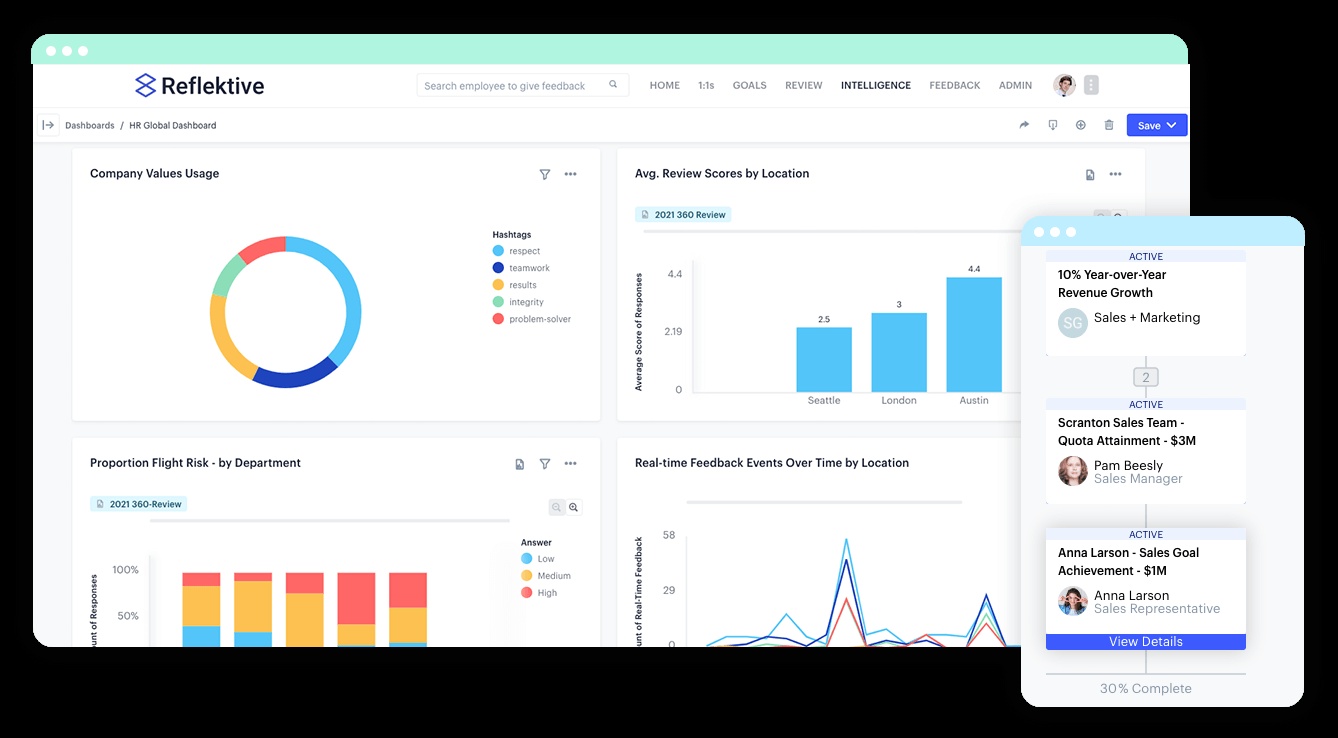
Reflektive belongs to a busy performance-management market. Alternatives include Lattice, 15Five and Culture Amp, alongside modules within larger HR suites. Continuous feedback is shared territory. Reflektive’s particular pitch connects daily interaction, formal assessment and analysis, with workflow integrations doing much of the persuasion. A buyer still has to test whether that arrangement suits the way their managers work.
Ten minutes for the form. Thirty for the person.
A useful example comes from Protective Life. In Reflektive’s 2017 customer account, the insurer wanted more coaching, a simpler review process and quarterly check-ins. It conducted interviews, an employee survey and a design workshop before selecting a technology solution. The process came first.
Protective replaced its beginning-of-year goal setting and annual review with quarterly goals and check-ins, while retaining an end-of-year rating. Managers reportedly spent 10 minutes in the tool and 20–30 minutes talking with the employee. The account also reported a 40% increase in people saying they understood what to focus on over the next 90 days. Those are customer-story results, rather than a guarantee for another employer.
The revealing detail is the surviving year-end rating. A company can want more frequent development conversations and still need a formal assessment. There is no requirement to turn every established practice into a bonfire. Protective’s example suggests a more selective change: shorten the interval between useful conversations, then preserve the parts needed for decisions.
For a manager, this is a sensible test of any new system. Does the form help you prepare for a conversation? Does the conversation produce a clearer next step? If all the time goes into documenting the relationship, the relationship has become a clerical assignment.
A compliment is the beginning
Recognition gives people a reason to participate. Reflektive makes that visible through peer and manager praise, while its engagement offering adds templated or custom surveys, sentiment analysis, benchmarks and suggested action plans. A survey can tell an employer that something needs attention. The follow-up plan is where that attention becomes a commitment.
“Goals are required.”Reflektive’s published company philosophy
That wonderfully unromantic sentence explains its positioning. The company’s public philosophy rejects both compliance-heavy performance management and a program consisting only of pleasant kudos. Its preferred mixture includes recognition, coaching, goals and accountability. Compliments are welcome; an organisation still needs to decide what matters and who will do it.
The performance suite supplies goal management, structured one-to-ones, reviews and check-ins. Calibration brings employee information into talent discussions, reducing dependence on disconnected spreadsheets. These are connected problems: a manager needs a useful record; HR needs to compare decisions; an employee needs to understand the expectations behind them.
In July 2018, Reflektive acquired Shape, a people-analytics company, for undisclosed terms. The acquisition supported an expansion into customisable reporting and dashboards. Reflektive’s people-analytics offering can compare survey information with behaviours such as feedback and one-to-one conversations, and examine performance across groups. It moves the buyer’s question from whether a review happened to what patterns the process reveals.
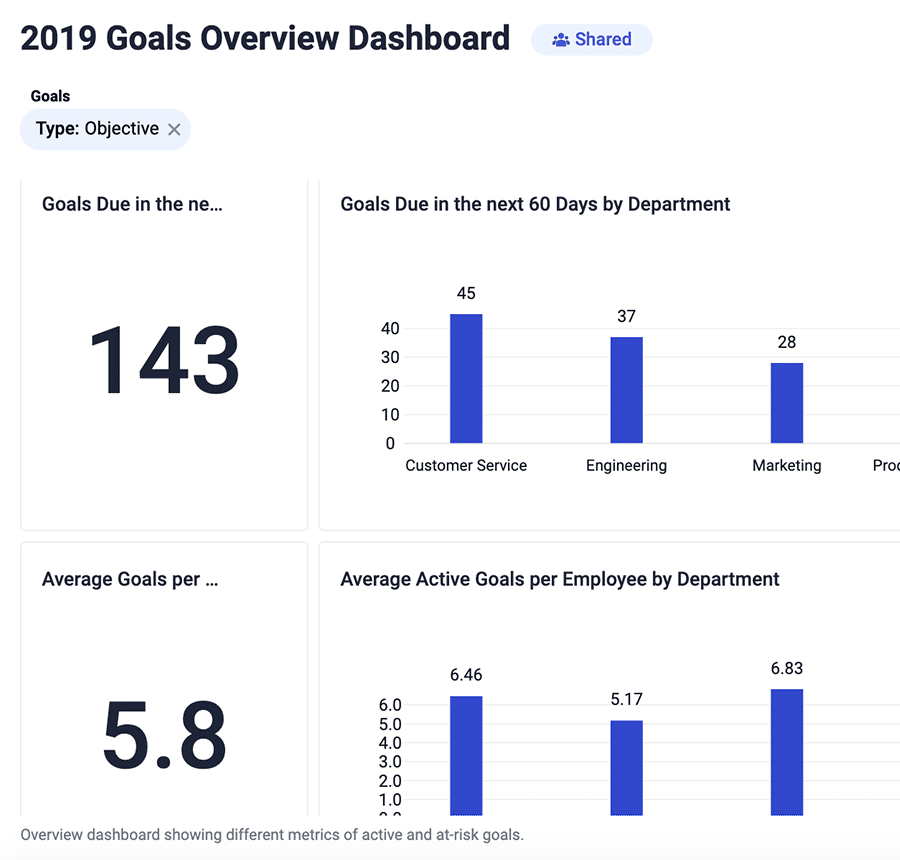
There is an obvious limit to the appeal of neat charts. Feedback frequency measures activity. It does not, on its own, establish the quality of the advice. A generous recognition culture can coexist with evasive conversations about difficult work. The useful response to an unusual pattern is a question, followed by judgement.
The money tells a less tidy story
The commercial proposition found an audience. Reflektive announced a $25 million Series B in January 2017, when it said its customer count had grown from 70 to more than 250. In February 2018, TPG Growth led a $60 million Series C, joined by Andreessen Horowitz and Lightspeed Venture Partners. Reflektive said it would invest in product development, expand its engineering team and pursue customers internationally.
Its reported seed, Series A, B and C rounds totalled approximately $101.6 million. Named customers across its public materials included Instacart, Allbirds, AAR, Grubhub and Protective Life. The company was selling to organisations with quite different businesses, united by the need to manage people beyond a single annual encounter.
2015–2018
2020
Recorded in LTG’s 2021 report
Funding did not settle the economics. LTG disclosed approximately $14.2 million in Reflektive’s 2020 revenue and an EBITDA loss of roughly $7 million. Most revenue came from recurring annual and multi-year contracts. This was a business with paying customers and repeatable contracts, operating at a loss.
LTG announced the acquisition’s completion in February 2021. Its 2021 annual report recorded $13.7 million in cash consideration, following an earlier disclosure of $14.2 million in initial consideration. Neither number should be confused with the amount investors had previously put into the company. Nor does a funding total, by itself, reveal the eventual return to any individual investor.
The next chapter complicates a simple failure story. By September 2021, LTG reported that Reflektive was trading profitably and contributing to organic growth. Reflektive joined PeopleFluent’s talent-management portfolio, giving its products a place within a broader offering. LTG itself became privately owned within General Atlantic in March 2025. Today, Reflektive’s main website directs visitors to its PeopleFluent product page.
Install a habit before you install an app
Reflektive sells software, but its services catalogue includes program design, change management, training and adoption support. That is a telling admission about the work involved. A company buying feedback software is also asking managers and employees to change a routine. Somebody must explain the purpose, demonstrate the behaviour and make room for it.
Its rollout guidance asks managers to establish their own goals, use feedback themselves and schedule review conversations. Written assessments are intended to support a conversation. The practical lesson is easy to borrow: set the expectation, model it and give it a place in the calendar. An inbox integration can reduce effort once those decisions exist.
The approach is most useful when managers have time to coach, employees understand how their information will be used, and HR can maintain the underlying data. If feedback carries a social penalty, easier submission may not produce more candour. If goals remain vague, a progress tracker can faithfully track confusion. Those are implementation judgements, not defects a reminder can repair.
Reflektive’s enduring idea is an economical one: shorten the distance between an observation and a useful response. The technology provides places to capture, connect and revisit that information. The manager must still say something worth hearing, while there is time for the employee to use it.