employee-recognition
(30)
New Stand sold the small things. Then it sold a better workday.
A subway shop learned that convenience could carry a bigger idea. New Stand took that lesson into the office - and its latest chapter, Daycast, makes workplace happiness an agency brief.
Stadium lost the office lunch. It kept the power of choice.
When offices emptied, Stadium turned a lunch-ordering system into a gift people could choose for themselves. Now it is stitching snacks, swag, recognition, and live experiences into one global business.
Terryberry and the business of being remembered
A company that once put appreciation into pocket watches now puts it into software. Its most interesting wager is that a thank-you works better when people can see it, choose it, and sometimes keep it.
Postal by Sendoso puts a gift on the table - and a signal in the CRM
A box of coffee is easy to admire and awkward to automate. Postal turns gifts, swag, and direct mail into a trackable business workflow - and its 2025 acquisition by Sendoso gives that workflow a larger home.
Springworks and the art of being noticed
A background check, a thank-you, a survey: Springworks puts the small transactions of working life where people will actually complete them. Its wager is that better timing can make a better workplace.
Nectar makes the quiet work visible
A $500 award can still miss the people who deserve it. Nectar is building a business around a different idea: let colleagues notice one another, then give that appreciation somewhere to go.
Reflektive moved the performance review into the working day
A good piece of feedback has a short shelf life. Reflektive built a business around delivering it sooner - and learned that changing management habits and making money are separate challenges.
Fond made a business of saying thank you
A corporate discount gets you a cheaper ticket. A timely thank-you tells you somebody noticed. Fond built its business in the space between the two.
Vantage Circle and the business of being noticed
A corporate discount platform grew into a system for everyday appreciation. Its wager: the useful reward is only half the story; the other half is who remembers to say thank you.
MTM Recognition and the two clocks of appreciation
A trophy maker from Oklahoma learned to put thank-you notes in a newsfeed. Its business reveals why a small act of help and a championship win need very different kinds of applause.

Steve Sonnenberg Put a Thank-You Note on the Balance Sheet
He lost his first company, borrowed $5,000 for a domain, and spent four years making an impossible Amazon rewards idea work by hand. The wager turned workplace appreciation into a platform used across 163 countries.

Perkbox found a better business in saying thank you
A failed group-buying venture became an employee benefits platform. Now, after joining forces with Vivup, Perkbox is putting supermarket savings, workplace recognition and mental health support behind the same login.
The 99-Year-Old Award Maker Turning Thank-Yous Into Enterprise Software
O.C. Tanner began with class rings and service pins. Now it sells a sprawling recognition system to global employers - and argues that the object still matters as much as the dashboard.
WorkTango Got Acquired Twice - Then Taught AI to Run the Meeting
A bootstrapped Toronto survey startup sold to a larger rival, watched the buyer take its name, and four years later joined a global rewards company. The useful lesson is not the dealmaking - it is how WorkTango closes the expensive gap between asking employees what is wrong and doing something about it.

Mindi Cox Built a Career by Looking Up From the Job
For nearly three decades at O.C. Tanner, she has treated culture less like a slogan and more like a daily operating system - built from open doors, specific gratitude, and the courage to let people do more than their job descriptions.

Brittany Wong Is Marketing the Moment When Work Feels Human
Across two decades and several software categories, Brittany Wong has built a career around a stubborn question: how do you turn an abstract promise into a habit people can actually feel? At Bucketlist Rewards, that question now lands on recognition itself.

Chris Fudge Is Betting the Workplace on One Small Signal: I Saw What You Did
After three decades crossing marketing, sales, service and coaching, the Achievers CMO has arrived at a plainspoken thesis: culture is built in the moments when useful work becomes visible.
Achievers Quit Selling Coffee Mugs - and Built the Recognition Machine HR Teams Can Copy
The Toronto company began with branded swag until one customer punctured the premise: nobody works harder for a coffee mug. Its second act turned appreciation into a daily data stream - and offers HR leaders a useful playbook, with sharp limits.

Bucketlist Turned a Million-User Side Project Into the Employee Recognition Habit HR Can Actually Measure
The consumer app had more than a million users. The better business appeared when employers kept asking for something else: a way to turn everyday appreciation into a system people would actually use.
The $70.8 Million Playbook for Outgrowing Your Own Name: How SRG Went Beyond Trophies
SRG spent 25 years becoming much bigger than the crystal awards that made its name. Its useful lesson is not the 2025 rebrand - it is the patient acquisition-and-operations machine underneath it.
Workhuman
Workhuman turned two decades of thank-you notes into a data business. The Irish-American company behind the 'thank you economy' now reaches 8 million workers and mines their gratitude for what HR software usually misses.
Resal
Resal is a Saudi digital gifting, rewards, and loyalty platform based in Jeddah. Founded in 2016, it connects merchants, businesses, and individuals through a single ecosystem that issues and manages digital gift cards, prepaid cards, loyalty points, and vouchers. Originally launched as a flower-and-gift delivery app, Resal pivoted in 2021 into a full B2B rewards and loyalty infrastructure company, and now serves more than 1.5 million users and over 1,000 organizations, working with 400+ retailers such as Jarir, Amazon, Noon, and Landmark Group across Saudi Arabia, the UAE, Bahrain, and Kuwait.
Compt
Compt is a Boston-based HR software company that runs flexible employee stipends and Lifestyle Spending Accounts (LSAs) for employers. Instead of one-size-fits-all perks, employees choose how to spend an allowance across categories like wellness, professional development, childcare, home office and pet care; they submit a receipt and get reimbursed through payroll with the correct tax treatment applied automatically. Founded in 2018 by Amy Spurling, the reimbursement-based platform emphasizes IRS-compliant tax handling, high participation, and low administrative overhead, and operates across all 50 U.S. states and 75+ countries.
HelloTeam
HelloTeam is a Boston-based HR technology company that builds an all-in-one employee engagement and performance management platform aimed at improving employee retention. Founded in 2016 by Tanya Bakalov, the software combines performance reviews, goals and OKRs, recognition and rewards, surveys, learning, a dynamic org chart, and people analytics into a single system so managers and HR teams can keep employees connected, engaged, and productive.
Snappy
Snappy is a New York-based corporate gifting platform that flips the traditional gift on its head: instead of shipping one preselected item, a sender picks a budget and a curated collection, and the recipient chooses the gift they actually want. Founded in 2015 by Hani Goldstein and Dvir Cohen, Snappy started in personal gifting before pivoting to enterprise, and now powers employee recognition, customer loyalty, and sales incentives for thousands of companies. Its recipient-choice model, digital 'unwrapping' experience, thank-you loop, and deep HRIS integrations have made it a favorite of HR and people teams, with more than 6 million gifts delivered across 170+ countries.

Hani Goldstein
Hani Goldstein is the co-founder and CEO of Snappy, the corporate gifting platform she started in 2015 with Dvir Cohen. Under her leadership Snappy has delivered more than six million gifts and become a gifting partner to a large share of the Fortune 100, including Microsoft, Zoom, Comcast and Uber. She has raised roughly $130 million across four rounds through a Series D in 2024, and guided the company through a swag-and-merchandise expansion with its 2025 acquisition of Covver. Goldstein operates by a simple mantra, 'do good,' and built Snappy around the idea that small moments of recognition can change how people feel about their work and each other.

Sendoso
Sendoso is a San Francisco-based B2B "Sending Platform" that lets sales, marketing, and customer teams source, store, ship, and track physical gifts, direct mail, swag, eGifts, and handwritten notes at scale. Founded in 2016 by two former sales reps who noticed that a $5 coffee gift card broke through cold-email fatigue, the company wraps that instinct in software - integrating with Salesforce, HubSpot, and Marketo so a gift can be triggered like any other campaign step and measured for ROI. After raising a $100M Series C in 2021 and reaching unicorn status, Sendoso consolidated the category by acquiring rivals Alyce (2024) and Postal (2025), and now layers AI gift recommendations on top of its global fulfillment network.
Gratia Health
Gratia Health is an Austin-based health-tech startup that turns everyday clinical work into measurable results. Its Workforce Activation Platform uses behavioral-science-designed incentives, real-time recognition, and gamification - points, badges, streaks, and patient shoutouts - to help hospitals keep nurses engaged, cover shifts, and cut spending on expensive contract labor. Emerged from stealth in November 2023 with seed funding led by JumpStart Capital and a launch partnership with ScionHealth's 70-plus specialty hospitals.
Humand
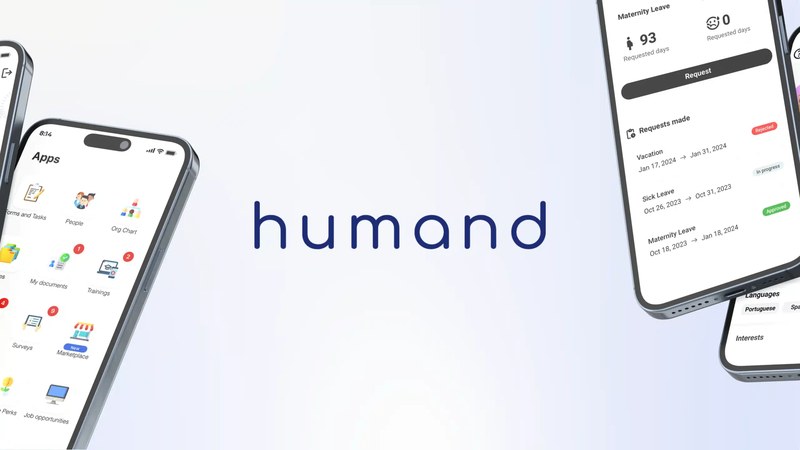
Humand is a mobile-first, all-in-one HR platform built for the 2.7 billion deskless and frontline workers who have never had a proper digital work home. Founded in 2020 by Nicolas Benenzon and Geronimo Maspero, the platform combines 30+ HR modules - from internal communications and payroll to performance reviews and AI-powered automation - into a single app. With 1.6 million workers across 1,500+ organizations in 51 countries, and a $66M Series A raised in February 2026 co-led by Kaszek and Goodwater Capital, Humand is positioning itself as the operating system for the world's largest workforce segment.
Xoxoday
Xoxoday is a global rewards, recognition, loyalty and incentives infrastructure platform. It helps businesses send gifts, payouts, and rewards to employees, partners, and customers across 100+ countries with a catalog of 1M+ options.