O.C. Tanner occupies a category that sounds soft until somebody has to operate it. Saying thank you is easy. Building a recognition program for 40,000 employees in 25 countries is a small industrial system. It needs budgets, approval rules, tax handling, translations, mobile access, an HR-data feed, a reward catalog, warehouses, shipping and enough judgment to stop a manager from sending a note that reads like a robot wrote it.
That system is O.C. Tanner’s business. The privately held Salt Lake City company says its Culture Cloud platform supports more than 1,100 organizations, about 14 million users in 180 countries and 31 million recognition moments a year. Its customers have included Chevron, Delta Air Lines, Amway, 3M, Navy Federal Credit Union, CIBC and KPMG. The company employs more than 1,600 programmers, researchers, designers, client professionals and craftspeople.
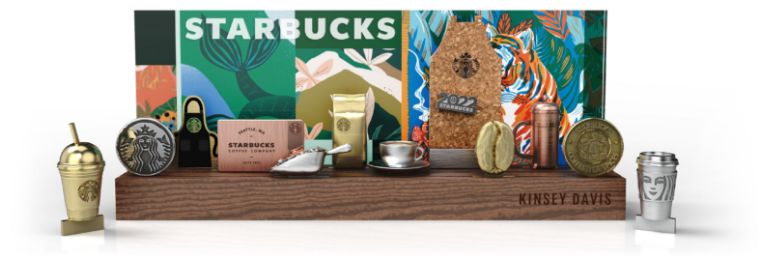
The last noun is the giveaway. O.C. Tanner is not merely a software vendor with a gift-card tab. It still designs and makes objects: service awards, corporate jewelry, branded swag and custom symbols that employees can put on a desk. In 2002, it manufactured the hefty, river-rock-shaped medals for its hometown Winter Olympics. Today it can put an AI writing coach and a collectible Starbucks coffee cup on the same invoice.
01 · The strange advantage
The SaaS company that kept the factory
Obert C. Tanner founded the business in 1927, selling class rings and awards. A century of service pins could have become a museum piece as HR moved online. Instead, the company wrapped software around the old craft. Culture Cloud now handles everyday peer recognition, manager awards, nominations, social feeds, career anniversaries, incentives, reward redemption and program analytics. It connects with Workday, SAP SuccessFactors, Oracle, UKG, Slack, Microsoft Teams, Outlook, Gmail and dozens of other workplace systems.
Then the atoms return. Points become merchandise. A service anniversary becomes a printed Yearbook filled with messages from colleagues. A company value becomes a custom token. O.C. Tanner calls one format Careerscapes: a personalized base that accumulates miniature symbols across a career. This is less efficient than emailing an e-card, which is precisely the point. Scarcity, weight and ceremony tell the recipient somebody bothered.
Competitors such as Workhuman, Achievers, Awardco and Reward Gateway sell versions of the same broad promise: make appreciation frequent, visible and measurable. Lighter tools including Bonusly, Kudos and Nectar can be easier to buy. O.C. Tanner’s distinction is the bundle. It supplies research, culture consulting, creative design, software, custom manufacturing and global fulfillment. That makes it attractive to large employers that want one accountable partner, and potentially excessive for a 200-person startup that mainly needs a clean kudos feed.
“Our founder, Obert C. Tanner, measured the company’s success by asking his accountant, ‘What’s our give-ability this month?’”O.C. Tanner company history
02 · What buyers receive
A thank-you with an enterprise architecture
For an employee, Culture Cloud can be almost trivial: open the app, choose a colleague, write a message, attach points and send. For an HR administrator, the machinery is more ambitious. Dashboards show participation, budgets and employees who may be going too long without recognition. Multiple storefronts can separate wellness funds, sales contests, company merchandise and manager supplies. “Buy Up” lets employees pay the difference when a reward costs more than their points balance.
Culture Intelligence adds a deliberately cautious layer of AI. Recognition Coach suggests how to make a message more specific; the suggestions are private, optional and editable. Other tools flag patterns around employee flight risk, job transitions and recognition gaps, recommend people in an employee’s organizational circle, and send prompts when a useful moment is about to pass. The positioning is sensible: the machine supplies context, but it cannot outsource sincerity.
Frontline access is another practical wedge. A nurse, driver or warehouse worker may not spend the day in Slack. O.C. Tanner offers mobile tools, printed reward codes, QR flows and integrations with devices and services used in retail and healthcare. “Say Thanks” lets a patient or customer scan a code and recognize the employee who helped them. The company’s research says adding customer-to-employee recognition can sharply lift engagement, though the result will depend on whether customers actually see and use the invitation.
03 · Proof and limits
The numbers are compelling - and mostly client stories
O.C. Tanner can point to outcomes that get a chief people officer’s attention. At a global insurer with more than 40,000 employees, the company reports more than 300,000 recognition moments in a year, a 20-point improvement in recognition satisfaction and an estimated $10 million to $15 million in annual attrition savings. At a multinational energy company, analysis found the odds of attrition were 77 percent lower among employees recognized at least four times in 12 months, and 95 percent lower for those recognized in nine consecutive months or more.
Those are not randomized experiments. Employers that recognize people consistently may also have better managers, healthier teams and more resources. The honest reading is that recognition frequency is a useful signal and possibly one cause among several. O.C. Tanner’s advantage is that it can join platform activity with employee and retention data, giving customers a way to test the relationship inside their own workforce.
Its 2026 State of Employee Recognition report surveyed 4,243 workers in 10 countries. The striking warning was not that employees want more points. It was that generic recognition can backfire. When leaders do not understand how an employee prefers to be recognized, the company found sharply lower odds of thriving. A mass-produced compliment delivered on schedule can expose how little the sender knows.
04 · Cost and implementation
The price tag is custom; the work is not optional
Culture Cloud has no public list price. Buyer directories describe a subscription shaped by employee count, chosen modules, customization and managed services. O.C. Tanner’s separate, packaged “Thanks” offer publishes a base of $3 to $4 per employee per month, with term discounts and extra-cost options. Neither figure includes the employer’s recognition budget, which funds points and awards, or the internal time required to govern the program.
Enterprise scope, integrations, service level and customization determine the contract.
Per employee per month as published, before optional items and the rewards budget.
The cleanest implementation lesson comes from Breakthru Beverage Group. It compared seven vendors and gave its team 90 days to launch for 9,500 associates. What failed first was scope. A single launch could not sensibly cover Canada’s existing contract, an acquired California business not yet aligned with the HR system, deskless operations staff and a new anniversary program. The team phased them.
The creative work also produced a small, useful failure. Designers proposed red-wine imagery for a beverage company’s recognition experience. A leader said it might land badly, and the idea was dropped. Later, Breakthru delayed service-milestone awards because the physical design was not ready. At the same time, the team changed its mind about recognizing only five-year anniversaries. Advice from O.C. Tanner pushed it toward one- and three-year milestones, where younger employees are more likely to leave.
That is the implementation pattern worth copying: preserve the moments that matter, and move the rest. A 90-day deadline worked because the board and executive team had already approved the goal, the company had a dedicated owner, and both sides were willing to postpone populations and features. Without an executive sponsor, clean employee data, a reward budget, manager training and time for change management, another recognition portal will simply become another password employees forget.
- Start with employee evidence, not a vendor demo. Breakthru’s trigger was an engagement survey showing that good work went unseen.
- Name an executive sponsor who can settle budget, tax and policy questions outside the project team’s reach.
- Launch the smallest complete experience. Delay populations or milestone programs that would otherwise feel unfinished.
- Design recognition around actual company language and employee preferences, then test anything that risks feeling generic or awkward.
- Measure who gives, who receives, who redeems and who leaves. Frequency alone is not proof, but it exposes where managers need help.
05 · Where it fits
Best for employers where a thank-you has supply-chain consequences
O.C. Tanner fits the upper end of the recognition market: multinational employers, regulated workforces, complicated HR systems and companies that want physical awards to carry their own brand. Its Workday integration can synchronize employee records, write recognition into Anytime Feedback, send redemption data to payroll and surface prompts inside employee journeys. In January 2026, the company earned ISO/IEC 27001:2022 certification, a meaningful credential when the platform holds organizational charts, employee activity and reward data.
The buying decision in plain English
The physical infrastructure may be the harder advantage to copy. Software features travel quickly across competitors. A global network that can engrave, package, localize, ship and resolve a missing award without souring the moment takes longer. O.C. Tanner says it scores suppliers on quality, lead time and delivery, uses corrective plans when standards slip, and mixes owned distribution with vetted partners. None of that looks glamorous in a product screenshot. It is exactly what an HR leader notices when a 30-year anniversary gift arrives late.
In August 2026, O.C. Tanner added Kudoboard as a preferred enterprise partner, folding collaborative group cards and celebration boards into Culture Cloud. The same month, Everest Group again placed the company as a Leader in its rewards-and-recognition assessment, citing the unusual combination of platform, in-house reward design, fulfillment, consulting and investment in AI-led analytics.
The company is approaching its centennial with an idea that has barely changed: achievement becomes more durable when other people notice it. What has changed is the apparatus around the noticing. In 1927, the proof might have been a ring. In 2026, it is a message, a manager prompt, a payroll entry, a retention dashboard, a package crossing a border and, sometimes, still a ring.