There is a peculiar indignity in receiving a work-anniversary present late. The company has remembered your years of service, eventually. The gift may be perfectly respectable. The timing has already delivered its own message. For a large employer, this small embarrassment becomes a logistical problem: thousands of anniversaries, different countries, busy managers, and a thousand opportunities to leave somebody out.
- What it sells: recognition and rewards, with wellness, employee surveys, and discounts alongside.
- Why buyers care: appreciation can reach across teams, countries, and the software people already use.
- What to watch: participation and coverage. A busy feed alone does not prove a better workplace.
Vantage Circle occupies this territory between a human gesture and its administration. An employer buys the system; employees give recognition, collect rewards, join wellness activities, or answer surveys. HR gets tools for running those programs. The proposition is easy to understand. Its execution involves rather more than ordering gift cards.
01 First came the bargain
The original idea was more mercantile. Vantage Circle started with corporate discounts: assemble employees into an audience that brands wanted to reach, then negotiate privileges for them. A cheaper holiday or a useful shopping offer had an obvious appeal. It gave the company a place in the employee-benefits conversation before recognition became its central subject.
In April 2014, funding coverage reported an angel round of 1.2 crore rupees, roughly $200,000, from six investors led by Raghu Bathina. The intended uses were sales expansion and new products. That was financing for the company, rather than a customer’s price for using it.
The founders brought experience from other businesses. Partha Neog had helped develop the property portal 99acres.com. Anjan Pathak had worked on e-commerce systems in Europe; he describes himself as an early investor who joined full-time in 2013. Early accounts also name co-founder KC Ramakrishna. The company’s current leadership presentation centers on Neog, the CEO, and Pathak, the CTO.
 Partha Neog / CEO
 Anjan Pathak / CTO
The company dates its beginnings to 2010. Its product history puts recognition and wellness launches in 2017, and surveys in 2019-20. In 2025, Vantage Rewards became Vantage Recognition. Read together, those steps suggest an expanding view of the employee experience: first help people buy something, then help employers notice, support, and hear them.
02 The anniversary that needs a system
Wipro makes the problem concrete. Its published case study describes a workforce of more than 230,000 across 66 countries. Recognition competed with client demands; personalized service awards were difficult to fulfill on time; data arrived from different business units.
The response combined peer badges, monetary awards, and automated service milestones. Colleagues could contribute messages and photographs to personal yearbooks. Business units retained room to run their own awards. Software handled the dates and distribution; people supplied the memories.
Increase in peer badges and appreciation tokens, 2021-2023.
2021 = 100. Indexed comparison of the reported change.Wipro’s reported 97.5% rise in peer badges and appreciation tokens from 2021 to 2023 is evidence of greater activity. It does not, by itself, prove a retention gain or a productivity gain. That distinction matters whenever a vendor turns a recognition count into a promise about business performance.
“when appreciation becomes a habit, excellence becomes the norm.”Sunita Cherian / quoted in the Wipro case study
03 A badge is a message with a budget
Vantage Circle’s more interesting argument concerns what a reward communicates. Its AIRᵉ framework separates Appreciation, Incentivization, Reinforcement, and Emotional Connect. The language can sound like a seminar. The underlying question is practical: what did the employee do, why did it matter, and what should other people learn from it?
Consider the difference between “great job” and thanking somebody for documenting a difficult handover so the next shift could work safely. The second message identifies a repeatable behavior. This is an illustration of the framework, rather than a reported customer incident. It shows why a recognition program needs more thought than a points balance.
- 01NoticeName the action.
- 02ExplainSay why it mattered.
- 03RecognizeMake the moment visible.
- 04ReviewCheck who is missing.
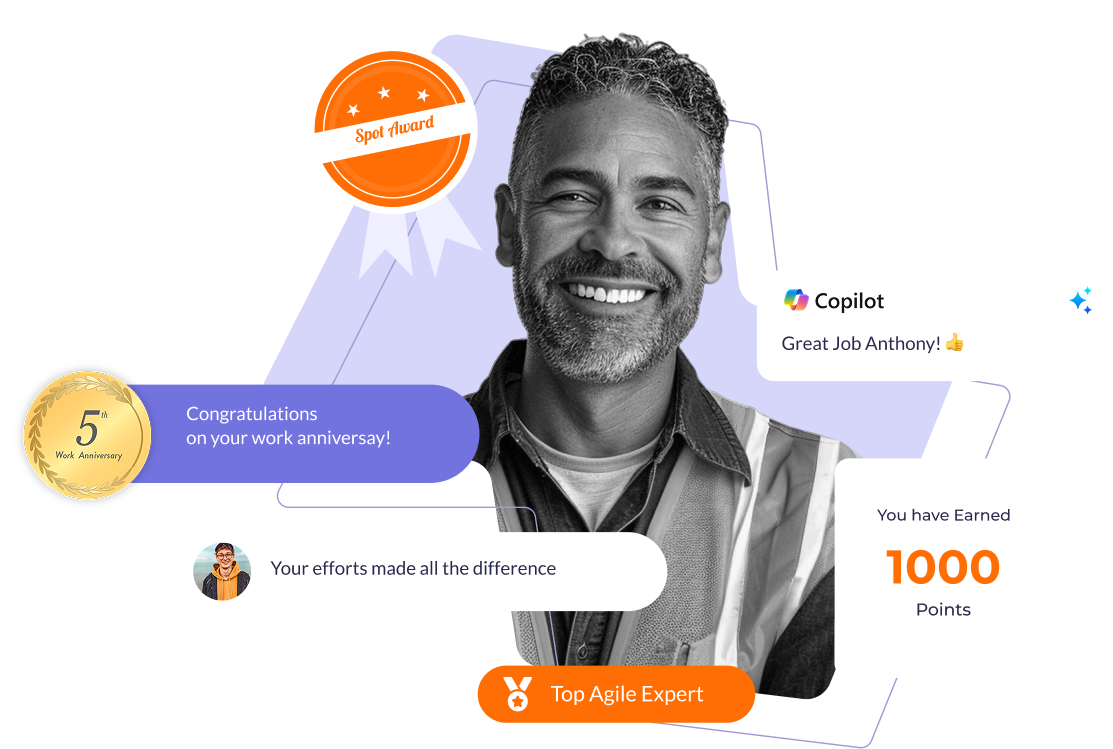
Recognition feeds, value-linked badges, manager awards, and milestone tools give employers ways to put that idea into practice. Analytics can identify employees receiving no recognition. That is a useful correction to the temptation to celebrate the sheer volume of applause. A feed can look lively because the same people keep applauding one another.
04 Four doors into the same workplace
Recognition is the main entrance, but it shares the building. Vantage Fit supplies corporate wellness activities and challenges. Vantage Pulse collects feedback through surveys. Vantage Perks keeps the original discounts business alive. Employers can choose modules instead of taking every product at once.
Pulse is particularly revealing. It offers anonymous conversations, recurring surveys, sentiment analysis, and surveys triggered by employee milestones. Recognition asks what deserves praise; listening asks what deserves attention. A manager who only sends badges may miss a team’s complaint about how the work is organized.
Perks has a more tangible promise: negotiated offers, discounts, cashback, and internal classifieds. Its usefulness depends on whether employees actually want what is offered. A catalog is impressive on a sales slide; a discount on something you were already going to buy is impressive at checkout.
The customer list includes Infosys, Bosch, Tata Motors, Blue Star, and Wipro. The company reports more than 3.2 million users and 700 clients worldwide. Its market sits among recognition specialists such as Workhuman, Achievers, Awardco, and O.C. Tanner. Vantage Circle’s pitch combines recognition with adjacent employee programs and help running them. Buyers should compare the actual bundle, local reward choices, and integration requirements rather than assume a longer feature list settles the contest.
05 The price of making a habit
The commercial structure follows that expansion. Grow combines recognition and perks. Transform adds wellness. Scale adds feedback and enterprise features. Pricing is quoted according to organization size, selected products, and integrations. A buyer’s useful comparison therefore starts with a defined workforce and a specific program.
There is also work after the contract. Through Vantage Edge, the company offers program design, governance, adoption campaigns, training, and ongoing measurement. It is selling assistance with the habit as well as access to the tool. Manager training belongs in that proposition because a reminder cannot decide what somebody deserves to be thanked for.
This provides a sensible condition for use: somebody must own the program after launch. Leaders need to participate, managers need to make recognition specific, and employees need convenient access. If awards feel arbitrary or praise becomes compulsory, the platform may faithfully circulate messages that nobody trusts. That is a design risk to evaluate, not a claim about a particular Vantage Circle customer.
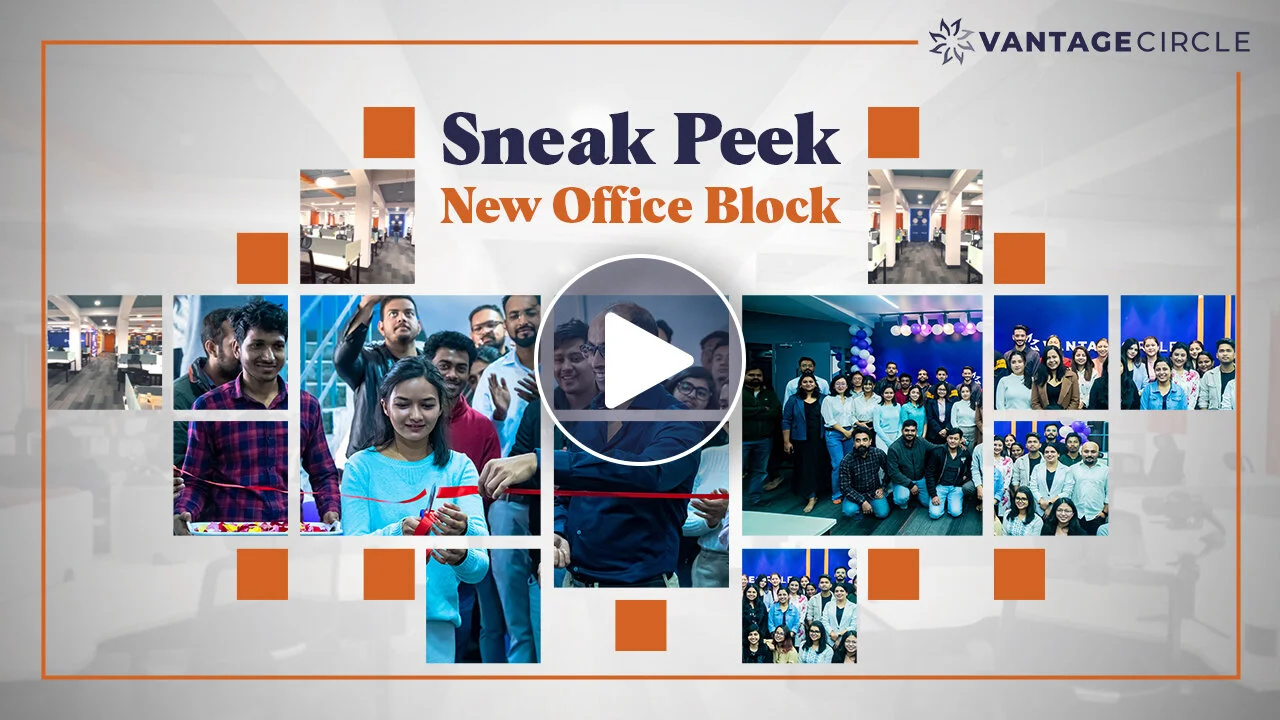
Vantage Circle operates from Guwahati, Assam. Its media kit describes recruiting specialist skills and hiring quickly as challenges of that location. Its published values include learning, ownership, wellbeing, and decisions based on data. Those are statements of intent; the concrete distinction is a regional operating base serving international employers.
06 Recognition gets a return address
A September 2026 Workday integration announcement offers a glimpse of where the product is heading. Worker records flow from Workday into Vantage Circle. Recognition flows back into Workday’s Anytime Feedback. The company describes an initial data load followed by daily updates, with a configuration-based setup.
The appeal is administrative coherence: a person changes teams, the record changes, and recognition remains connected to the employee. Integrations with collaboration tools pursue the same practical aim of reducing the distance between doing the work and acknowledging it.
There is something readers can copy without buying a platform. Name the behavior. Deliver the thanks while the moment is fresh. Let colleagues participate. Count how many people receive recognition, then investigate who does not. Automate the calendar and leave the personal message to a person. Vantage Circle’s story is most useful at this level: a large company’s good intentions become more credible when its small gestures arrive on time.