The most revealing thing about SRG is that the trophies are still there. Crystal towers, plaques, art-glass flames and paperweights remain stacked across its catalog like a tiny glass city. The company did not escape its niche. It built outward from it - first into adjacent crafts, then corporate gifts, then retail brands, technology, bags, drinkware and global sourcing. By the time St Regis Group shortened its name to SRG in January 2025, the old label had become less a description than a historical artifact.
This is a private, business-to-business company, not the hotel and not a direct-to-consumer trophy shop. Its customers are mainly promotional-products distributors in Canada and the United States. Those distributors bring in a brief - recognize 500 employees, commemorate a financing, outfit a conference, send a client gift - and SRG supplies the physical answer. The object might be a $19 paperweight, a crystal award priced above $300, a branded bottle or a custom run that never appeared in a catalog.

The supplier behind the supplier
The end user sees a tumbler with a logo. The distributor sees everything that can go wrong before it arrives: art files, proof approval, minimum quantities, decoration, safety documentation, inventory, freight and deadline math. SRG's real product is the removal of that anxiety. It promotes 24-hour proofing, quick responses, live product information and a widening set of digital sales tools. Its PitchPro service helps distributors assemble presentations. SRG Global advertises sourcing across more than 35 categories, orders from 100 to 100,000 pieces and 15-day delivery on qualifying quick-ship projects.
That operational layer separates SRG from a local engraver and explains why it can compete with broad hard-goods suppliers such as HPG, Koozie Group, Logomark, Gemline and Goldstar. The catalog breadth gets attention. The useful differentiation is having design, sourcing, compliance, decoration and shipping under one roof - or, more accurately, under more than 400,000 square feet of roofs in Markham, Ontario, and Itasca, Illinois.
The business model is wholesale with embellishment. Distributors log in for trade pricing, choose a stock product or commission a custom one, send artwork and approve the proof. SRG earns revenue on the object and the work that makes it specific: engraving, Vividprint color, etching, packaging and fulfillment. Quantity pushes unit prices down; complexity pushes the job in the other direction. The distributor keeps the client relationship and adds its margin. SRG stays mostly behind the curtain, which is precisely where a good trade supplier wants to be.
Eighteen deals, one direction
Richard Firkser founded the business in 1999 as a small awards company. The subsequent acquisition list reads like a deliberately assembled toolbox. Etching Industries added decorated wine and gifting capability. R.S. Owens brought a storied Chicago awards manufacturer - and an unlikely connection to the Oscar statuette. The 2016 combination with ESP and K&R widened the product range, customer base and American footprint. The Book Company's journal division arrived in 2020. Clearmount, known for custom Lucite awards, followed in 2022.
The pattern matters more than the deal count. These were adjacent moves around a durable customer: the distributor who already needed awards and could also sell journals, drinkware or executive gifts. Each new capability created another reason to use the same supplier. Each acquired customer gained access to a broader warehouse. That is how a niche becomes a platform without performing the dramatic, often fatal maneuver called a pivot.
“Companies are built and grown by their people. A corporation is nothing without the team that builds and grows it.”Mark Waisbrod, CEO
What failed first - and why the second try worked
Clearmount supplies the most useful episode. After co-owner Rosalind Plummer died in 2017, her husband David and daughter Kate began considering a sale. St Regis made an offer, but Kate Plummer decided it was not the right fit. So the first attempt simply stopped. She spent the next five years growing Clearmount's brand, studying its EBITDA, improving its technology and training, and preparing the business to transact on better terms.
When St Regis returned, the logic had changed. The product fit was clear. Its Markham plant sat about 20 minutes from Clearmount's Scarborough operation. Most importantly, SRG could absorb the roughly 15-person team whose craft knowledge was difficult to replace. The acquisition closed in December 2022, financial terms private, and the staff moved with the business. What changed the seller's mind was not a cleverer pitch. It was five years of readiness plus a buyer able to protect the people attached to the value.
The cost question
SRG has not published what it paid for Clearmount or its other major acquisitions. The visible economics sit at the customer end: public catalog prices run from paperweights below $20 to elaborate stock awards above $300, before quantity, personalization and custom-project choices. The company makes money by serving a large range of order values through the same operating system.
The numbers caught up with the story
When St Regis disclosed revenue for Counselor's supplier ranking, the progression became visible: $49 million in 2021, $66.8 million in 2022, $68.8 million in 2023 and $70.8 million in 2024. That put the company at No. 25 on Counselor's 2025 Top 40 supplier list. PPAI's separate, multi-factor ranking placed SRG at No. 20 among suppliers in 2026.
Then came the name change. It worked because the operational fact preceded the marketing claim. SRG already carried more than 40 retail brands, including disclosed relationships with RIEDEL, Cerruti 1881, Hugo Boss, OtterBox, S'well and Shinola. Swarovski and Logitech joined the push into premium gifts and tech. Rollink brought foldable luggage. A 2025 exclusive agreement made SRG the sole North American provider for All American Writing Instruments' six brands.
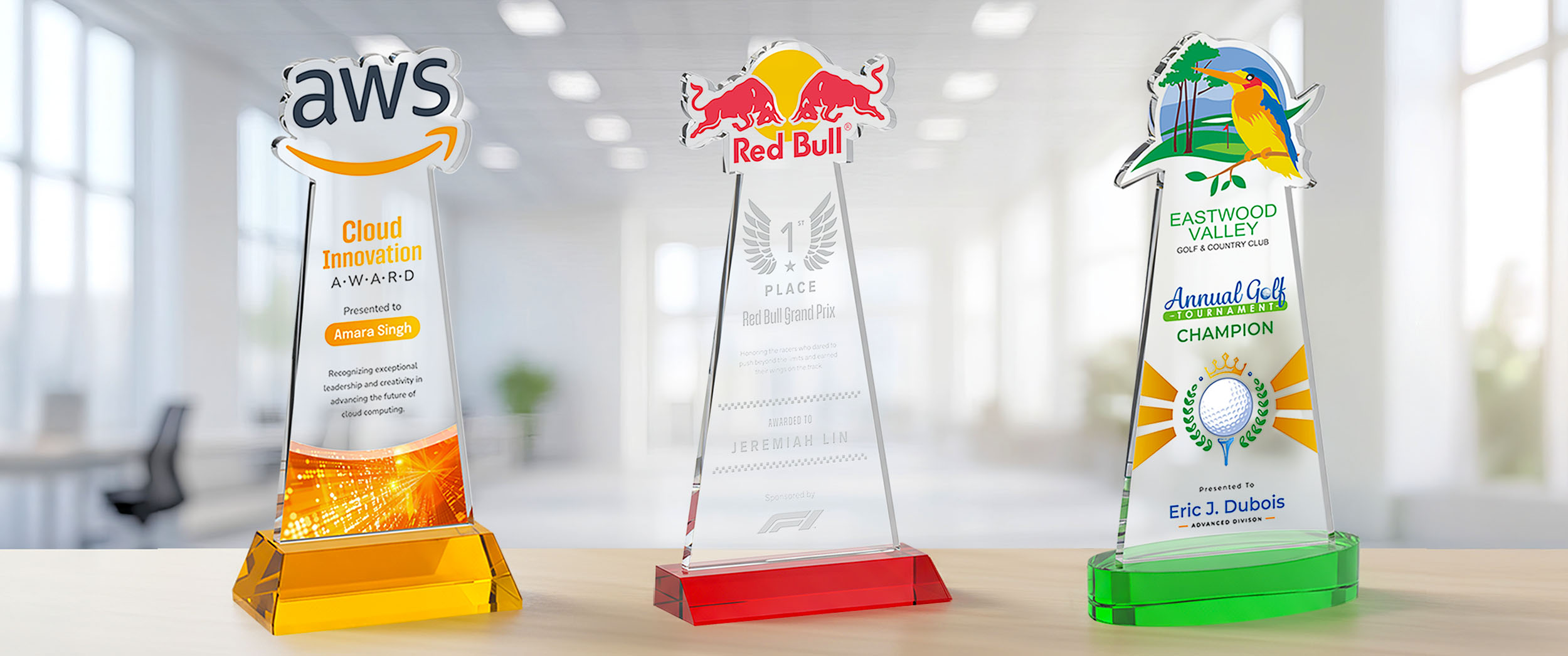
The old St Regis name was not tossed in the recycling bin. It remains the awards label within the broader SRG portfolio. That is tidy brand architecture: expand the parent while preserving the equity of the specialist brand. The corporate initials now have room to hold pens and power banks; the familiar name still sells crystal.
The part worth copying
Earn the rebrand first
Change the operation before the identity. A new name should clarify reality, not audition for a future that has not arrived.
Buy adjacency
Add products your existing customer can sell in the same conversation. Journals beside awards beat a random new category.
Treat people as the asset
Craft knowledge, customer trust and continuity are not soft benefits. In a specialist manufacturer, they are the deal.
Centralize invisible work
Proofing, compliance, inventory and fulfillment create leverage precisely because the recipient never has to think about them.
There is a fifth lesson, and it is less flattering: breadth creates complexity. A catalog that covers crystal, cookware, charging gear and luggage is harder to forecast, police and explain. SRG's push into AI, automation and electronic purchase orders is not decorative innovation. It is maintenance for the sprawl. Its sustainability work carries the same pressure. Corporate merchandise can become waste with a logo on it, so product carbon measurement, an EcoVadis Bronze rating, facility audits and air-source heat pumps in Markham matter as operating proof, not just impact-report furniture.
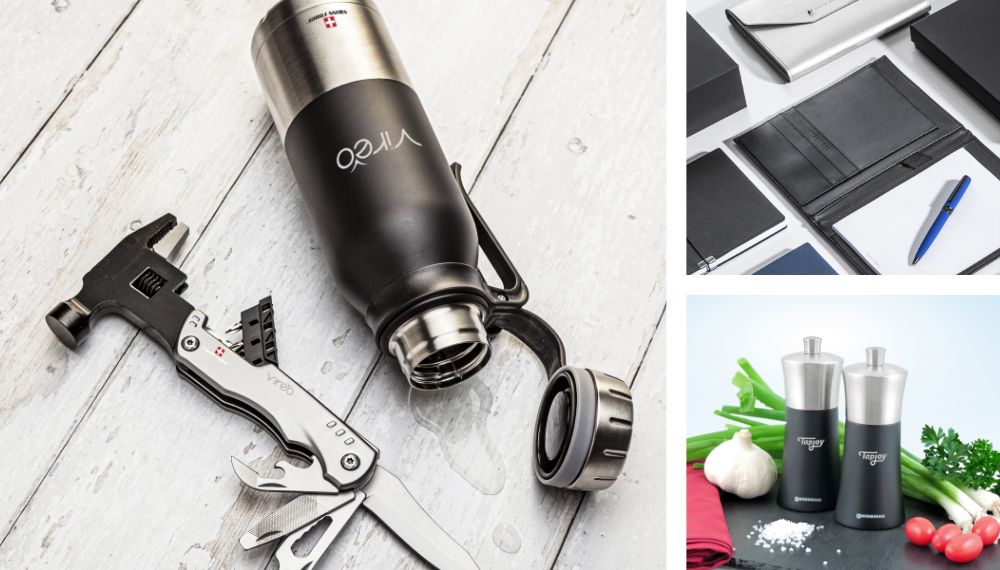
This is also where expertise becomes market position. Anyone can import a bottle. Fewer suppliers can document the material, decorate it consistently, show real-time stock to a distributor, replace breakage and repeat the order months later. In recognition, SRG can move among deep etching, laser engraving, three-dimensional etching, acrylic fabrication and full-color printing. In global sourcing, it can translate an idea into a manufactured piece. In premium brands, it acts as the bridge between retail cachet and corporate customization. Competitors can match individual products. They have to match the connective tissue to dislodge the account.
When the playbook breaks
This model will not travel neatly to every company. It depends on repeat buyers who value a single supplier, acquired products that fit the same sales channel, enough warehouse and production capacity to consolidate operations, and teams willing to stay. Buy a category the distributor does not understand, lose the craftspeople, or promise one-stop convenience without reliable proofing and freight, and the platform becomes a crowded warehouse with a branding problem.
Nor does a rebrand solve weak category permission. SRG could credibly shorten its name because customers were already buying far more than awards. A founder with one product and a broad new logo has only made the stationery more ambitious. The sequence is the strategy: wedge, adjacency, integration, evidence, then identity.
SRG's story is amusingly physical in a software age. Its moat is made of people who know how to engrave glass, systems that can find a bottle in a warehouse, and trucks that arrive before an awards dinner. The object on the stage may be symbolic. Getting 500 of them there on time is not.