promotional-products
(30)
CAMERAReadyArt and the logo that couldn’t go to print
A logo can look perfect on a laptop and still be useless to a printer. CAMERAReadyArt built a business in that awkward gap, then followed the artwork into proofs, purchase orders and online stores.
API-Marketing gave Prince Perfect his retirement papers
An Auburn printer spent decades adding services, then had to teach customers what it had become. The lesson involves a retired mascot, personalized postcards, and a surprisingly useful lunch fund.
Advertising Edge and the small decisions that make a shirt worth wearing
A Santee merchandise company offers a useful lesson in branding: the logo is only part of the order. Fit, quantity, artwork and the date on the calendar do much of the work.
Minuteman Press and the business of being nearby
In Orange, California, a print shop sells something a shopping cart cannot specify: help with the deadline. Its story connects a local owner to a franchise built by questioning where a printer’s job ends.
USA Marketing knows the joke has to arrive fresh
Avocado toast for new homeowners. Noisemakers delivered before the inning ends. Inside the Oakland company that makes promotional ideas work in the physical world.
IMAGEN and the business inside the box
A branded gift is easy to order. IMAGEN’s more interesting work is making the design, the delivery, and the reason for sending it fit together.
Novelty Printing and the fine print behind a $2 tote
A Rancho Cucamonga promotional-products shop shows how much work sits between picking a giveaway and putting it in someone’s hands.
Electronic Printing Solutions takes on the work after the ink dries
The San Diego printer combines short-run production with mailing, merchandise and warehousing. Its useful proposition: a marketing project should arrive somewhere, not become another box in the office.
APG puts your business on paper. And on the truck.
From business cards to vehicle wraps, Advanced Printing & Graphics turns a company’s identity into things people can hold, wear and spot across the street. Its pitch is continuity: one creative idea, carried through production.
Prima Printing puts a local name behind your logo
Business cards, branded bottles and the occasional awkward assignment: the San Carlos printer sells the help that turns an idea into something you can hand over.
All Printing Services sells the part you cannot upload
At this family-run Encino print shop, the pitch is personal: help with the design, a plan for the deadline, and everything from business cards to a trade-show booth.

Blur Design makes brands you can hold
A juice bottle, a fishing shirt, a gold-foiled beauty promotion. The Oakville studio’s portfolio makes a practical case for designing the object along with the logo.
Your logo looks fine. Now make it sew.
Inscribe Graphics turns rough artwork into files that printers and embroidery machines can use. Its business lives in the small, exacting gap between approving a design and putting it on a product.
San Diego Printers Takes the Job Beyond the Press
A brochure is only the beginning. This San Diego print shop connects design, production, packing, and mailing - with a business built around the work customers would rather hand over.
Impact Production does the work after the logo
A hotel review card, a lobby sign, a conference booklet: the Torrance agency turns brand ideas into things people can actually use. Its business lives in the details that a design presentation leaves out.
Select Imaging sells the whole job, right down to the last fold
A Dublin print shop grew from two businesses sharing space into a place to order the brochure, the mailing, the team shirts and the box. Its appeal lives in the details customers would rather hand off.
The Pebble Group Put Software Behind the Swag
One half ships the objects global brands put their names on. The other half gives independent distributors the software, buying power and community to run the same complicated trade.

Guy Malk Is Turning Recognition Into a Systems Problem
At SRG, Guy Malk has spent years making physical products easier to see, sell and remember. His career traces a practical idea: presentation is not decoration around the work - it is part of the work.

The $70.8 Million Playbook for Outgrowing Your Own Name: How SRG Went Beyond Trophies
SRG spent 25 years becoming much bigger than the crystal awards that made its name. Its useful lesson is not the 2025 rebrand - it is the patient acquisition-and-operations machine underneath it.
The Company That Turned Swag Into a Half-Billion-Dollar Handshake
How a phone call to the Seattle Seahawks in 1984 became a $552 million machine for the T-shirts, tumblers, and bobbleheads that carry the world's biggest brands.
Bordova Turned the Uniform Closet Into a Brand Department - Here’s the Playbook B2B Operators Can Steal
Bordova sells uniforms, gifts and promotional goods. The more interesting product is coordination: one relationship for the many small decisions that make a company look like itself.
The Swag Is the Easy Part. Imprint Engine Built the Hard Part.
A hoodie is simple. Getting the right hoodie, in the right size, to 5,000 people across borders - without losing the brand or the budget - is not. Imprint Engine turned that operational headache into a global business.
The Factory Behind the Internet's Oddly Specific Orders
A missing car-wash sign became a portfolio of 12 brands and more than 10,000 customizable products. Group Bayport's real product is the machinery that turns one-off requests into repeatable ecommerce.

DME Delivers
For forty years, most of the marketing world has been racing away from paper. A family-run shop in Daytona Beach built a business by running toward it - and teaching universities how to make a donor feel like more than a line in a database.
Josh Tabaj
Josh Tabaj is the Chief Marketing Officer and one of four co-founders of Branded Bills, the Arizona headwear and apparel company that turned a hand-branded leather patch into a national custom-merchandise business. Branded Bills started around 2015 in a Mesa garage with a branding iron, a knife, and roughly $1,000 from each founder; its first patch hat went to a South Dakota brewery. The company grew from state-pride hats into a vertically integrated operation that sources and produces its own headwear, runs a custom and corporate-branding division, sells officially licensed collegiate gear, opened its first physical store inside the Phoenix Suns' Footprint Center in 2022, and moved into a 96,000-plus square foot Tempe headquarters in 2025. Tabaj handles the marketing side of that machine - the brand voice, the customer story, and the argument that a logo deserves better than a screen print.

Custom Ink
Custom Ink is an online retailer that lets anyone design and order custom apparel and promotional products - t-shirts, hoodies, hats, drinkware and swag - without order minimums or design software. Founded in 2000 in a Virginia basement, the company built an easy online Design Lab plus human design and support help, turning group orders for teams, schools, businesses, nonprofits and events into a business that has grown to roughly $500 million in revenue. It has since expanded into corporate swag management through acquisitions like Swag.com and Printfection.

The Icebox Cool Stuff
The Icebox Cool Stuff is an Atlanta-based, full-service branded merchandise and custom apparel agency founded in 2001 on the belief that promotional products can actually be cool. It handles the whole chain - creative design, product sourcing, in-house decorating, warehouse fulfillment, company-store management and global distribution - for corporate clients ranging from Delta Air Lines to Google. Roughly 150 employees work across three locations and 150,000+ square feet of warehouse space, serving brands that want merchandise people actually keep and wear.

Paige Fuller
Paige Cannon Fuller is the Chief Marketing Officer of The Icebox Cool Stuff, an Atlanta-based branded merchandise and apparel agency, where she leads the marketing and creative teams that build merch programs for enterprise clients such as Delta Air Lines and the NYSE. A marketing and brand strategist with a background spanning apparel, e-commerce and consumer brands, she joined Icebox in 2018 as VP of Marketing & Brand Management and was elevated to CMO in 2024. Earlier she founded the advisory shop Fuller Made and held senior marketing roles at Alternative Apparel.
THE/STUDIO
THE/STUDIO is a custom product manufacturing and on-demand merchandising platform that connects brands, creators, and organizations to a global network of vetted factories. Founded in 2013 as a custom patch shop, it now produces 300+ categories of custom goods - pins, patches, apparel, coins, drinkware and more - with no minimum orders, fast turnaround, and software that compresses the traditional sourcing process from months to days. The company positions itself as a modern, ethical answer to slow legacy manufacturing, serving over 100,000 customers including Nike, Adidas, Netflix, Uber and the Met Store.
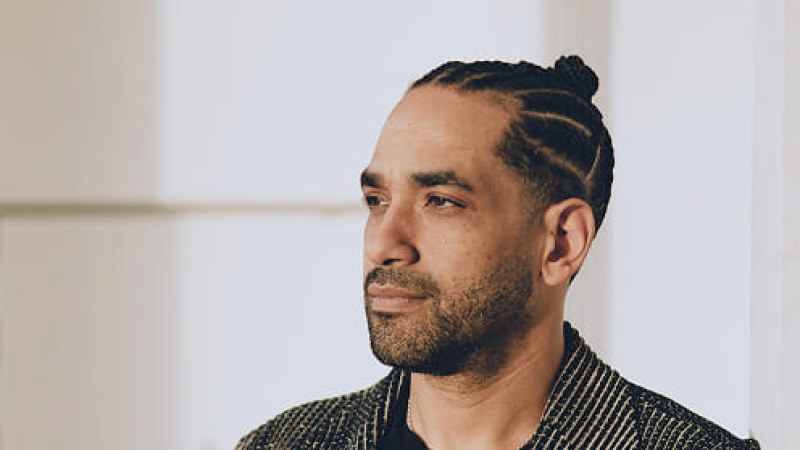
Joseph Heller
Joseph Heller is the CEO and founder of THE/STUDIO, the company behind TheStudio.com and SuppliedShop.com, a supply-chain platform that connects creators, brands and small businesses with vetted factories worldwide so anyone can make custom products - patches, pins, apparel, medals and more - without minimum orders or sourcing expertise. After more than a decade working with factories in China, he built a low-MOQ, on-demand manufacturing model and a fully remote, globally distributed team, raising an $11M Series A in 2018 after 18 months and more than 150 investor rejections. His through-line is democratizing access to manufacturing as a path to broad-based wealth creation.