A brochure can look finished and still have a long way to go. Somebody must fold it, pair it with the right insert, put it in a package, and make sure it reaches the right person. San Diego Printers has built its offer around that whole assignment. Ink on paper gets the attention. The less photogenic work gets the campaign out the door.
The company supplies business printing, from cards and catalogs to packaging, with services extending into design, mailing, and fulfillment. Its natural customer is a business with something to communicate and a collection of production tasks standing between the idea and the audience. The proposition is easy to understand: give more of those tasks to the people making the printed material.
That makes San Diego Printers an interesting business to examine beyond its machinery. The useful question is how much of a customer's assignment it can carry. A beautiful stack of brochures is one purchase. A coordinated job, ready for its destinations, is another.
A week offered. A career begun.
John Barros arrived at the company in 1982 looking for work. He offered to work without pay for a week to prove himself; a permanent offer came within three days. He became a press operator, advanced through production management, and eventually acquired the business with partners. He has been president since 1999.
That history, recounted in a June 2024 trade-show profile, gives the management story a physical starting point: the production floor. The company itself dates its beginnings to 1972. Barros's story is one of joining and later owning an existing operation, with working knowledge acquired along the way.
“We want to be a one-stop shop for our clients.”
John Barros · June 2024
The ambition is broad, but the service list makes it concrete. A buyer can bring work that needs printing and finishing, or an assignment that continues into assembly and mailing. The selling point is continuity across those steps. Each additional capability gives a customer one more reason to keep the project with the same supplier.
The pressroom has more than one answer
San Diego Printers lists offset, digital, and on-demand production, alongside variable data printing and database publishing. Its advertised equipment range runs from single-color presses to a six-color, 40-inch press with a coater. The company says it matches equipment to each job. That is the operational substance behind an otherwise familiar promise of flexibility.
For buyers, the distinction matters before a file reaches production. A repeated piece, a small batch, and a personalized mailing present different requirements. The useful conversation begins with what must be made, how many versions exist, and when the material is needed. Choosing the production route belongs inside that conversation.
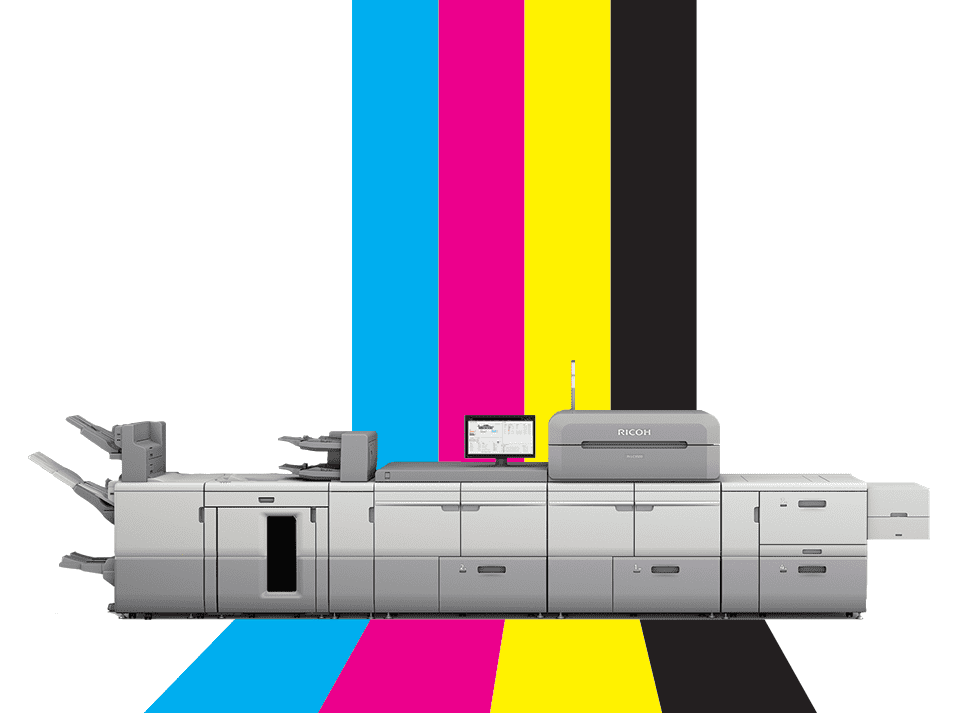
The finishing choices are equally revealing. The estimate form includes saddle stitching, comb binding, perfect binding, and spiral binding. Packaging and point-of-purchase materials also appear among its services. This is a shop addressing the form of the finished object, including how pages hold together and how material will be presented.
Its product range consequently crosses departmental boundaries. A marketing team might want campaign pieces; a sales operation might need supporting literature. The common thread is a physical item that has to be specified, produced, and made useful to someone else.
The job does not end in a cardboard box
Fulfillment is where that range becomes a broader business offer. San Diego Printers describes boxing multiple items and sending them to different destinations. It also advertises storage and shipping capabilities. For a customer juggling several pieces of collateral, the service can extend responsibility beyond the finished sheet.
Consider an illustrative assignment: a business needs printed literature and branded merchandise delivered to several offices. Printing is one part of the brief. Someone still has to establish the contents of each shipment and connect each package with an address. A supplier offering assembly and distribution can be considered for that larger scope from the beginning.
- 01PrepareFiles & artwork
- 02PrintOffset or digital
- 03AssembleFinish & pack
- 04DeliverMail & distribute
Service map, not a measured production timeline.
That example is a way to understand the offer, rather than a claim about a particular customer project. The practical lesson is to describe the destination as carefully as the design. How many locations? Which items go together? Does the shipment need to arrive before an event? Those answers define the assignment more clearly than “we need some brochures.”
The company lists customers across financial services, healthcare, manufacturing, real estate, marketing, and public agencies. Its commercial reach includes local, regional, and national businesses. These are varied audiences, but they share a reason to buy help: printed communication creates work before and after printing.
Yesterday's message is expensive inventory
One of the company's more useful offerings is print-on-demand paired with variable data printing. Its solutions page presents smaller quantities and personalized messages as ways to address deadlines and reduce obsolete inventory. The appeal is particularly clear when the information on the page may change before the entire order is used.
There is a buyer's discipline here worth copying: think about the useful life of the message. If a price, product description, or event detail changes, remaining copies may lose their purpose. Asking about a smaller run brings that possibility into the buying decision. The question becomes how much usable material the business needs for the next period.
Personalization adds another layer. Different recipients can require different content, so the source information deserves attention alongside the artwork. A buyer considering this service should establish which fields change, who checks them, and how sample versions will be approved. Personalization is only useful when the differences are intentional.
San Diego Printers also offers digital asset management: storing and organizing files, images, layouts, and databases for retrieval. In the context of repeat print work, that is a practical companion service. The next edition starts with locating the right material and knowing which version should return to production.
The price begins with a better brief
The company's estimate form tells a compact story about its business model. Customers choose an account manager and provide job specifications. There are three quantity fields, followed by questions about dimensions, folds, colors, paper, and finishing. It is a custom project conversation, with the price following the brief.
Those three quantity fields are worth pausing over. They give a buyer room to request alternatives for the same assignment. A useful comparison holds the other specifications steady, making it easier to see the tradeoff between ordering more and ordering only what is needed. The cheapest-looking total and the most useful order need not be the same choice.
Define the finished piece.
Then define where it goes.
For a complete comparison, buyers should ask which parts of the assignment each estimate includes. Artwork preparation, finishing, assembly, and shipping are distinct pieces of work. If one proposal covers more of them, the totals answer different questions. An agreed scope makes a price understandable.
The same approach clarifies suitability. A standard piece with a settled specification may call for a straightforward ordering process. A job with changing versions, several physical components, and multiple recipients creates more coordination work. The latter is where San Diego Printers' range of services becomes especially relevant to the purchasing decision.
People who know what a promise requires
The company's sales page contains a detail more revealing than another adjective about service: it says its sales staff help in production. That connects the people taking an order with the work required to complete it. For a customer, practical familiarity can make the early conversation about specifications more useful.
The directory also makes the relationship visible. It names account managers, lists direct contact details, and identifies Tom Schultz as sales manager. The estimate form begins by letting customers select a person. The website may receive the request, but the process is organized around people who handle accounts.
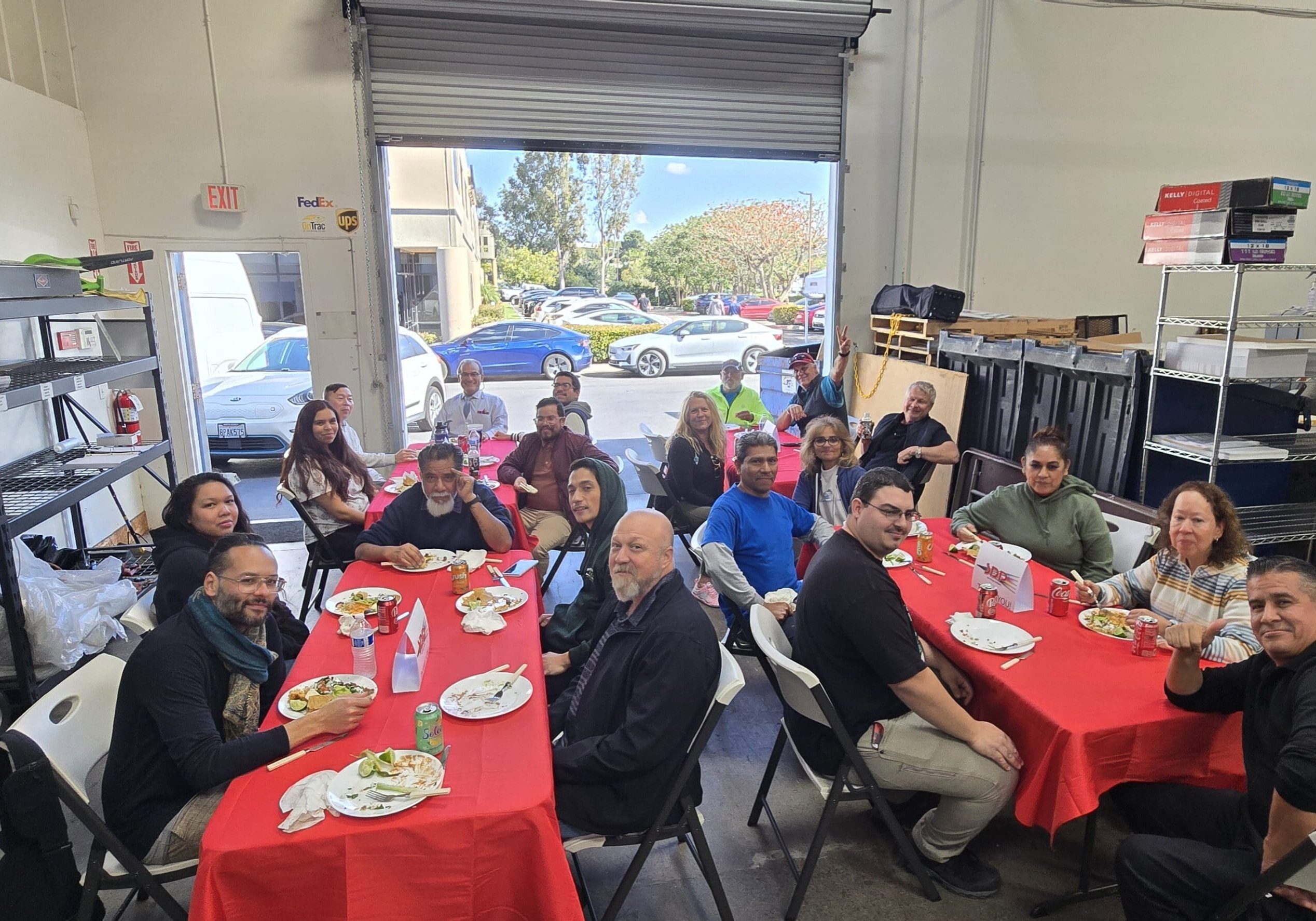
A photograph of that lunch supplies a pleasantly ordinary scene. Red-covered tables stand among the warehouse shelves; colleagues sit with their plates beneath an open loading door. The events page also lists golf and local networking activities. These are concrete expressions of how the company presents its relationships, both inside the shop and around the business.
An established shop, an unfinished future
San Diego Printers operates among other regional commercial printers with overlapping capabilities. L+L Printers promotes printing and direct mail, while DPI Direct offers offset, digital, and large-format work. Customers have alternatives. San Diego Printers' case rests on the combination it offers and the working relationship it can establish across an assignment.
At drupa in 2024, Barros discussed eventually replacing offset with digital while expressing satisfaction with his existing offset output. He also described a plan for his son Isaiah to assume leadership within five years. Those comments describe intentions, rather than completed transitions. They put technology and succession on the same planning horizon.
For a prospective customer, the immediate test is more grounded: can the shop understand the job, agree on the finished result, and carry the work through its final steps? A print order starts with an object someone wants to make. San Diego Printers asks to stay involved until that object is ready for the people meant to receive it.
Put a project on paper
Explore the services, prepare an estimate request, or meet the people handling accounts.