A business card is easy to describe. It has dimensions, a color, a name. The circumstances in which someone needs a business card are less tidy. There is an event approaching. A file needs changing. Someone has to decide whether the lettering will survive being printed that small. A customer enters a printing business carrying a little pile of decisions disguised as an order.
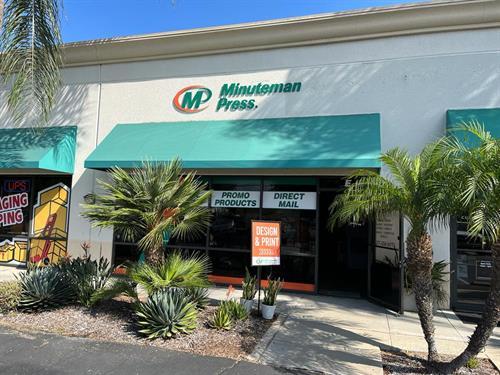
Minuteman Press Orange works in that space. The local shop sells printing and design, with signs, apparel and promotional merchandise alongside the familiar paper products. Its current store listing also makes a carefully limited promise: same-day options on selected products. Those last three words matter. A deadline is useful only when the person accepting it understands the job.
Owner Luciana Lorenzo brought an earlier printing career from Argentina to Orange. In a company-sponsored interview, she describes opening her first shop at 22, running it for eight years, and acquiring the Orange franchise in 2021. Training and support helped persuade her to buy. English-Spanish service became part of her local approach.
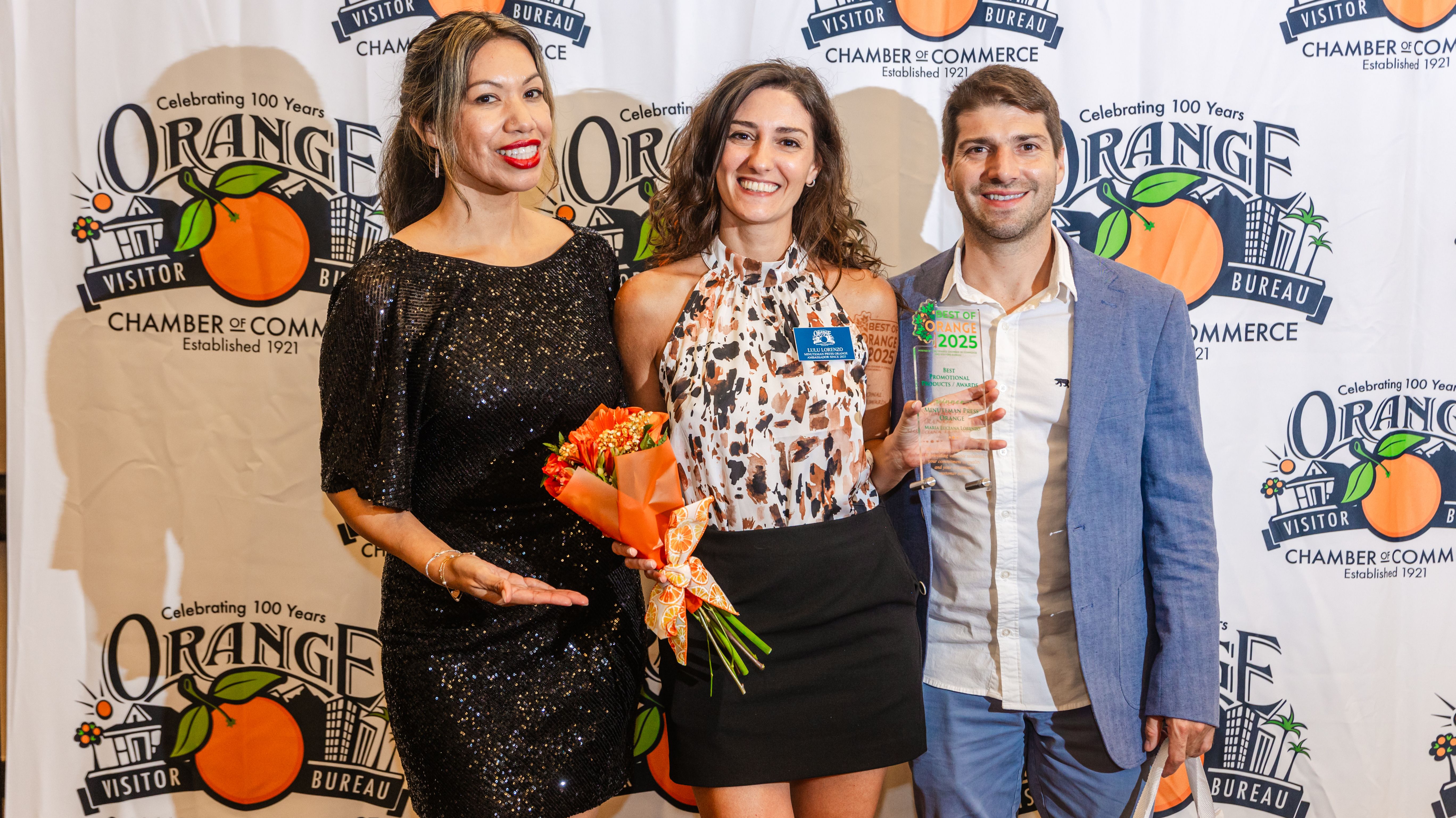
In 2025, the shop won the Chamber’s Promotional Products/Awards category. The interesting detail is how closely this business sits beside the businesses it supplies. A community event needs objects bearing names. A local printer makes those objects. The same community becomes an audience for the printer’s work.
The delivery request that changed the job
The wider Minuteman story begins with another small inconvenience. Roy and Bob Titus opened their first shop in Plainview, New York, in 1973. The company’s history traces Roy’s interest to frustrating experiences with printers while working at Parents Magazine: missed deadlines, disappointing quality and poor service.
In Bob’s account of the early shop, a real-estate customer wanted flyers delivered to an office down the street. An experienced printer working there resisted. Roy agreed to do it. The disagreement concerned a very short journey, but a surprisingly large question: was the job finished when the press stopped, or when the customer could use what had been printed?
That question travels well beyond printing. A furniture seller can leave a customer with an assembly problem. A software vendor can leave a customer with a setup problem. A printer can leave a customer with a collection problem. Every business has a boundary around its work. Customers tend to notice the awkward chores sitting just outside it.
“My dad saw this as a great service we could provide that would make it easy for customers to do business with us.”
Bob Titus, recalling the decision to offer delivery
There was a literal breakdown, too. Bob recalled a press failing and delivery worker Dave Scadin fixing it; Scadin subsequently became the press operator. It is a good antidote to an overly orderly company history. Sometimes the person with the next useful skill is already standing nearby, doing a different job.
Color took a different plate
Service alone could not expand what the machines could produce. Michael Jutt, who joined the Farmingdale shop in 1974 and later built its franchise training program, remembered testing a 3M plate system that made multicolor printing practical on their press. The team evaluated both performance and cost. A better plate widened the work they could accept.
There is a wonderfully concrete detail in Jutt’s hiring story. He was earning $110 a week elsewhere. Roy initially offered to match it. After Jutt raised the additional commute, the offer became $120. A ten-dollar weekly difference helped bring in the person who would develop the training program. That is a historical wage anecdote, not an estimate of what it cost to build the company.
Franchising carried the format beyond its first shops. Today the brand describes a network of more than 1,000 locations. Those are worldwide locations, not branches managed from Orange. The distinction helps explain the business: shared identity and support above, individual customer relationships at the counter.
What comes out of the Orange shop
The Orange Chamber directory lists business cards, flyers, brochures, banners, signs, apparel and pens. The range sounds miscellaneous until you consider a customer preparing for an event. Several objects may need to carry the same name and design. Coordinating them can be a job of its own.
Think of a hypothetical small business attending a trade show. A sign has to be legible at a distance; a handout needs enough detail to take home; clothing needs to identify the people at the stand. Asking for the same artwork on all three is only the beginning. Each object has a different viewing distance, material and purpose.
This is where the local service proposition makes sense. A buyer can discuss the occasion before settling on the object. The practical value depends on the quality of that conversation and the finished work. A familiar sign above the door does not, by itself, answer either question.
Two ways to buy convenience
For a customer, the business model is straightforward: buy a printing, design or merchandise job. For a franchise operator, there is a second transaction: pay for entry into a system with an established brand and operating support. The two prices should never be confused.
A 2026 analysis of the franchise disclosure document reports an initial investment of roughly $138,000-$216,000 when the equipment package is leased, or $237,000-$315,000 when purchased. The stated new-center franchise fee is $48,500. These are system-level startup estimates for leased premises, not Lorenzo’s purchase price or the price of a customer’s printing order.
The attraction is understandable: an owner can buy a framework instead of designing every operating practice independently. But the local work remains local. Someone still has to quote accurately, schedule production, communicate a delay and earn the next order. The franchise can support those tasks; it cannot make the customer’s deadline less real.
Price the whole job
There is a useful buying method here. Start with the intended use, quantity, finished size, artwork and completion date. Ask what design work is included. Establish who approves the proof and when. Then compare estimates with the same requirements. A lower price for a different specification tells you very little.
The Orange Chamber currently lists a 10% member discount on printed services, subject to change. That is a concrete local benefit. It still belongs inside a complete comparison of the job: materials, finishing, timing and any additional work.
For a repeat order with finished artwork, ample time and no need for discussion, an online supplier may suit the buyer perfectly. A specialized production requirement may call for a specialist. Same-day service also depends on eligibility and available capacity. The sensible question is whether this shop can solve the particular problem in front of it.
What another business owner can copy is the habit visible in that early delivery request. Watch what your customer must do immediately after buying from you. Ask whether you can take responsibility for one useful part of it. Set a price and a boundary you can keep. Then do it reliably enough that, next time, the customer knows whom to call.