A logo is easy to admire on a screen. Then somebody needs it on a window, a booklet, a shirt, and a small card at the hotel front desk. Somebody also has to check the quantity, approve the artwork, and get the boxes to the right address. This is the territory occupied by Impact Production, a Torrance company whose name is unusually literal. It designs things. It produces them. The interesting part is how much work fits between those two verbs.
The company describes itself as a graphic design business, digital marketing agency, and print shop. Its menu includes corporate communications, branding, web-to-print portals, and fulfillment. The combination puts it close to a familiar business problem: a marketing idea may be approved once, but its physical ingredients have to be made, ordered, and delivered repeatedly.
That work can look small from the outside. A conference booklet does not announce the negotiations over its page count. A window graphic does not explain the revisions that made it readable. Yet these are the objects through which a business becomes visible away from its website. Impact Production’s offering belongs in that everyday, commercially useful space.
A card with a job to do
One revealing example is the company-hosted Hilton resort review-card order page. It offers business-card-sized prompts for hotel guests to leave a review after a stay. The undated listing gives a price of 12 cents per card, plus shipping, with quantities from 250 to 1,000. That is a published product price, not a current quote for the agency’s wider services.
The order form asks for practical particulars, including language, property code, and purchase-order number. Usage instructions accompany the product. Among them: no upgrades or gifts in exchange for a review. The little piece of paper arrives with a job description.
The business lesson is about specificity. “Improve our marketing” is an elastic assignment. A card intended for a particular interaction is easier to brief: who hands it over, who receives it, and what should happen next? Those questions give design something useful to answer. They also make a purchasing conversation more concrete than a debate about whether the artwork feels exciting.
A cheap object can still be a poor purchase if nobody uses it. For a buyer, the relevant cost therefore includes the effort of distributing the material and explaining its purpose. Print quantity alone cannot tell you whether the job makes sense. A box of unused cards is inventory, however attractive the typography.
A hotel supplier, down to the lobby art
The hospitality connection goes beyond an order form. G6 Hospitality purchasing documents list Impact Production for promotional products, anti-human-trafficking signs, lobby art blocks, and miscellaneous signage. The company appears in lists dated 2022, 2023, 2024, and February 2025. These are specific supplier references, rather than evidence of an exclusive relationship or a stated volume of business.
Lobby art is a pleasingly concrete entry in a company profile. It places the work where a guest might actually encounter it, alongside reception furniture and the route to a room. The signage categories also show why treating every printed object as an advertisement misses part of the business. Some materials inform. Some identify. Some support the operation of a property.
For a hotel operator, that variety creates a purchasing problem. Different objects can belong to the same brand while serving quite different purposes. A promotional item and an informational sign should not necessarily compete for attention in the same way. A useful production partner needs to understand what the object is supposed to accomplish before choosing how to make it.
Impact Production also names restaurants, healthcare, insurance, entertainment, lifestyle, and consumer-product brands among the sectors it serves. The common thread is business communication across multiple formats. Its relevant customer is often the person responsible for turning an approved idea into material that colleagues can put to work.
- 01DesignGive the message a form.
- 02ProduceMake the physical material.
- 03FulfillGet it to the destination.
The press operator belongs in the design meeting
A July 2014 hiring notice supplies a more tactile glimpse of the business. Posting from Redondo Beach, Impact Production sought an experienced Heidelberg press operator. It wanted knowledge of polymer-plate printing, die cutting, and foil stamping on a Heidelberg Windmill Black Ball press. Bindery experience was welcome, though optional.
“We are a design agency looking to grow our letterpress business.”
Impact Production’s July 2014 hiring notice
The notice also required someone able to work well with the design team. That detail earns its space. It places the person operating the machinery inside the creative relationship. The ambition, at least in that historical recruitment effort, was to connect design decisions with the skills needed to execute them.
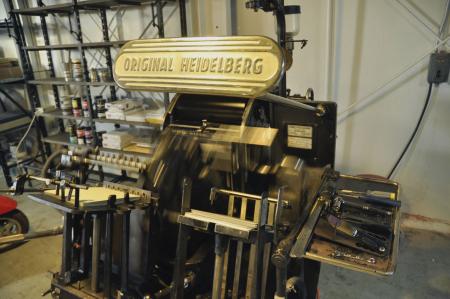
That is a useful corrective to the way creative work is sometimes purchased. A customer may begin with a visual reference and leave the production decisions until later. Bringing production expertise into the discussion gives the buyer a chance to ask what the intended effect requires. The answer can influence the specification before a design becomes expensive to revise.
The company’s broader listed services include digital printing, large-format work, letterpress, and bindery. The attraction of that range is choice of treatment. A small printed piece and a large display present different problems of scale and use. Buying them together only helps when the supplier can translate the brief into the appropriate form for each.
The useful part of one supplier
Impact Production sits between several familiar purchasing categories. An independent design studio can develop an identity. A commercial printer can manufacture collateral. A promotional-products distributor can source branded goods. A web specialist can help with digital communication. This company offers work across those boundaries, including online ordering through web-to-print portals.
That does not make the integrated option automatically preferable. Its appeal depends on the assignment. A business coordinating several kinds of material has a different problem from a buyer who already has a finished file and simply needs copies. The broader the production brief, the more useful it may be to discuss the components with one team.
The tradeoff is straightforward: a combined service can reduce the buyer’s coordination work, while separate specialists can offer more choice for individual tasks. Neither arrangement excuses a vague specification. The customer still needs to agree on deliverables, revisions, approvals, and delivery. Having one contact is helpful only if responsibility is clear.
The apparent commercial model is a mix of paid creative work and production services, including printed goods and fulfillment. That interpretation follows the service offering and the public product order form. It should be understood as a description of how customers can buy work, rather than a claim about the proportions of company revenue.
Web-to-print adds a recurring use case. The useful question for a business is whether a location or department can order the right branded material without rebuilding the brief each time. For someone evaluating a portal, the test is practical: try a normal repeat order, a changed address, and a request that needs approval. The demonstration should resemble an ordinary working day.
What must match? Identify the elements that need consistency.
What can change? Define the local details and quantities.
Who signs off? Name the person who approves production.
Write the delivery brief first
The most transferable idea in Impact Production’s service mix is to think about the destination while discussing the design. Before approving an item, decide where it will be used, how many people or locations need it, and who will receive it. These are creative constraints as well as administrative details.
For a hypothetical conference order, that means describing the room, the viewing distance, the pieces attendees will carry, and the date everything must be ready. For a repeat hotel order, it means distinguishing the details that stay fixed from those that change between properties. Neither brief needs fashionable language. Both need decisions.
A useful first conversation with a supplier would include the intended audience, available artwork, quantities, formats, delivery destinations, and approval deadline. Ask for the quote to separate the components you need to compare. If the job includes digital ordering, ask who maintains the approved materials and how changes reach the ordering system.
This approach suits work with several moving parts. It may be excessive for a simple, standardized print order with no design or distribution problem attached. Conversely, a highly specialized finish can justify seeking a dedicated craft supplier. The sensible choice follows the job’s requirements, rather than the length of an agency’s services page.
Impact Production’s distinctive feature is the proximity of the creative brief to the production task. The hotel card, the supplier listing, and the press-operator notice each expose a different part of that relationship. Together, they describe a business concerned with what happens when an idea has to leave the presentation and arrive somewhere useful.
That somewhere might be a lobby. It might be a conference table. It might be a guest’s pocket. The design has to work there, too.