A logo can win approval on a screen and still be unfinished business. Someone has to turn it into artwork suitable for a print process, fit it to a product template or translate it into instructions for an embroidery machine. Inscribe Graphics INC makes a business out of that last stretch. The customer sees a badge, a cap or a team shirt. Inscribe handles the file that helps make it possible.
Its territory is the production side of graphic design: redraws, vector conversions, embroidery digitizing, repeated variations on existing layouts and print collateral. These are specific deliverables with somewhere to go. A promotional product distributor needs artwork for a supplier. An apparel decorator needs a usable embroidery file. A sportswear business needs another version of an established design, this time with the right name and colors.
The appeal is easy to understand. Businesses can buy specialist artwork capacity without assigning every task to an internal designer. Inscribe combines a U.S. marketing presence with production centers in India, according to its account of the business. The arrangement puts customer communication and a sizable production operation behind services that often arrive as deceptively small files.
The picture is only the beginning
Inscribe groups its offer into four main service lines: artwork, embroidery digitizing, namedrop and print design. The first takes raw images toward what the company calls camera-ready artwork. Its listed destinations include screen printing, engraving, laser etching, embossing and enamel decoration. That range explains why asking for “the logo” is only the beginning of an order. The intended use matters.
Vector conversion and redraws address the image itself. Image editing, mockups and customer proofs address how it is presented or prepared for approval. Inscribe also lists custom rhinestone designs, a reminder that commercial graphics can end up in materials more exuberant than ink. Its portfolio organizes these jobs by what the buyer needs to accomplish, from a cleaned-up image to a preview of the finished idea.
Digitizing has a different deliverable: a digital embroidery file readable by an embroidery machine. Inscribe lists lettering, logos, appliqué, sequins, chenille and 3D puff among its capabilities. Its service description also names stitch approaches such as satin, run and complex fills. The advertised expertise is in translating a design for stitching, including texture and thread colors, rather than simply returning another picture of it.
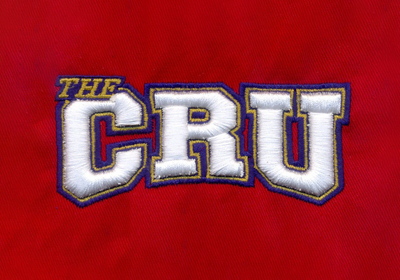
A buyer can use that service for garments, bags, headwear, uniforms and accessories. But the delivery promise concerns a design file. It should be read separately from the time needed to decorate, inspect and ship the physical goods. Keeping those steps distinct makes the offer more useful: the customer can identify precisely which part of the job is being handed over.
One layout. Another team. Do it again.
The most revealing word on Inscribe’s menu may be “namedrop.” Here it means adapting a reference design while preserving its layout. Names, logos, colors, icons and sizes can change. The company serves collegiate, resort, professional sports, retail, golf and military apparel through this service. It is a business built around the fact that a familiar design often needs another carefully controlled version.
Imagine an approved apparel layout that needs a different resort name. That is an illustration of the use case, not a reported customer order. The task sounds modest until the name, logo, color and dimensions all have to agree with the reference. Inscribe explicitly says its process follows trademark licensing requirements. A quick-looking revision still carries instructions that cannot be treated casually.
For a repeat buyer, the attraction is continuity. The company’s FAQ promises to retain the same set of artists for a customer’s work. That gives the offer a practical distinction in a market where buyers can also use freelancers, specialist digitizers or an internal artwork department. The promise addresses who receives the next brief, as well as what comes back.
“Yes, the same set of artists would be retained for your work.”
Inscribe Graphics, customer FAQ
The significance is an inference from the service design: recurring work benefits when a supplier can retain context. Repeated layouts and customer preferences give continuity something concrete to act on. Inscribe’s namedrop service and repeat-artist commitment belong together. One sells controlled variation; the other offers a stable team to perform it.
The clock comes with small print
Speed is a prominent part of the pitch. Inscribe’s FAQ puts standard turnaround at up to 24 hours and rush work at two to four hours. It tells customers to put “Rush” in the subject line. That is a strikingly ordinary instruction for an international production business: an urgent request can begin with an email, rather than an elaborate buying journey.
File delivery, not the production or shipping of finished goods.
The PPAI Solutions Center listing advertises selected rush turnarounds starting at 60 minutes. Those two descriptions should not be flattened into one universal guarantee. A buyer with an urgent order needs the agreed deadline for that file. The distinction is particularly relevant when several different kinds of artwork sit under the same company name.
Price follows a similar pattern. PPAI advertises services starting at $5, while Inscribe’s own FAQ directs prospective customers to request a current pricing sheet from sales. It also offers pricing plans for customers proposing more than ten art jobs daily. The starting figure is an entry point, not a published all-purpose rate for every logo, stitch file or brochure.
That makes this a service business with a volume conversation built into it. A customer bringing occasional work can ask for a quote; a business bringing a steady queue has a reason to discuss a plan. The actual purchasing decision includes how much work is needed, how quickly it must arrive and how easily the supplier can handle the next order.
Three founders divide the work
Inscribe dates its beginning to January 2009 and identifies three founders and directors: Prakash Radhakrishnan, A. Omer Sheriff and Vimla Thomas. Their published responsibilities explain the company more clearly than a generic creative-agency description. Management, technical infrastructure and design operations each have a named owner in the leadership account.
Radhakrishnan, the managing director, oversees business planning, finance, personnel and administration. His biography describes an outsourcing background and an earlier entrepreneurial venture, Inscribe BPO. Sheriff oversees IT and infrastructure, drawing on experience in hardware, software and IT-enabled services. The biographies position both founders around the systems needed to support work delivered across borders.
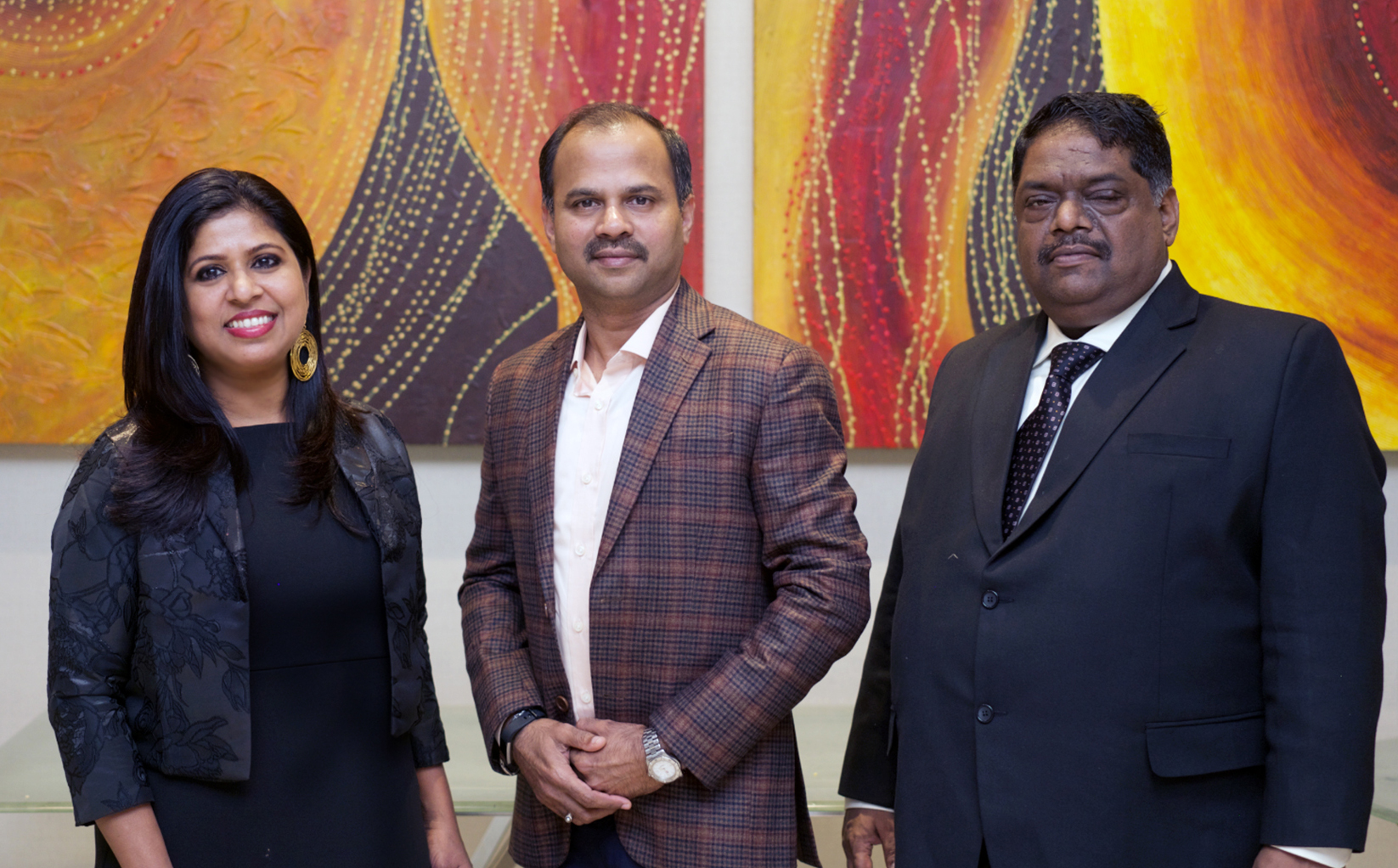
Thomas brings the design and customer side. A graduate of Chennai’s Government College of Fine Arts, she oversees artwork and digitizing operations, client relationships, service development and team mentoring. Her biography includes work in advertising and IT-enabled services, as well as founding Motif - the design place. That combination fits a business where the output must satisfy both visual expectations and a production brief.
The company describes a culture that encourages initiative, ownership and recognition of performance. Read that as its stated ambition. The more concrete evidence of its operating philosophy is in the customer-facing detail: continuity of artists, coordinators for job enquiries, and a test process that includes invoicing and service. Those commitments make the culture claim something a prospective buyer can put to work.
Buy one handoff before buying a hundred
Inscribe’s advice to a prospective customer is unusually useful: send an art file and test the process. Its FAQ says it will complete the artwork within 24 hours, then invites the buyer to assess quality, turnaround, invoicing, payment and customer service. The offer does not describe the test as free. What stands out is the breadth of the proposed evaluation.
A buyer can copy that approach. Choose a representative job, specify the required output and deadline, and judge the returned work against the brief. Then examine the surrounding transaction. Was the status easy to obtain? Did the delivery method suit the team? Inscribe offers email or FTP delivery and lists PayPal, checks and wire transfer as payment options. The mundane parts count.
The same reasoning sets limits on the fit. A repeatable production-artwork brief gives this arrangement clear tasks to perform. A buyer still deciding what the brand should mean has a different problem to solve first. Likewise, a mockup can help someone approve an appearance, but it should not be mistaken for the physical product. These are distinctions between services, not claims about a failed Inscribe project.
Print design broadens the relationship beyond decorated apparel. Inscribe lists brochures, flyers, newsletters, signage, packaging, catalogs and corporate stationery. A customer can therefore seek both artwork for merchandise and collateral to accompany a business campaign. The connection is practical: several graphic tasks can pass through one supplier, provided each has a clear brief.
Inscribe occupies a recognizable corner of the design market: outsourced production expertise for businesses that need usable artwork repeatedly. Its proposition rests on the file, the clock and the people who handle the next request. For the customer with an approved logo and an unfinished order, that is plenty to evaluate. The design has somewhere to go. Inscribe offers to prepare it for the trip.
Put a file in motion
Explore the service menu, inspect the portfolio or use the FAQ to prepare a first enquiry.