Consider the small logo on a work shirt. On a laptop, it is a picture. On fabric, it becomes a sequence of decisions: where the needle enters, which direction the thread travels, how much detail survives. The person ordering the shirt may never see those decisions. Someone still has to make them. Doodle Designs built its business around that easily overlooked interval between approving an image and being able to manufacture it.
- Prepares artwork for promotional suppliers, distributors and decorators.
- Handles digitizing, vector conversion, image editing and production support.
- Became part of Binated in 2021, with 240 artists reported at acquisition.
The picture is only the beginning
Embroidery digitizing turns an image into instructions a machine can read. Those instructions include stitch types, density, thread paths and color mapping. That makes the file a production plan. A detail that looks charming in a mockup may need simplifying before it can be sewn. Small lettering and thin lines can demand adjustments. The designer is translating between two materials: pixels and thread.
Doodle’s customers work in the promotional products trade, where another company’s identity is the merchandise’s reason for existing. Suppliers, distributors and decorators need artwork they can use across orders. Their challenge is practical: get the supplied design into a form that suits the intended process, then keep the job moving. Outsourcing that preparation gives them access to specialist production labor without building every capability internally.
Five designers. Then a deal.
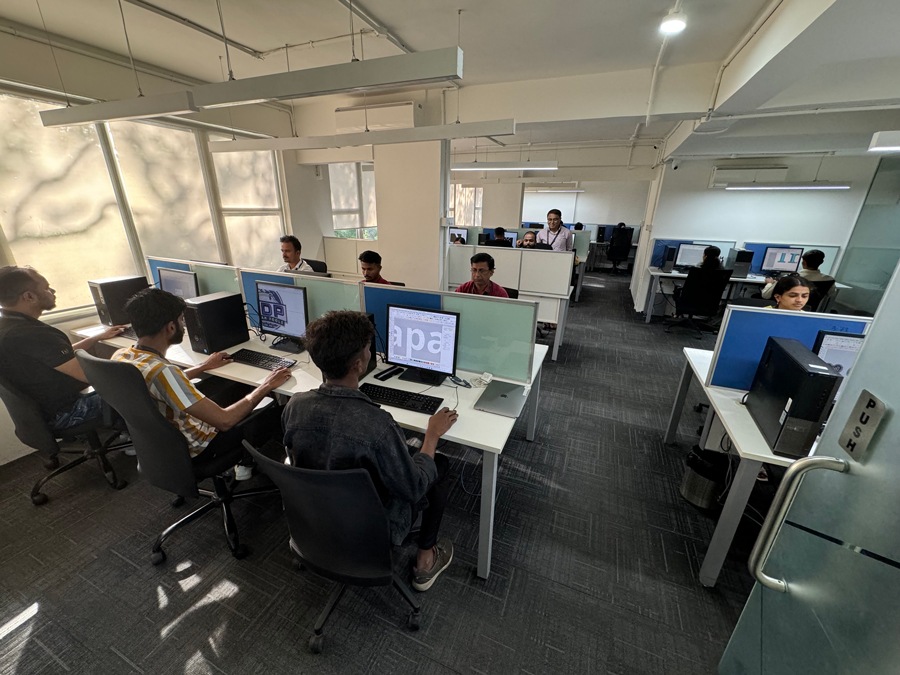
Doodle dates its operating start to April 2010, with five designers and one local customer. It is a satisfyingly modest beginning for a business whose work eventually crossed borders. The useful detail is the customer count. A service company can begin with a very narrow relationship, learning what one buyer needs before trying to reproduce that service for others.
By March 2021, the trade association PPAI described a design house of 240 graphic artists. Binated had acquired it, with operations under Binated effective April 1. The buyer already worked in technology products and back-office solutions. Bringing artwork production into that business connected two adjacent parts of a promotional order: preparing the design and managing the work around it.
The acquisition is the clearest turning point in Doodle’s public history. It places the company inside a broader services operation. Today, Binated still identifies Doodle as an owned brand. That matters when interpreting the numbers: the parent’s workforce, clients and awards describe the wider business. The 240-artist figure belongs to Doodle’s acquisition announcement, at a particular moment in 2021.
The deal also suggests a useful way to read the company’s position. Artwork is one stage in a chain of approvals, information and production. Buying more artistic capacity becomes more useful when the surrounding order information travels with it. That is an interpretation of the combination, rather than a claim about the acquisition’s financial return. It explains why a back-office business would want a design house.
The order needs a memory
Artwork production creates a second problem. Once a design has been prepared, approved and delivered, it must be findable. Doodle’s website describes a Media Locker with controlled access, alongside dConnect, its order submission and tracking system. The archive makes sense in a trade built on repeat orders. A useful file should survive the inbox that first delivered it.
Think about the alternative as a workflow problem. A buyer asks for the same mark again. An employee searches for the attachment. Someone else has a different version. The team spends time establishing which file was approved. An archive gives that question a home. Its value depends on keeping enough context with the artwork to know when reuse is appropriate.
- 01BriefArtwork + intended use
- 02PrepareRedraw or digitize
- 03ApproveProof + sample feedback
- 04RetainApproved file + context
A service business with software habits
The offering extends into vector artwork, image editing and print preparation. Binated’s design menu includes color separations, product mockups, marketing collateral and sample sew-outs. These jobs share a need for detailed production judgment. A customer may bring an existing image and a specific output requirement; the provider supplies the work needed to connect them.
The commercial logic is paid production support for other businesses. Buyers should compare the whole job: artwork preparation, revisions, proof approval and compatibility with the eventual production method. A low initial quote tells them little about the cost of a poorly specified order. The useful comparison is the effort required to reach an approved, usable result.
In a 2024 Wilcom interview, Binated founder Anish Varghese described customer-specific workflows and at least six months of training for embroidery digitization employees. He also discussed sampling feedback before full production. Those are parent-company practices, but they help explain the operating environment around Doodle. Software routes the job; trained people still make the production decisions.
“We build custom technology solutions for each client”
Anish Varghese · Binated founder · Wilcom interview, 2024
For a customer choosing between an outside provider, a freelancer and an internal artist, the distinction is partly organizational. Who receives the order? Who handles the revision? Where does the approved version live? These questions sound administrative until a deadline depends on the answer. Doodle’s combination of artwork and order support makes coordination part of what a buyer should evaluate.
Give the needle a better brief
The lesson a buyer can copy is pleasantly unglamorous. Specify the material, finished size and intended decoration method before work begins. Agree who approves the proof. Test a sample before committing the full run. Keep the approved file with the details that made it work. Each step reduces the number of assumptions passed from one person to the next.
Start that evaluation with a representative job. Use an actual production requirement, including the difficult details, and judge the returned file against the intended use. Record the changes requested during approval. That creates a concrete basis for deciding whether the provider fits the work. A portfolio can show what an artist has made; a relevant sample shows how the relationship might function.
Reuse also has limits. Changes in size, placement or product can require a fresh digitization. A screen preview cannot settle every question about a physical result. That is why sampling belongs in the buying decision. Doodle’s place in the market is clearest here: specialist artwork labor, backed by order coordination, for companies that need the picture to become something producible. The interesting test comes when another person can pick up the approved work and use it correctly. That is a demanding, measurable form of usefulness for any creative service. Eventually, the logo has to leave the screen.