Consider the business card. It is a small rectangle asked to perform an unreasonable amount of work: introduce a stranger, suggest competence, survive a pocket. For a large company, ordering thousands is routine. For someone starting alone, the same purchase once exposed an awkward industrial mismatch. The business needed very little. The printing press preferred a great deal.
The story in three points
- VistaPrint makes customized print and merchandise accessible through online design and ordering.
- Its early breakthrough combined browser design with automated aggregation of small orders.
- The useful lesson: standardize the expensive work behind a personalized product.
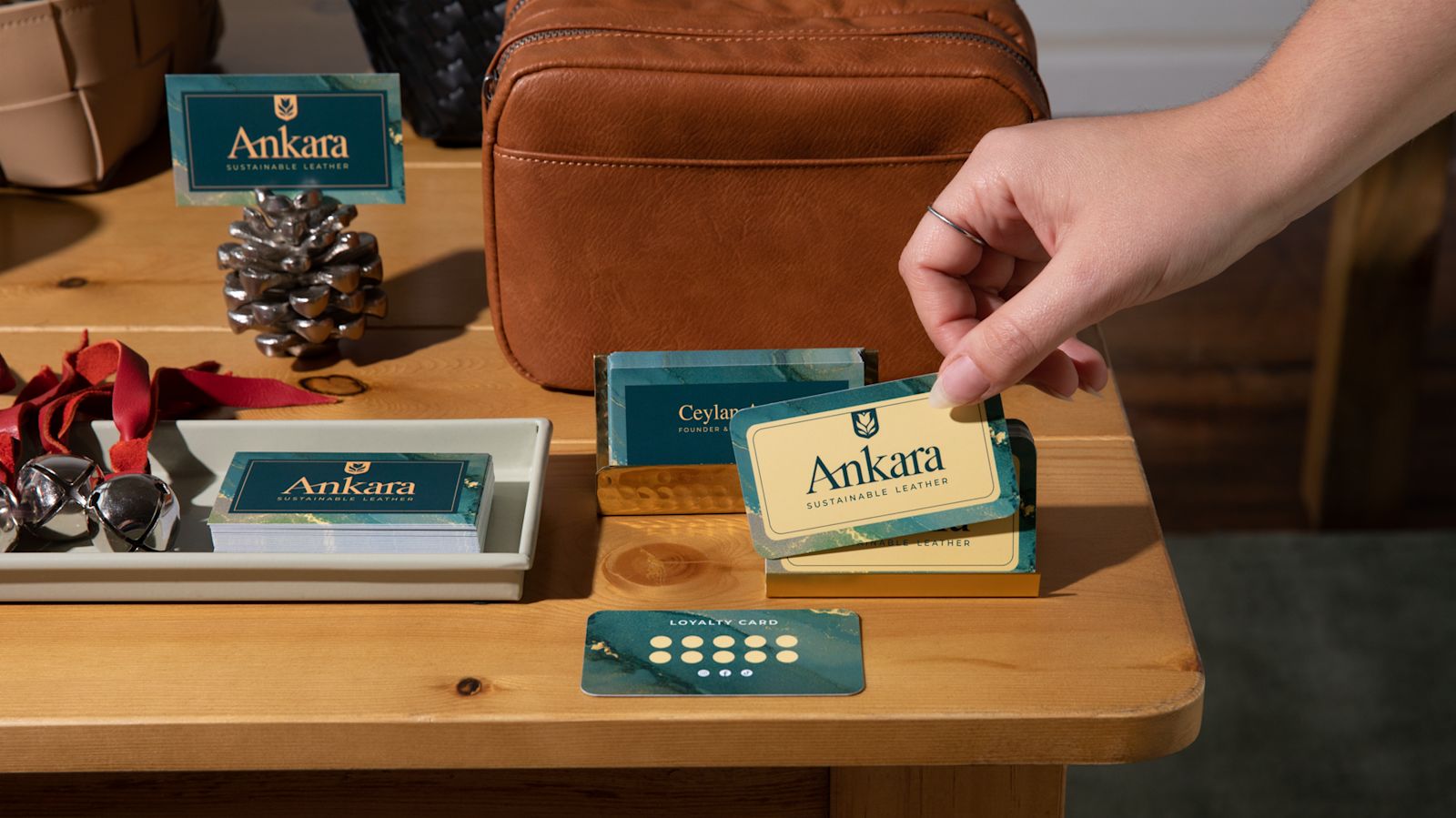
VistaPrint built its business inside that mismatch. Today its catalog stretches from cards and flyers to signs, packaging, clothing and promotional gifts. A shopkeeper can put the same identity on a window, a label and a shirt without assembling a miniature procurement department. The convenience is visible. The machinery that makes it affordable takes a closer look.
01 / THE WRONG KIND OF DELIVERYA catalog trapped in a box
Robert Keane started the original company, Bonne Impression, in Paris in 1995. The first route to customers was wonderfully specific: catalogs distributed inside boxes of Microsoft Publisher. Buyers already interested in desktop publishing looked like sensible prospects for software and printable supplies.
Then France’s general strike disrupted the November launch. In a later interview, Keane recalled: “All the catalogues were worthless, and we almost went out of business.” The company restarted in spring 1996 and became profitable. Survival, however, left another problem intact: access to customers depended heavily on somebody else’s distribution channel.
Microsoft restricted repeated marketing to its existing base, Keane said. Finding customers outside that channel cost ten times as much. By 1999, the company was planning an internet business. The lesson was expensive and precise. A route that gets you started can also set your ceiling.
02 / THE STRANGERS ON YOUR SHEETMake the setup shareable
The change involved more than replacing paper catalogs with a website. Customers could design in a browser. Software could gather many small orders into a production stream. In the early model, unrelated designs shared a press sheet and its setup costs, then became separate orders again after cutting and finishing.
Conceptual illustration of early order aggregation. Not an actual production layout.
A customer wanted individuality at the surface: a name, a color, a logo. Production needed repeatability underneath: compatible formats, predictable steps, fewer manual interventions. VistaPrint’s expertise crossed software, manufacturing and direct marketing because the customer’s small order passed through all three.
That combination took years to settle. Describing the process in 2015, Keane called it “the school of hard knocks.” After the dot-com crash, the company restructured and sold its declining catalog operation. It kept the need it understood and changed the delivery system around it.
The customer wanted a different design. The factory needed a repeatable job.
THE TENSION INSIDE MASS CUSTOMIZATION · EDITORIAL OBSERVATION
The resulting growth was substantial: the original business went from $17 million in fiscal 2002 revenue to $815 million in fiscal 2011, according to Cimpress’s history. That was before the later portfolio of acquisitions. In 2003, it opened its first production facility in the Netherlands. Owning more of production gave the digital ordering system a physical counterpart.
03 / AFFORDABLE IS EXPENSIVE TO BUILDThe bill behind the bargain
The US launch in 2000 used free business cards to attract customers. That offer was a door into a paid product business. Today, the total still depends on the item, quantity, stock, finish and delivery selected. A headline discount cannot tell a buyer what the finished order will cost.
Nor should an easy ordering screen suggest an inexpensive operation. In fiscal 2026, the VistaPrint reporting segment recorded roughly $1.93 billion in revenue. Its selected expenses below reveal the industrial and marketing commitments behind the storefront. Segment figures include related design and digital businesses; they are not a clean measure of cards sold under one brand.
Bar lengths use a common scale. Selected expenses only; this is not a total-cost breakdown.
VistaPrint serves about 11 million small businesses annually. Its parent, Cimpress, owns other printing businesses too. Keeping those boundaries straight matters: a parent company’s scale, a reporting segment’s sales and a single product’s price answer different questions.
04 / A LOGO NEEDS SOMEWHERE TO GOMove the front door closer
Some customers arrive without a design. Cimpress’s 2020 acquisition of 99designs, for a headline purchase price of $90 million subject to adjustments, added a freelance design platform. The Wix partnership announced in 2021 supplied website technology. Both addressed work surrounding the print order.
In March 2026, VistaPrint announced a generative AI Logomaker with free downloadable files. On October 20, it announced a Gemini integration for English-language users in the United States: discover products, prepare artwork, preview the result and send it to a VistaPrint cart. These are additional entrances into the same physical-product business.
There is a familiar pattern here. Browser tools removed the need to install publishing software. Human designers helped people who could not finish the artwork themselves. Conversational shopping now attempts to remove another handoff. Each approach starts with a different customer obstacle. None eliminates the need to manufacture, check and deliver a physical object.

The company’s stated remote-first culture sits alongside that physical obligation. Its careers material places technology, design, manufacturing and customer care together. That combination makes sense: a beautiful interface cannot rescue a misspelled sign, and a capable factory cannot print artwork a customer never manages to finish.
05 / WHAT TO BORROWKeep the promise. Edit the process.
For an owner, the practical attraction is coordination: design, product selection and ordering in one place. Alternatives include MOO, Canva’s print offering and local printers. The sensible comparison starts with the job. A repeatable catalog product suits an automated service; unusual materials, exacting physical proofs or an urgent local handoff may justify a printer you can visit.
Before ordering, inspect the proof, compare the complete cart and check the arrival date. Before copying the business model, ask whether enough customers need compatible work. Aggregation loses its advantage when every order demands a different process. VistaPrint’s transferable idea is to find the expensive preparation customers keep paying for separately, then make it shareable.