A business card has an unusually brief audition. It crosses a table, gets a glance and disappears into a pocket. MOO has spent two decades trying to make that encounter last a little longer. Its proposition is tactile: heavier paper, an unexpected shape, a photograph worth looking at. The contact details are still there. So is a small invitation to ask a question.
The London company sells customized print and branded objects through the web. Independent photographers can order cards; a growing business can equip its team with stationery; a corporate buyer can put a logo on notebooks or drinkware. The interesting part is how MOO got here. Its founder initially tried to teach people a new use for cards. The business improved when it gave them more freedom to decide for themselves.
The card was fine. The assignment was wrong.
Richard Moross began his entrepreneurial effort in 2004 with Pleasure Cards, a proposed business card for social life. Recipients were meant to enter a code online to retrieve more contact information. It was a physical introduction with digital homework attached. The site launched in early 2005, but orders barely moved.
According to his 2012 account in Elite Business, the operation was selling only two or three orders a day. Around £150,000 had funded the product, manufacturing tooling, software and the machinery of taking and shipping orders. People liked the cards themselves. The social-network idea was harder to sell. That distinction gave Moross something to work with.
Photo personalization changed the offer. A Flickr integration allowed users to bring their own pictures to MiniCards, making the object an expression of something they already cared about. The relaunched MOO appeared in 2006, backed by a £2.75 million investment round led by Atlas Venture with Index Ventures participating. Conventional business cards followed in 2008.
Moross later admitted that pride delayed his response to investor advice. His recollection is useful precisely because it lacks a tidy flash of genius: he had built something, attached a theory to it and taken too long to loosen his grip. The reusable lesson is to separate the part customers enjoy from the behavior the founder hopes to impose.

Fifty cards needn’t make the same point
MOO’s signature feature is Printfinity. On eligible business cards, customers can keep one side consistent and vary the reverse across the pack. A photographer can show different assignments. An illustrator can offer several drawings. A retailer can put different products into circulation without placing a separate order for each design.
The company describes the discovery behind Printfinity as a happy accident. It found that the variation was possible, named it and included it without an extra Printfinity fee. That last decision matters. A feature requiring a separate quote would invite customers to calculate whether an experiment was worth the trouble. Inclusion makes experimentation an ordinary ordering choice.
DETAILSSame front
One introduction. A whole pack of possibilities.
There are boundaries. Both sides do not independently vary through the standard feature. Product eligibility matters, especially around finishes and Luxe packaging options. Designs are also packed in upload order, mixed through the pack, rather than sorted into little piles by design. These details matter if the order is intended for several people or separate sales kits.
A sensible first experiment is small: choose a handful of images, keep the contact side readable and see which designs people pick. That is a suggested use, not a promise of better conversion. Printfinity supplies variety; the customer still supplies the work worth showing. Its 2018 Queen’s Award for Innovation recognized the technology behind that unusually approachable choice.
The price of a nicer handshake
The US catalog gives the premium positioning a concrete scale. At the time of checking, 50 Original business cards started at $23. Super and Cotton started at $33, while Luxe began at $43. Those are advertised starting prices, before shipping, tax and choices that change the order. The leap from Original to Luxe is $20 per entry pack.
The specifications explain some of that difference. Original is 16pt stock; Luxe is 32pt, built from four layers of Mohawk Superfine paper with a colored seam. Super supports options including foil and gloss treatments. The customer is buying a particular feel and finish as well as printed information.
MOO sits among online printers such as Vistaprint, premium specialists such as Jukebox Print and local commercial print shops. Its emphasis suits buyers who want short runs, visual variation and material choices. A buyer distributing enormous quantities of identical contact details should compare delivered unit costs carefully. A local printer may also be a better conversation partner for an unusual production requirement.
“Other people go for ‘faster’ and ‘cheaper’ as positives, but I’m more interested in ‘better’ and ‘different’.”Richard Moross, 2011
The practical advantage of MOO’s free sample packs is that they let the argument leave the screen. Paper thickness is difficult to judge in a browser. Feel the stock, check the finishes and decide what the encounter needs. A wedding photographer and a repair service may reasonably reach different conclusions about where to spend the extra money.
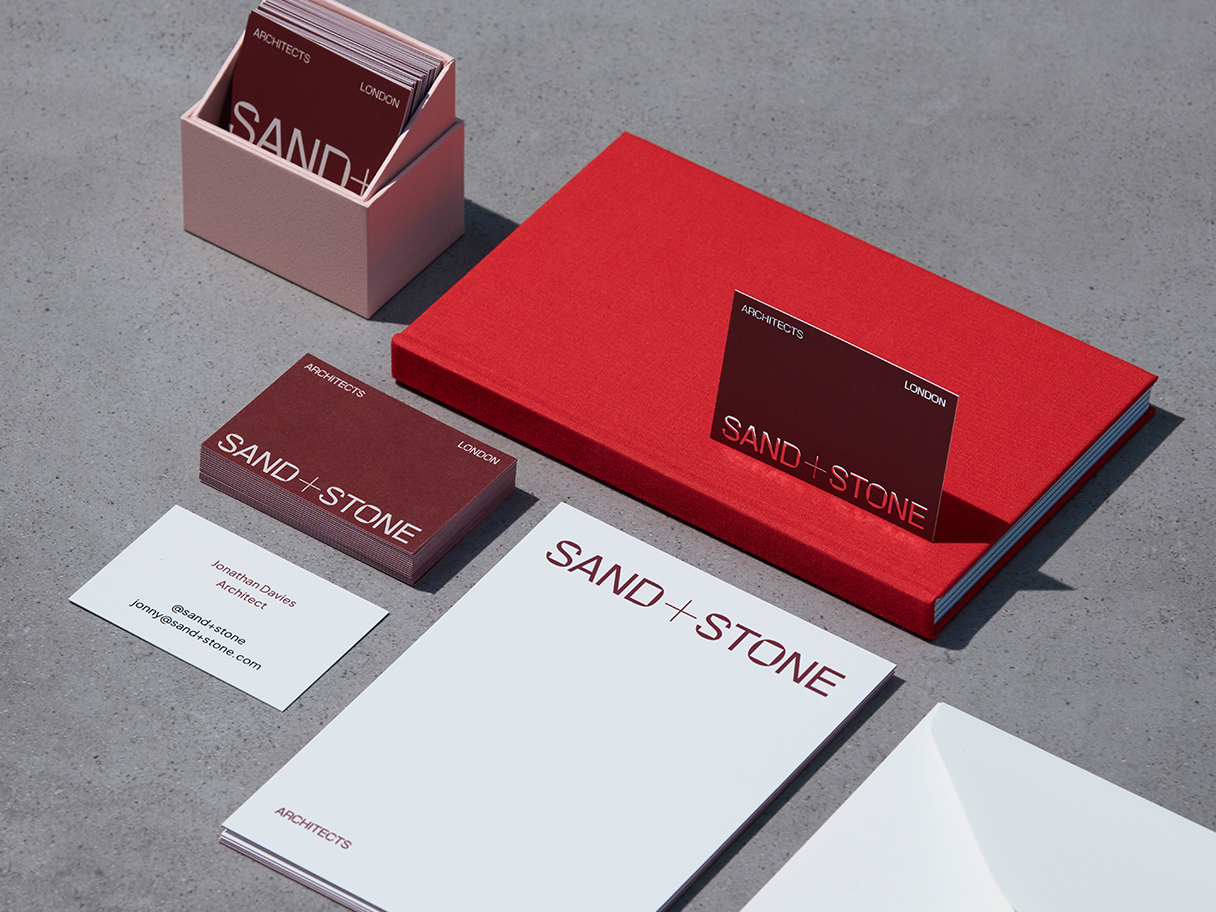
When the customer brings the whole office
Ordering one beautiful card is straightforward. Ordering for a team introduces another problem: consistency. Someone changes a job title, someone needs a fresh batch, and someone opens an old artwork file. MOO’s Business Services plans add templates, ordering tools and human support around the physical goods.
The current US plan page lists Business Boost at $149 annually, Advanced at $299 and Enterprise at $699, with a $149 Reseller option. Products are purchased separately. Higher tiers add services such as more extensive design support, flexible invoicing and, for Enterprise, help with deliveries to multiple locations and bulk freight.
Monotype’s public testimonial gives the pitch a recognizable use case: offices around the world needed access to designs that were easy to modify and order. The customer is buying fewer administrative tangles as well as stationery. For a small operation placing occasional orders, the annual fee needs to earn its keep through the support or savings actually used.
MOO’s expertise consequently spans several jobs: making customization manageable online, preparing designs for print, choosing materials and producing the finished object. That combination explains why it can appeal both to a freelancer who brings finished artwork and a marketing team that wants ongoing help.
The notebook wants a place on your desk
The catalog now extends well beyond the introductory handshake. It includes postcards, brochures, stickers, letterhead and greeting cards, alongside notebooks, planners and drinkware. These objects occupy different moments: a package arriving, a new employee starting, a client receiving a gift.
The hardcover notebook provides a particularly revealing example. Its Swiss-style binding lets it lie flat, while 16 colored pages sit in the middle of the book. Customization can include foil or a quieter debossed mark. The binding solves a practical annoyance. The colored interlude gives the owner a small reason to notice the object again.
In May 2026, MOO announced a wider partner drinkware collection, including names such as Stanley, Fellow and Owala. This broadens its role from designing its own products to selecting and customizing other brands’ objects. A company can order something recipients may already recognize, with its own identity added.
Quantities still shape the decision. MOO’s Owala collection lists minimum orders of 24, for example. A team gift and a one-off personal present are different purchases. Familiar branding on the bottle also does not guarantee that anyone needs another bottle; usefulness has to survive the excitement of choosing the color.
A bigger catalog meets a real factory
MOO reported $114.4 million in 2025 revenue and $13.8 million in adjusted EBITDA. Print accounted for approximately 96.6% of revenue; branded merchandise remained a small part. The expansion is a direction of travel, while paper still pays most of the bills.
of group revenue came from print
Print 96.6% · Merchandise 1.7% · Subscriptions 1.7%Rounded from reported revenue by product type.
The annual report also records a less photogenic development. New product demand put pressure on throughput, labor efficiency and service levels late in 2025. MOO moderated launches and increased capacity, including a third shift. Growth had reached the point where another product page could make the factory’s day harder.
This is the condition behind the apparent ease of customization. More choices must still fit a production system. For another business copying MOO’s expansion, the useful question is whether each added option can be made, checked and shipped reliably. The ordering interface cannot answer that on its own.
The finish deserves a second look
MOO describes its purpose as making great design available to everyone. Its stated culture bundles sustainability, attention to detail, human service and collaboration into six values called MAKE IT. Those are management’s commitments; the product specification is where a buyer can inspect what they mean.
The sustainability guidance makes useful distinctions. MOO offers FSC-certified papers, recycled options and cotton paper. It also says some specialty finishes, including certain foils or laminations, may not be accepted by local recycling services. Responsible sourcing and easy disposal are separate questions, even when they concern the same handsome card.
The best use of MOO begins with that kind of specificity. Choose the thing someone will use, the message they need and the quantity that makes sense. Let the image or material earn the extra attention. The company’s earliest mistake was deciding too firmly what people should do with a card. Its enduring invitation is more generous: put something of yourself on it, then hand it over.