There is a particular moment when a small company discovers it has accidentally become a purchasing department. It needs 500 flyers, twelve embroidered polos, a banner for Saturday and a website that does not look as if it was built during the first Obama administration. None of these jobs is exotic. The nuisance is that each tends to live with a different vendor, a different vocabulary and a different version of the logo.
The Print Factory, based in Ontario, California, has arranged its business around this nuisance. Its menu crosses four production worlds: offset and digital printing; large-format signs and displays; apparel printing and embroidery; and website and graphic design. The individual products are familiar. The combination is the point.
This is a company where an NCR invoice and an SEO service appear in the same catalog. It will put a design on a business card, a hoodie, a window cling or a custom event tent. Its own phrase is “one-stop print partner,” an old retail expression that becomes more interesting as the stops grow farther apart.
The product is partly coordination
Printers sell objects, but a broad printer also sells the absence of certain headaches. The customer can brief one team. Artwork can begin from one set of files. A campaign can move from handout to uniform to booth without being reintroduced from scratch at every counter. That does not make every job simple - screen printing and web design remain very different crafts - but it changes where the complexity sits. The shop absorbs more of it.
Offset & digital
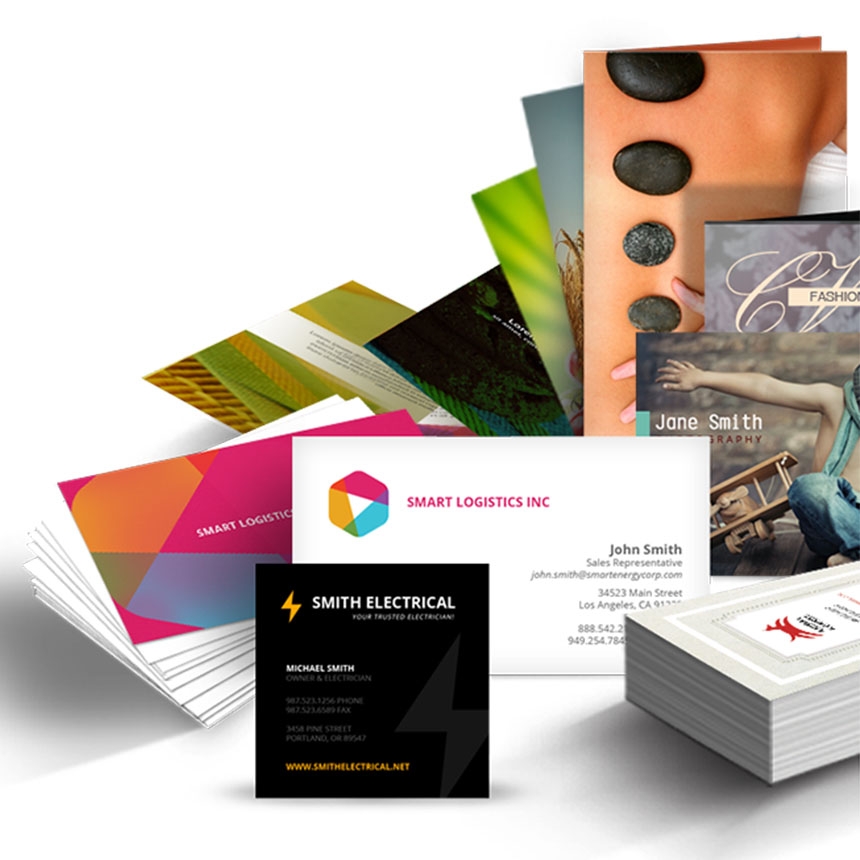
Cards, catalogs, menus, folders, tickets, stationery, postcards and short- or longer-run commercial pieces.
Large format
Banners, flags, murals, signs, wraps, backdrops, display systems and event structures.
Apparel
DTG, DTF, screen printing and embroidery across shirts, hoodies, hats, uniforms and promotional goods.
Design & web
Logos, custom websites, marketing graphics and SEO - the files and interfaces before production begins.
The customers implied by that range are not hard to picture: a restaurant refreshing menus and uniforms; a real-estate team ordering signs; an exhibitor assembling a booth; a school or club putting a design on garments; a local business trying to make its storefront, staff and website recognize one another. The company advertises both small custom runs and bulk apparel orders, which matters because the useful unit is often not “a print job.” It is a moment - an opening, an event, a campaign, a new identity.
“Our mission is simple: to bring your mission to life and get your business noticed.”The Print Factory, company website
Six machines, six different answers
The breadth also conceals an expert decision: how should the thing be made? A full-color photograph on one cotton shirt is not the same production problem as two hundred one-color team tees. Fine lettering on a cap asks something different from a soft image on a hoodie. The Print Factory lists direct-to-garment, direct-to-film, screen printing and embroidery because there is no universal winner.
Paper has its own fork in the road. Digital production is useful when speed, shorter quantities or changing information matter. Offset earns its keep on repeatable commercial work and volume. Large format changes the calculation again: viewing distance, weather, surface, installation and portability enter the brief. The expertise is less about owning a device than knowing which device should stay idle.
A catalog designed like a toolbox
The Print Factory’s product list reads less like a collection than the contents of a very organized garage: door hangers, magnets, booklets, backlit film, channel letters, dry-erase products, table throws, mugs and car wraps. This breadth is its competitive argument against two opposite alternatives. At one end sits the specialist, excellent at one medium but unable to carry the rest of a campaign. At the other sits the self-serve online marketplace, efficient when the buyer already knows the exact specification.
The Ontario shop’s pitch is consultation plus range. Its site invites direct contact rather than presenting a universal rate card. The public claim is “below retail prices,” not a fixed number. That makes the economics project-specific: quantity, material, method, finishing and turnaround all sit inside the quote. What customers are buying, then, is partly judgment before production and accountability after it.
There is a practical limit to the one-partner idea. A buyer who needs only the lowest posted price on a standardized commodity may prefer an automated online printer. A global rollout that demands audited facilities in many countries may need a distributed production network. And an unusual fabrication job may reward a narrow specialist. The bundle works best when several related pieces must agree, when the brief still needs interpretation, or when the cost of a missed handoff is larger than the savings on one line item.
The brand is the thing that repeats
The Print Factory says it has been producing printing, signs and apparel solutions since 2010. Its LinkedIn presence places the operation in Ontario and describes a company of 11 to 50 people. It is not presented as a venture-backed technology story, and there is no reason to squeeze it into one. This is a local production company making a durable wager on proximity, range and service.
The wager is easiest to understand at an event. A visitor sees the flag before the booth, the tent before the table, the shirt before the name tag and the card on the way out. Each item arrives at a different size and on a different material. To the visitor, however, they are not separate jobs. They are one impression.
That is the quiet logic behind the enormous catalog. The factory is not really organized around paper, vinyl or cotton. It is organized around repetition - the same promise made on every surface a customer can see, hold, wear or walk into.