There is a moment in every marketing campaign when the adjectives stop and the objects begin. The logo has been approved. The colors have names. Everyone likes the deck. Then somebody has to put that idea onto an eight-foot wall, an 800-page catalog, ten thousand postcards or the side of a van without making it look as though four vendors interpreted four different briefs. Integrated Marketing Services lives in that moment.
The company sits in Liverpool, New York, just outside Syracuse, in a building whose address - 4682 Crossroads Park Drive - appears in its own photography like a quiet proof of work. Inside is an unusual combination: creative agency, digital print floor, large-format shop, mail operation and fulfillment business. The company can help name and shape a brand, design its website, print its collateral, address and sort its mail, wrap its vehicles, skin its trade-show display, install its office graphics, store the leftovers and ship the next batch.
This sounds like a list until you notice the organizing idea. Integrated does not merely sell more services. It sells fewer seams.
The expensive space between the mock-up and the mailbox
Most agencies are organized around specialties. Most production vendors are, too. That division makes sense until a job moves between them. A web designer hands off to a printer. The printer asks for new files. A mailing house finds a data problem. An installer discovers the type is too small at twenty feet. Each exchange creates another proof, another schedule and another chance for the brand to drift.
Integrated's answer is not a clever piece of software. It is proximity. Terry, one of the leaders profiled on the company's site, calls the operation a “production powerhouse” and says keeping production in-house gives the team control while lowering cost and turnaround time. Ed, a partner, vice president and creative director, describes rolling up his sleeves in the large-format department. Chris is both a senior art director and a graphic installation manager. Spence's biography runs from web banners to photo retouching, 800-plus-page catalogs and signage installation.
The company does not end its creative process when a client approves the file. That is when the file begins to encounter reality.YesPress observation
The point is not that every job uses every stage. The point is that a job can cross stages without changing owners.
Mike Barker's practical empire

Michael Barker, the company's president and CEO, describes his remit without theatrics: strategic direction, financial management and the account-service function. New York corporate records date the business to January 22, 1993. Three decades later, Barker still invites prospective clients to call him directly and talk about reaching a demographic efficiently.
That last word matters. This is a company made for marketers who eventually have to count things: pieces, pallets, deadlines, square feet and postage. Its digital color systems handle quantities from one to 10,000. Its six-color large-format equipment takes material up to 96 inches wide, then laminates, mounts, cuts and routes it. Its mail team handles millions of pieces each year, including barcoding, automation, presorting, inserting and verified drop shipments.
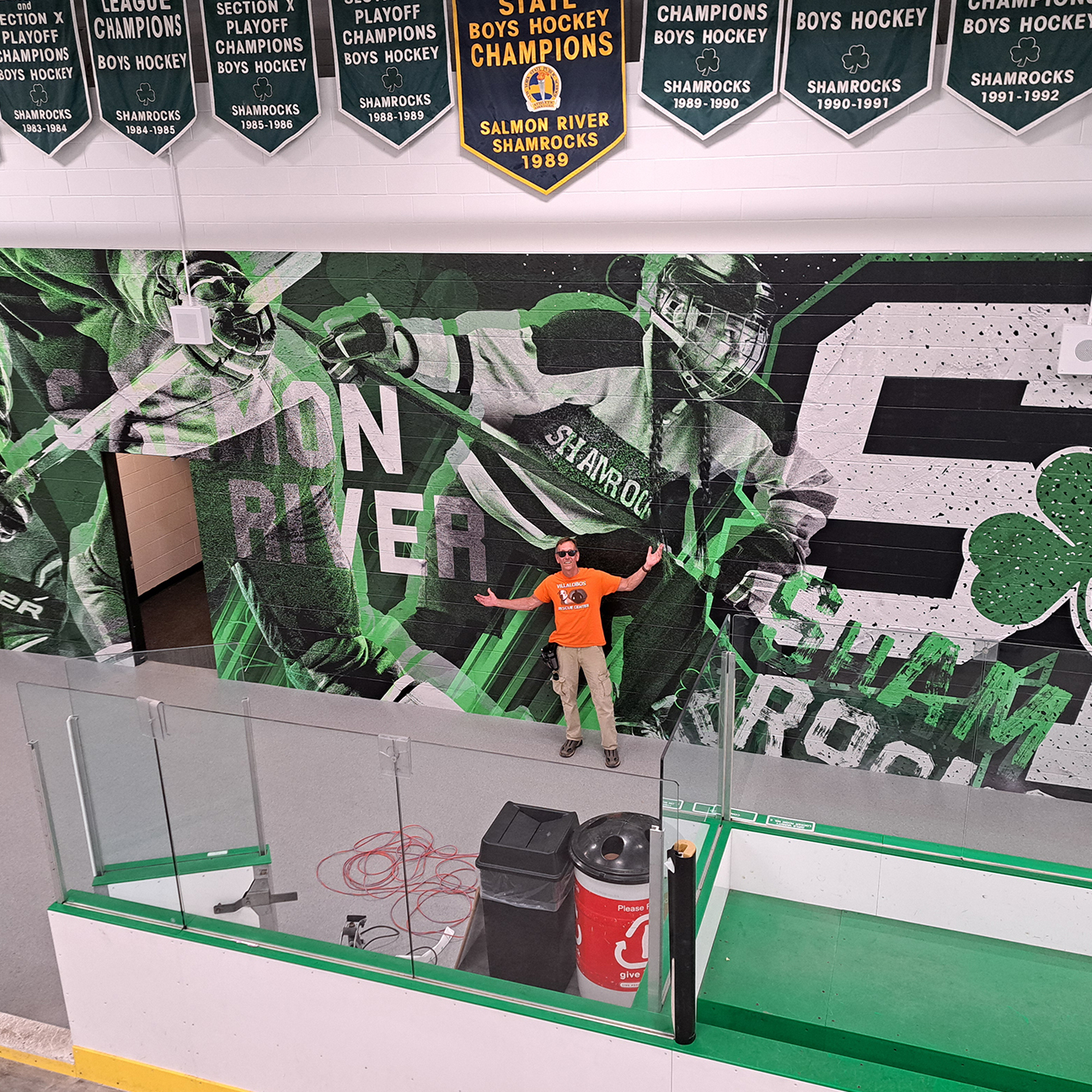
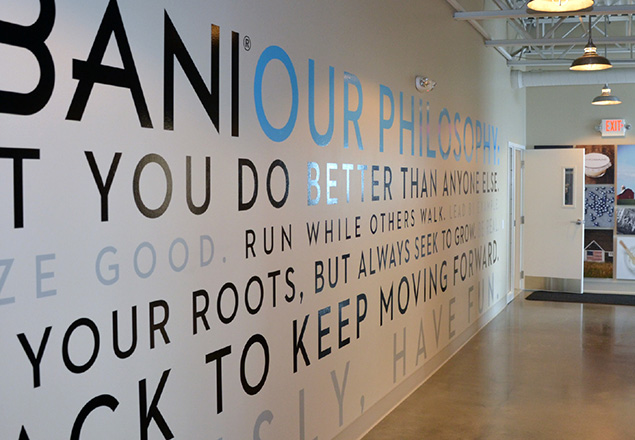
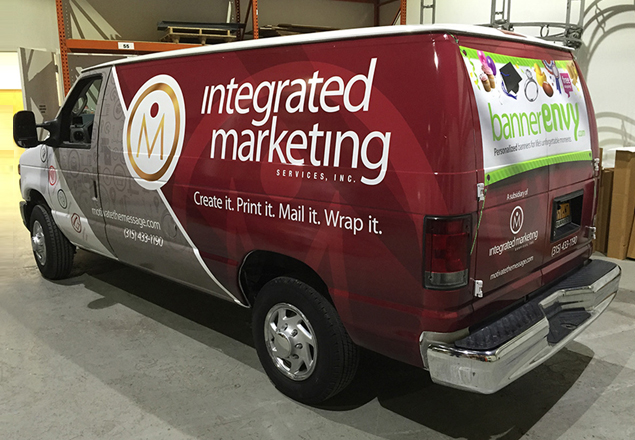
The clients visible in the portfolio suggest the range this machinery serves. There are environmental graphics associated with Chobani, Le Moyne College, SUNY Cortland, SUNY Oswego, Byrne Dairy, Crunch Fitness and the Oncenter. There are fleet and trade-show examples associated with National Grid and others. These are not abstract “engagements.” They are walls, vehicles, displays and rooms - marketing that can be scratched, folded, driven and stood beside.
What a customer is really buying
The obvious answer is output. The better answer is continuity. A regional company can ask one team to establish an identity, make the sales materials, personalize the mailing, prepare the event display and convert a blank office into a branded environment. A national organization can use the same production chain for a repeatable program. The business model is project and program work rather than software subscriptions: clients pay for creative labor, production, installation, mailing and fulfillment in the combinations their campaign requires.
The first thing to fail in a fragmented version of this work is usually not the big idea. It is the handoff - an incorrect file, a missed trim, a late list, an installation constraint discovered after design. Integrated's model moves those problems closer to the people who can change the work. That does not make mistakes impossible. It makes the feedback loop shorter.
A playbook worth stealing
The useful lesson is not to buy a 96-inch printer. It is to map the complete journey of an idea before approving its first expression. Ask where the smallest type will appear. Ask who owns the mailing data. Ask how the trade-show structure ships, where it sleeps between events and whether the same color can be reproduced on coated paper and adhesive vinyl. Put the installer in the review while the design can still move.
That is the company's most copyable habit: treat production knowledge as creative input. A campaign becomes more coherent when the people who understand barcodes, substrates, routing, mounting and inventory are invited in before the pretty PDF is final.
Where the model earns its keep
Multi-format campaigns, physical rollouts, direct mail, branded interiors, fleets, events and recurring programs that require storage or fulfillment.
Where a specialist may fit better
A single narrow deliverable, global media buying at vast scale, or work whose center of gravity is television production, software or a specialist research discipline.
This distinction keeps the company in its proper market. Integrated Marketing Services is not trying to be every kind of agency. It is most persuasive where marketing has mass and consequence - where a message must leave the screen, survive production and arrive somewhere intact. Its competition is not only the design shop or commercial printer down the road. It is the client's own pile of vendors, email threads and handoffs.
A glamorous agency might show you the campaign launch. Integrated's portfolio shows the wall after the lift has gone home. That is a quieter picture of marketing, and a more honest one. The idea worked because somebody made it fit.