An avocado is an awkward advertising medium. It has no interest in your launch calendar. Send it too early and the recipient waits; send it too late and the joke has gone brown. In 2017, a mortgage company decided this was a problem worth having. SoFi offered qualifying July homebuyers a month’s supply of avocado toast. Somebody had to make breakfast arrive.
The offer answered a peculiarly specific cultural argument: that young people’s brunch habits were keeping them out of the housing market. SoFi turned the accusation into a housewarming present. Buyers could choose regular or gluten-free bread; ingredients would arrive in three shipments. The homeowner supplied the toaster. The company supplied the punchline.
USA Marketing, the Oakland agency that includes the project in its portfolio, says it sourced ingredients on Mondays for fresh Friday deliveries. That modest scheduling detail is the most revealing part of the story. A public-relations idea had become a recurring grocery-and-shipping assignment. Here was a brand promise you could check by opening a box.

A brief with an expiration date
USA Marketing works in the space between an approved idea and a recipient’s hands. Its offering covers promotional merchandise, online company stores, sports activations and fulfillment. That puts creative decisions next to unusually concrete questions. How many boxes? Which addresses? Who approves the artwork? What day must everything arrive?
The agency’s contact form asks for both a need date and an “in-hands date.” It is a small distinction with a useful implication. Finishing an item and delivering an experience are separate jobs. A buyer who concentrates entirely on what a gift looks like can overlook the journey that determines whether it is useful.
Consider the avocado again. Its appeal came from the situation of the person receiving it: a new homeowner who had heard the joke about millennials and brunch. Replace that audience with an unrelated mailing list and much of the meaning disappears. The transferable idea is specificity. Begin with something the recipient recognizes, then choose an object that makes the reference tangible.
The first inning is a deadline, too
A 2019 account from Pennsylvania College of Technology catches USA Marketing doing a different kind of delivery. At the Little League Classic in Williamsport, 15 Penn College students and eight from Lycoming College helped distribute thundersticks and mini drums. Their assignment was to get the noisemakers into the crowd during the first inning.
Two students and a USA Marketing staff member covered each section. Materials differed by section, with colors tied to the participating teams and the event. The work demanded preparation, but also restraint: handing something to a spectator should not wreck the experience the giveaway is meant to improve.
“We spent hours getting prepared for a 20-minute distribution.”
John J. Shadle, student participant
Penn College’s 2019 event report
That sentence explains the economics of attention at a live event. The audience gets a short, visible moment; the crew absorbs the preparation. From the stands, a noisemaker is a noisemaker. From the organizer’s position, it is a quantity to count, a section to assign and a handoff to rehearse.
Editorial framework: work backward from the recipient.
The merchandise is only part of the purchase
The familiar side of USA Marketing’s business is easy to browse: apparel, bags, drinkware, writing instruments and technology accessories. Its shop also organizes products around occasions such as employee recognition and holiday giving. A buyer can start with an item. The broader service offering lets a buyer start with a problem.
For an employee program, that might mean sourcing a welcome gift, assembling the package and sending it to multiple addresses. For a fan program, it could mean an ordering portal. The agency offers managed company stores and reward-redemption programs, alongside inventory management, warehousing and shipping. It identifies fulfillment hubs in Dallas and on the West Coast.
Commercially, this is a business-to-business merchandise and service operation. The published process moves from a conversation to concepts and pricing, then into artwork approvals, supplier coordination, production checks and delivery. That sequence matters to the buyer: the decision is about a proposed project, with a scope to approve, rather than an abstract promise of better branding.
The sensible budget question is therefore the cost of the completed handoff. Ask a prospective provider to spell out the item, customization, packaging, assembly, storage and delivery in its proposal. This is a purchasing checklist, not a claim about USA Marketing’s fee schedule. It makes competing quotes easier to compare and keeps the inexpensive object from distracting everyone from the expensive journey.
A box can mark the occasion
Its portfolio gives the service a more human scale. USA Marketing describes Stanford admission kits sent annually to more than 2,000 students across 70 countries, and a Gilead employee launch project involving 5,000 kits. The latter paired a Roku player and blanket with custom packaging. Both assignments put an object beside a milestone.
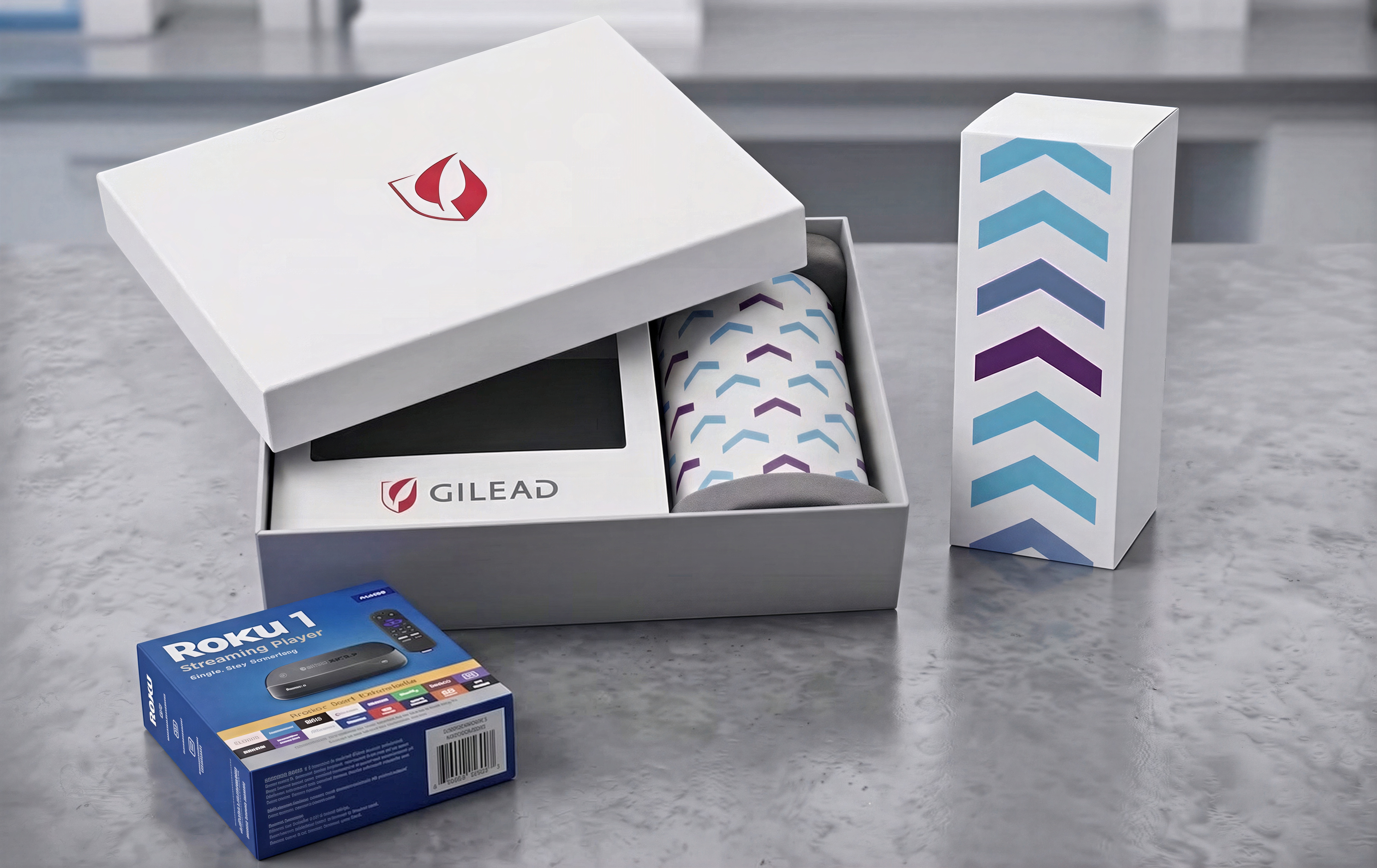
There is a useful distinction between choosing a gift people like and choosing one that belongs to an occasion. The second task forces better questions. What has just happened? What does the recipient need to do next? What would make the package feel intended for them? Those questions help explain why marketing departments, employee-program teams and universities can end up buying similar operational services.
The appeal of having one person to call
Founded in 1996, USA Marketing describes its approach as giving clients the service its own team would expect to receive. Its stated advantages include in-house creative work, a supplier network and a dedicated project manager. It also offers continued storage of brand assets and inventory after a project ends. The proposition is continuity: someone remembers the artwork, the stock and the last conversation.
This places it among promotional distributors and service agencies, with an added emphasis on execution in venues and across delivery networks. A catalog seller can be a sensible choice for a straightforward repeat order. A local decorator may suit a small apparel run. USA Marketing’s broader proposition becomes more relevant when a buyer wants connected responsibility for several moving parts.
Coordination still cannot manufacture a reason to care. An unwanted gift remains unwanted when it arrives on time. A stadium giveaway needs room in the event plan; a personalized program needs usable recipient information. Those are practical conditions for the approach, and they belong in the brief before anyone starts selecting colors.
The useful habit to copy is to picture the final handoff first. A fan reaches for a drum. A student opens an admission package. A new homeowner finds breakfast at the door. Work backward from that scene, and the creative conversation acquires dates, quantities and responsibilities. Even the avocado gets a schedule.
Follow the work
Explore USA Marketing, its project portfolio, merchandise shop and LinkedIn profile.
Read SoFi’s original avocado-toast announcement and Penn College’s account from the stands.