At Valero, the trouble with the T-shirts was the spreadsheet. Thirty-two corporate sites needed merchandise for a United Way campaign. Colors, quantities, sizes and dates varied. One employee at headquarters was trying to keep the orders straight. It was a small administrative task that had quietly become a large one.
Boundless proposed a trial of its GroupBuy system. Sites entered their own requests; purchasing was consolidated. Valero was initially skeptical about coordinating everything at once. After one campaign, it estimated savings of about $8,000. The company then used the approach again.
- Creative merchandise, company stores and delivery in one service.
- GroupBuy pools demand; OnDemand makes products after purchase.
- The best fit: teams managing more complexity than a shopping cart can handle.
01 / The object is only the beginning
A promotional product looks simple because most of its complications are invisible. Somebody must choose it, approve the artwork, find a supplier, arrange decoration, collect addresses and make sure the boxes arrive. Boundless sells help with that entire chain. Its buyers are marketing, HR and procurement teams; the people opening the boxes may be employees, customers, conference guests or fans.
The idea goes back to Jason Black and Henrik Johansson, who founded the Austin company in 2005. Black brought promotional industry experience. Johansson brought a background in consulting and technology businesses. In a later founder interview, Johansson described their starting observation: the industry lagged in its use of technology. They built software and recruited a sales team, then raised venture backing in 2006.
That pairing still explains the business. A Brand Consultant helps shape the campaign; shared teams support design, sourcing, administration and technology. Consultants keep control of client relationships. Boundless even has an employee-defined word for the collaboration it wants: “Contribucate.” Contribute plus communicate. A little ungainly, perhaps, but admirably specific.
02 / First, decide how to buy
GroupBuy lets departments join the same purchasing campaign and benefit from larger quantities. OnDemand tackles a different problem: uncertainty. It offers made-to-order products without inventory commitments or minimum quantities on eligible items. One approach combines demand; the other waits for demand to arrive.
An OrderMyGear partner case study shows why the distinction matters. An unnamed client had warehousing and inventory difficulties. Boundless proposed pop-up stores, then expanded the experiment into quarterly seasonal openings alongside a permanent store. The report says the pop-ups generated more than 150% higher sales than the year-round stores. That is one client’s result, but the operational lesson travels: test an assortment before committing to shelves full of it.
Behind the storefront, Boundless offers kitting, packaging, storage and distribution, including international logistics. Its technology supports approval workflows and connections to business systems. Those details matter when a welcome gift has to pass through procurement and reach a new hire in another country. The recipient sees a box. The buyer needs the machinery behind it to behave.
03 / A billboard with sleeves
Then there is the fun part. Wingstop wanted a digital-first promotion for its boneless wings. Working with Boundless, it sent 1,000 white sweatshirts to influencers and fans. The garments announced their own purpose with #ThisIsAnAdForWingstop. Advertising had acquired a hood.
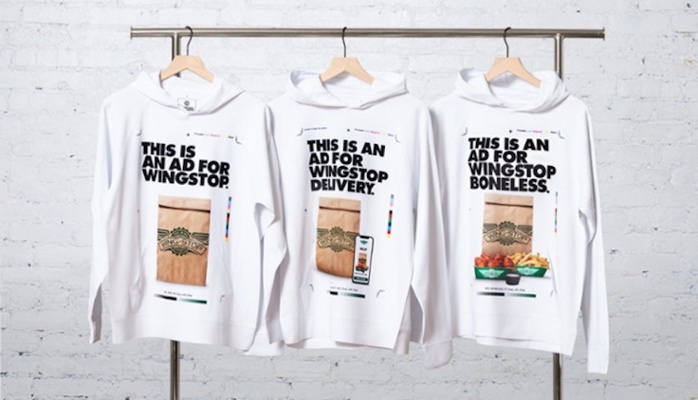
Boundless reports 22 earned media placements and more than 275 million online impressions. Those figures describe exposure, rather than incremental chicken sales. Still, the mechanism is clear: give an interested audience something conspicuous enough to share, then connect the physical object to a recognizable online campaign.
AMD offers a quieter example. Its fan store began in 2017 with three items and grew to more than 50, including apparel and gaming chairs. Merchandise here serves people who already want an affiliation. The sensible move was to begin with a small range and let the store develop.
04 / Sometimes the answer is a turkey
Wild Turkey wanted to revive the collectible ceramic decanters associated with its past. Earlier attempts had disappointed. Boundless worked through artist renderings, custom molds, hand painting and retail packaging to produce a bird-shaped keepsake.
“We had attempted this campaign prior to partnering with Boundless and it had always fallen flat.”
Sarah Grabo · Wild Turkey visitor center assistant manager
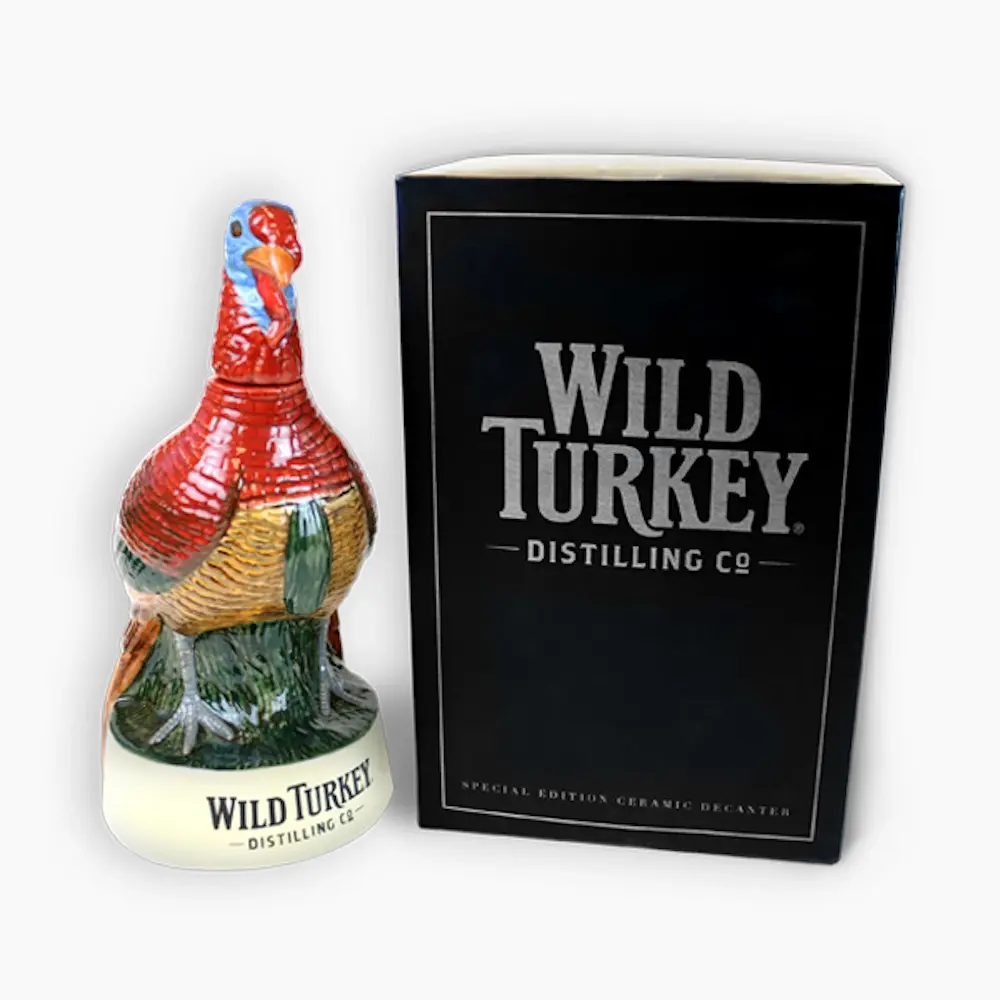
That project illustrates Boundless’s place between a creative agency and a merchandise distributor. A self-service print shop suits a finished design on a standard item. A custom ceramic collectible demands product development and specialist suppliers. Companies choosing between those options should price the work they need, including packaging and fulfillment, as well as the object.
The service relationship matters as much as the catalog. A marketing team can bring a concept that needs developing; a procurement team can bring a buying process that needs simplifying. Boundless’s pitch joins those conversations. That makes it a plausible choice for recurring, complicated programs, while a straightforward one-off order may need much less coordination.
05 / More work around the merchandise
Responsible sourcing adds another decision. Boundless’s proprietary PRISM framework assesses process, materials and broader impact using certifications and verifiable classifications. It gives buyers a structured way to compare products against their priorities. The useful question remains concrete: what evidence supports this particular selection?
The company has also bought capabilities. After Zazzle acquired Boundless in 2014, a Point Rider Capital affiliate and Treaty Oak Equity bought it in 2021. Boundless acquired Touchstone in 2024, adding creative services, fulfillment and enterprise systems expertise. In April 2026, it added wet paint group’s on-site gifting and activation work.
Expansion has a commercial backdrop. ASI reported $149 million in 2025 North American promotional products revenue, up from $148 million in 2024. In September 2026, Boundless appointed leaders for DTC commerce and print. The direction is toward more services surrounding each product, in a business whose recent reported revenue growth was modest.
North American promotional products revenue · ASI, July 2026
Axis starts at zero. These figures do not measure all global business.
For a buyer, the practical starting point is a brief: audience, desired response, deadline, quantity and delivery plan. Shared buying needs compatible products and coordinated timing. Made-to-order merchandise needs production time. A sweatshirt campaign needs people willing to wear the message. Get those conditions right, and the logo has a chance to do some work.
Follow the work
Campaigns, collections and the people behind the products.