CEO & Founder · THE/STUDIO
Joseph Heller
He spent a decade on the factory floors of China learning where supply chains break. Then he built one that doesn't.
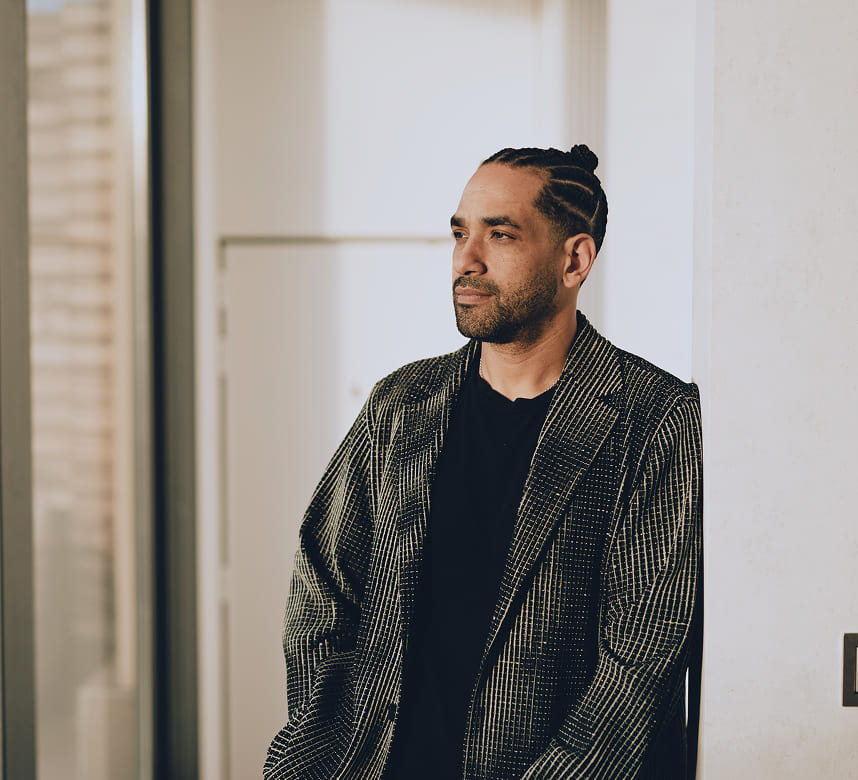
Runs a five-country company from a laptop. The desk is optional.
He spent a decade on the factory floors of China learning where supply chains break. Then he built one that doesn't.
Order one enamel pin from THE/STUDIO and somewhere a vetted factory spins up for a run that, twenty years ago, no factory would have touched. That is the whole idea. Joseph Heller built a platform where a one-person brand gets the same access to the world's factories that a multinational does - same vetting, same craftsmanship, minus the minimum-order math that used to lock everyone but the giants out.
Today THE/STUDIO runs two front doors. TheStudio.com lets anyone design and make custom products - patches, pins, apparel, medals, packaging, coins - without owning a sketchbook or a sourcing rolodex. SuppliedShop.com lets small businesses buy wholesale straight from factories with no minimums at all. Both rest on the same conviction: the supply chain is the last great gatekeeper of who gets to build a business, and Heller wants the gate open.
He is not a man who arrived at manufacturing by accident. He arrived by candy, by kiosks, by a failed dotcom startup, by a one-way ticket to China, and by roughly 150 investors telling him no. The order in which those happened matters less than the pattern they trace: find the place where access is hoarded, then pry it loose.
Economic equality requires equal ability to create wealth.Joseph Heller, on why he started with the supply chain
The dotcom bust ended his first real venture - an online artist marketplace he'd raised angel money for at UC Berkeley - and sent him back to school. To stock a few mall kiosks he started importing wholesale inventory from China. The kiosks were small. China was not. He went to see it, taught English to pay the bills, and stayed.
By 2006 he was running Heller Sourcing, connecting Western brands to Chinese factories for promotional and fashion accessories, and moving luxury food the other way - from the US and Europe into China. Standing inside those factories for years, he saw what the brochures hide: traditional supply chains are slow, opaque, and built for whoever orders by the container. Everyone else gets a polite no.
Are you leading the company as Steve Jobs, where you know what the customer wants - or as Jeff Bezos?On the only question a founder really has to answer
Hold the mission, hold the cap table. He ran lean long before the Series A landed, and treats capital as a tool for the vision, not a substitute for it.
Modernize the D2C supply chain so a one-person brand gets factory access on the same terms a multinational does. Low MOQs, vetted partners, real craftsmanship.
A globally distributed team across the US, China, the Philippines, Romania, Nigeria and Ghana - with near gender parity in management - run remote-first, on purpose.
A FedEx delay was about to wreck a customer's store opening. THE/STUDIO reshipped the entire order overnight on its own dime, tucked in a handwritten apology, and then used company money to buy products from her store. She became a lifelong advocate who still promotes them. Heller's accounting on this is blunt and intentional.
That instinct traces back to a harder lesson. In his twenties he managed by yelling - he'll tell you so himself - echoing how his father communicated. A company president two decades his senior showed him you could lead with heart and earn loyalty instead of fear. Reading Felix Dennis sealed four rules: treat staff well, delegate, don't chase money for its own sake, and play to your own entrepreneurial archetype. He stopped trying to be every role and started being the one he was good at - vision, motivation, the hard calls.
We will sometimes lose money, short-term, as a cost of excellence.On customer service that pays back over years, not days
Undercut the cafeteria on candy. The suspension didn't stick; the lesson did.
Came to buy kiosk inventory. Stayed to teach English and build an import/export business.
THE/STUDIO grew out of custom patches and pins before becoming a full custom-manufacturing platform.
Runs the company remotely - literally from a laptop, across five-plus time zones.
Felix Dennis gave him four rules he still runs the company by.
Eighteen months. 150-plus 'no's. One 'yes' worth $11M.
The long game isn't patches or pins or even one platform. It's democratizing business itself - giving small businesses and underserved communities equal access to the factories, tools and supply chains that build generational wealth. Heller started with manufacturing because that's where he could see the gate most clearly. He'd like to be there when it comes off the hinges.