There was a peculiar advantage to Stadium’s office-lunch business. A group could order from different restaurants and receive everything together. Nobody had to persuade the sushi enthusiast to become a pizza enthusiast. The company coordinated the transaction; the eaters kept their preferences. Then, in March 2020, the offices emptied. The preferences remained. The destination vanished.
- Stadium turns recognition budgets into gifts employees choose themselves.
- Its lunch-to-snacks pivot reused existing technology and customer relationships.
- Today it combines shops, swag, snacks, recognition, and global fulfillment.
- The 2026 Confetti acquisition adds something a parcel cannot deliver: time together.
The menu survived the office
The first thing to fail was the occasion. Stadium’s New York lunch service depended on people gathering at work. Office shutdowns removed that gathering almost overnight. Its ordering machinery could still coordinate many individual choices, but the meal at the end of the machinery no longer made sense.
Shaunak Amin and his colleagues had a clue hiding in the old orders. In the company’s account of the pivot, 70% of its customer base was already buying two or more snacks and beverages alongside meals. Snacks could travel to a home. A restaurant lunch had a much narrower appointment with hunger.
Snackmagic emerged from that observation. An employer could set a budget; employees could build their own boxes. Existing customers supplied an initial audience, while Stadium’s back-end systems supplied part of the infrastructure. The change was substantial, but the organizing principle was familiar: coordinate the choices without making everyone choose the same thing.
The company reported reaching a $20 million annual revenue run rate within eight months and profitability in December 2020. That run rate described the pace of sales, rather than a full year’s collected revenue. Craft Ventures led the subsequent $15 million Series A, with Luxor Capital participating. The announced uses included warehouse capacity, logistics, and new product categories.
A gift with a little less guesswork
Corporate gifting contains an agreeable fiction: the sender knows what everyone likes. Usually the sender knows a budget, a deadline, and the unsettling number of names on a spreadsheet. Stadium makes that knowledge sufficient. A buyer can establish a shop, give recipients points or spending power, and let them select the reward.
Snackmagic applies this to treats. Swagmagic applies it to branded merchandise, alongside bulk ordering, storage, inventory management, and kits. Stadium’s recognition tools add peer praise, manager awards, and milestone programs. A company can retain control of branding and expenditure while surrendering the rather hopeless ambition of choosing every employee’s favorite object.
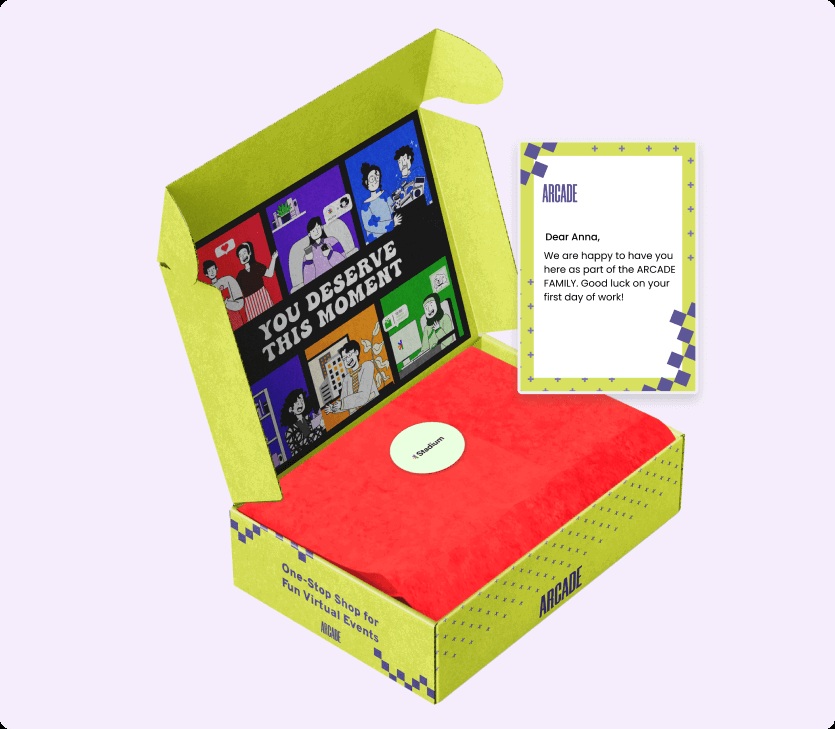
The audience extends beyond HR. Sales teams can thank clients; marketers can run gifting campaigns; event organizers can reward attendees. Recognition and commerce meet here: a praise message can lead to something someone actually redeems, with fulfillment attached to the transaction.
The work behind the thank-you
The more revealing customer story concerns an administrator’s workload. In Stadium’s published Keyfactor case study, the company’s previous swag vendor shipped internationally without local fulfillment. That brought inventory management, expensive shipping, and returned packages. Appreciation had acquired a second career in operations.
Keyfactor adopted shops, kits, automated milestones, and a recognition currency called KEYkudos. Its UKG integration triggers a redemption email when a new employee enters the HR system. The case study reports more than 50 shops, more than 20 automations, and recipients in at least nine countries. One month produced 1,000 posts of praise.
“We love being able to offer versatility for our employees.”
Megan Caldwell, Keyfactor
Those are vendor-published results, and activity counts cannot establish improved retention. They do show the kind of problem Stadium tackles: several recurring tasks, formerly scattered among people and vendors, becoming a connected workflow. The recipient chooses; the administrator stops chasing every detail.
- 01 / SetBudget, branding, occasion
- 02 / ChooseRecipient selects a reward
- 03 / DeliverFulfillment handles the parcel
That combination places Stadium between recognition software, promotional merchandise, and business gifting. Bonusly overlaps in recognition and rewards. Sendoso overlaps in gifting and direct mail. Stadium’s proposition is the breadth of those connected jobs, particularly for distributed teams. Recipient choice alone is hardly a monopoly; the operational combination is the more interesting claim.
What the ribbon costs
There are two purchases hiding inside a corporate gift: the thing being given and the machinery that makes giving manageable. Stadium monetizes both commerce and access to platform capabilities. Its current pricing page offers Shops, Swag, Engagement, and Enterprise passes, with prices obtained through sales.
Its help center describes a 15% service fee on most trial or legacy Basic gifting orders, waived for paid passes; bulk swag purchases are among the exceptions. Snackmagic’s published starting budget is $45 per recipient. Its FAQ lists free US shipping and $9 shipping per non-US box. Branding and other additions can raise the bill.
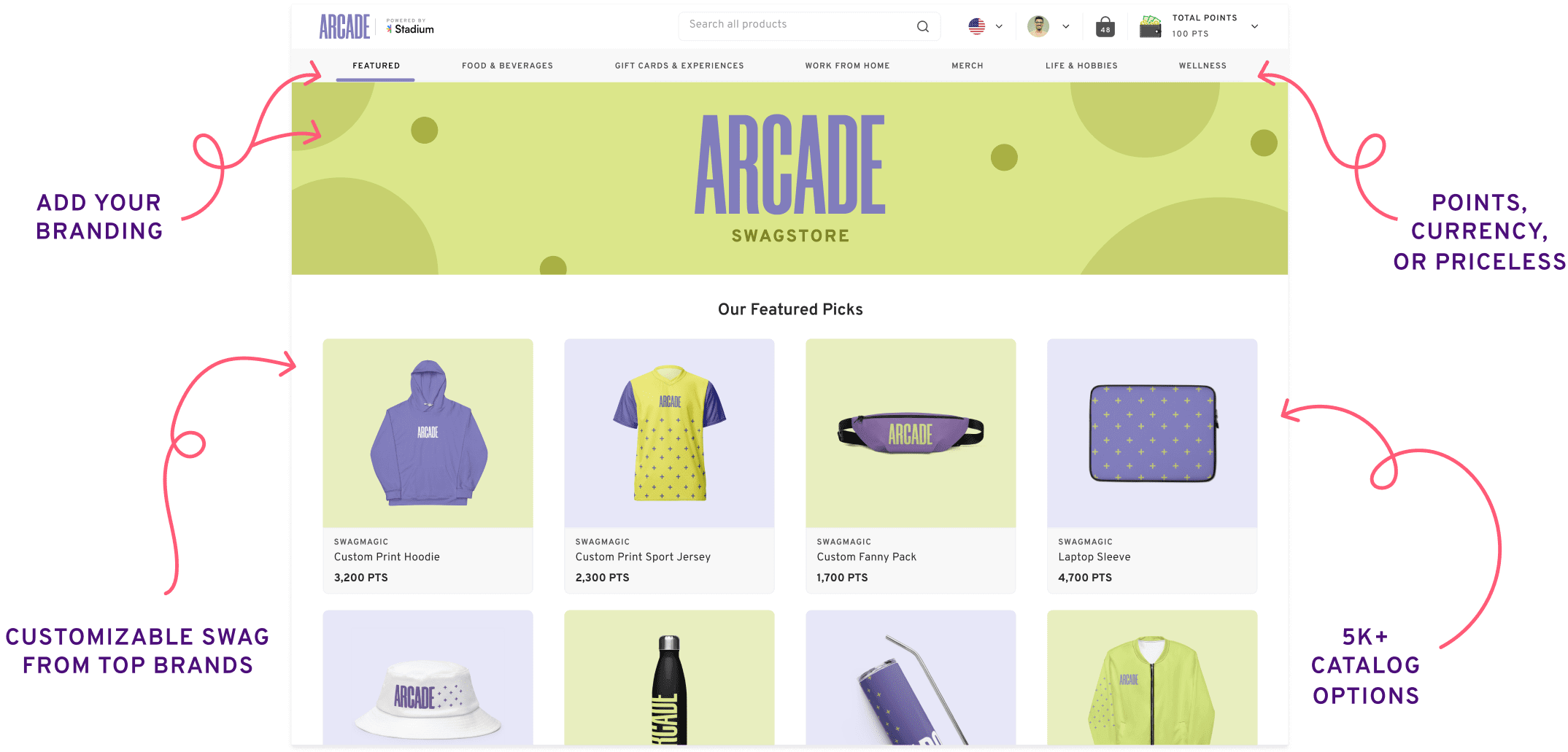
The practical lesson is to price the whole workflow. A small domestic thank-you may need little infrastructure. A recurring international program has different needs. Local catalogs, redemption participation, delivery timing, and plan features deserve checking before launch. A reward budget also cannot repair weak management: purchasing the system does not supply the reason to praise someone.
The next thing cannot fit in a box
On September 16, 2026, Stadium announced its acquisition of Confetti, a platform for virtual and hybrid team experiences. The companies said existing brands and customer arrangements would continue. The move extends Stadium from objects people receive to activities people share, adding hosts and event formats to a business accustomed to packages.
For another founder, the useful thing to copy is the inspection of existing behavior. Stadium found a new business in what customers already added to their lunch orders. For a People team, the lesson is equally modest: give employees choice, automate the repetitive parts, and keep the human occasion specific. Even an elegantly delivered gift needs someone who means it.
Explore Stadium
Website · Platform pricing · Snackmagic pricing · LinkedIn · X · Facebook · Snackmagic Instagram
Confetti announcement · Snackmagic blog · Acquisition news
Watch the people behind the parcelsThe pandemic pivot · Shaunak Amin on raising the Series A · Life at Stadium