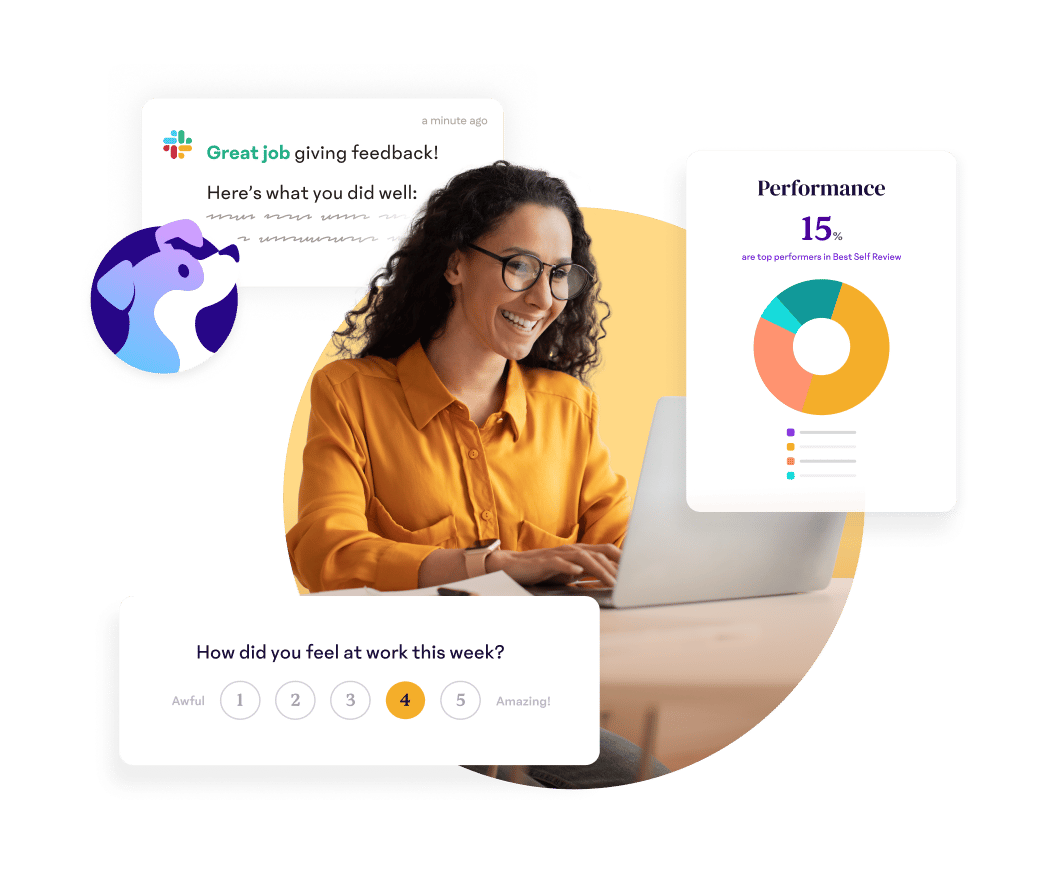
Why 15Five? Because most workplaces discover trouble on a delay. A manager learns that someone has been blocked for six weeks when the deadline slips. Human resources spots a morale problem when the exit interview lands. The performance review asks for examples from February when everybody can barely remember Tuesday. 15Five was built around a smaller, saner loop: an employee spends roughly fifteen minutes answering a few questions; a manager spends about five minutes reading the answers. Wins, obstacles, priorities, goals, and a pulse score show up while somebody can still do something about them.
That habit remains the cleanest reason to buy the product. It gives managers a prompt, employees a regular opening, and HR a stream of signals richer than one giant survey. The modern 15Five, however, is much larger than its name. It now folds in one-on-one agendas, 360-degree reviews, engagement surveys, OKRs, recognition, career plans, performance-improvement plans, succession planning, compensation workflows, coaching, and AI analysis. This is no longer a charming status-report app. It is a performance-management platform with ambitions to sit between the HRIS, the manager, and the work itself.
Who gets the most from it?
The sweet spot is a people team at a company big enough to have managerial inconsistency and small enough to care about repairing it. 15Five describes its usual customer as a mid-market or enterprise organization with roughly 100 to 1,000-plus employees. That sounds right. At that scale, spreadsheets have become folklore, review cycles hurt, and HR cannot personally coach every new lead. A common system can create a shared cadence without turning every conversation into a policy meeting.
It is particularly appealing when the desired change is continuous: better weekly communication, clearer goals, useful one-on-ones, earlier engagement signals, and evidence for fairer reviews. Remote and distributed teams also benefit because important context no longer depends on who happened to be near the coffee machine. The iOS and Android apps handle check-ins, comments, one-on-one agendas, and High Fives, though serious setup and analysis still belong on the web.
A ten-person company with attentive founders may find the suite oversized. A company seeking payroll, benefits, time tracking, or applicant tracking should look elsewhere or budget for an HRIS beside it. 15Five is a performance layer, not the employee system of record. And a business that runs one formal review a year with no interest in weekly habits may resent the notifications long before it appreciates the analytics.
The product is a loop, not a filing cabinet
The best way to understand 15Five is as a chain of small events. An employee checks in. The manager turns an answer into a one-on-one talking point. A goal gets adjusted. A High Five records peer recognition. Over a quarter, those fragments become context for a review. Across the organization, surveys and performance data reveal teams that need attention. HR assigns an action plan, a development plan, or manager coaching. The information is supposed to come back around as better behavior.
and pulse
and feedback
and insight
and growth
The ordinary details matter. Shared one-on-one agendas preserve decisions and action items. Weighted OKRs tie work to a larger priority. High Fives make recognition visible. The 9-box Talent Matrix helps HR compare performance and potential, while Growth Studio can launch individual development plans, PIPs, career paths, and succession nominations from that view. None of these ideas is exclusive to 15Five. The distinction is how insistently the product connects them to the recurring manager-employee conversation.
“I like that 15Five is focused on frequent, easy, meaningful check ins between manager and team members rather than annual performance reviews.”Verified Capterra reviewer
Then the check-in learned to talk
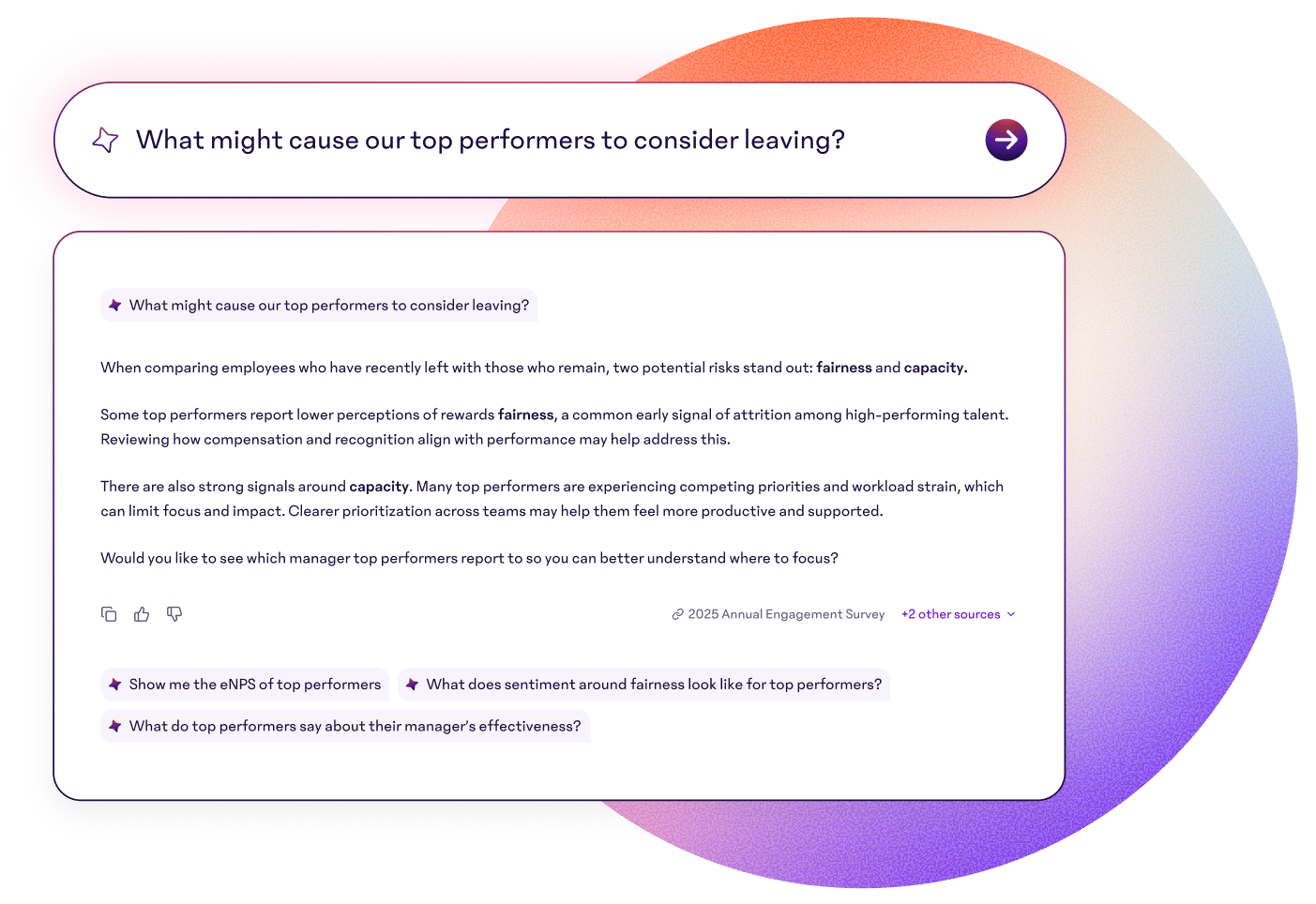
The 2026 release cycle pushes AI into that loop. AMAYA lets HR ask plain-language questions across engagement, performance, turnover, and adoption data. The new Insights Dashboard presents guided data stories instead of dropping an analyst in front of an empty report builder. Focus Briefs produce a recurring list of what a manager or employee should notice. AI-Assisted Reviews, released in beta in June, works through reflection, drafting, quality checks, and discussion using evidence from 15Five.
Its new Context Layer pulls together records in 15Five, company-supplied context, and signals from connected tools including Slack, Microsoft Teams, Google Calendar, Jira, Asana, and Google Drive. The pitch is persuasive: a review draft should know what work happened, not merely which accomplishments somebody remembered at 11:47 p.m. 15Five says connected data remains permission-aware and that its agents only surface information a person can already access. Buyers should still put data governance on the demo agenda. Performance notes, meeting records, compensation, and predicted flight risk make a sensitive cocktail.
Kona adds another angle. Acquired in January 2025, it can document one-on-ones, build performance snapshots, create action items, and coach managers in the flow of work. This is where 15Five's thesis becomes most concrete. HR dashboards do not improve a team by existing. A timely nudge before a difficult meeting might.
What users like, and where it rubs
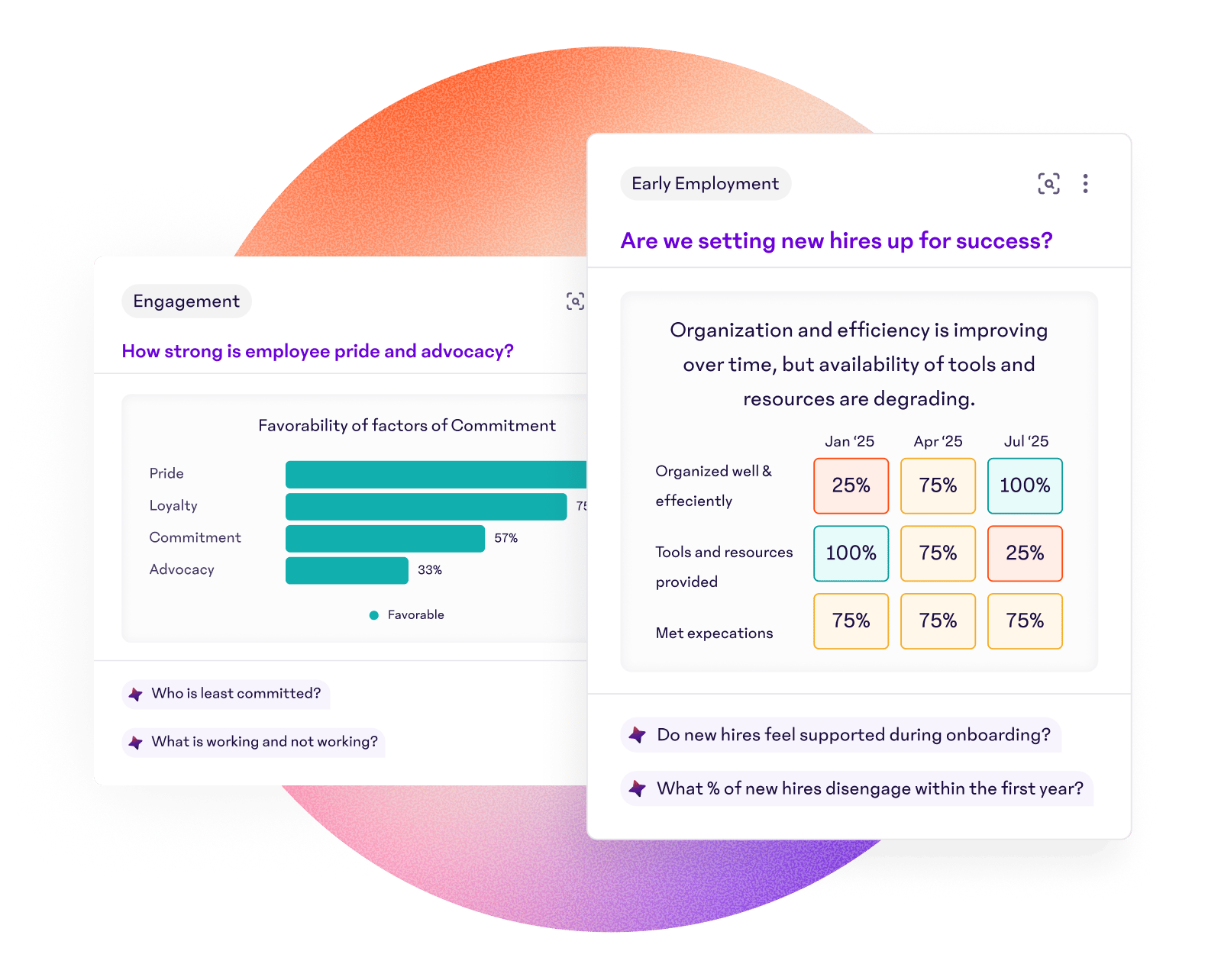
The broad review pattern is unusually consistent. At the time of research, G2 showed 4.6 out of 5 from 1,899 reviews; Capterra showed 4.7 from 895. Users repeatedly praise easy check-ins, clearer one-on-ones, goal visibility, and the way small notes accumulate into review evidence. A TrustRadius reviewer described using end-of-week check-ins to collect accomplishments and challenges for one-on-ones and OKR planning. The pleasure is not really filling in a form. It is walking into a conversation without reconstructing the last month from Slack.
The friction also repeats. G2's review themes include limited customization, missing features, a learning curve, and reporting complexity. Capterra's buyer summary points to premium pricing, less flexible workflows, and a limited mobile experience. Forbes notes that 15Five lacks core HR functions and that some users complain about notification volume. Those are related problems: a broad platform needs conventions, and conventions can feel like handrails to one company and guardrails to another.
| Need | 15Five's answer | Question to ask in the demo |
|---|---|---|
| Weekly visibility | Check-ins, pulse scores, comments, priorities | Can teams vary cadence without wrecking reporting? |
| Better reviews | 360 feedback, calibration, AI-assisted drafting | How much can forms, scales, and approval paths change? |
| Engagement action | Surveys, benchmarks, heat maps, plans | What anonymity threshold fits our smallest teams? |
| Manager growth | Content, human coaching, Kona, Focus Briefs | Which interventions can HR measure afterward? |
| Talent planning | 9-box matrix, IDPs, PIPs, succession | Who can see sensitive labels and history? |
The price of a better habit
Published pricing is refreshingly visible. Engage costs $4 per user per month on annual billing and centers on surveys, assessments, action plans, heat maps, and data breakdowns. Perform costs $11 and adds the performance suite, including reviews, AMAYA, goals, feedback, talent planning, career tools, check-ins, and one-on-ones. Total Platform costs $16 and combines both sides with broader analytics and selected manager learning.
The extras deserve their own spreadsheet. Manager learning content starts at $49 per manager monthly; live coaching is $399 per credit. Kona Meeting Assistant is $2 per employee monthly and Kona Coach is $19 per manager monthly. Compensation is $9 per user, or $11 with Mercer salary benchmarking. Everything cited here is billed annually, and optional products may carry minimum requirements. A buyer should compare the complete intended configuration, not the inviting $4 doorway.
The verdict
Buy 15Five when your real problem is managerial cadence: conversations happen late, goals vanish between quarters, reviews depend on memory, and HR sees patterns without a way to prompt action. Skip it when you need a core HR suite, crave completely bespoke workflows, or lack executive patience for a recurring ritual. The software can supply the prompt. It cannot make a manager curious.
Run a pilot that can fail
Do not pilot 15Five with the friendliest manager and a clean demo team. Choose one strong manager, one overwhelmed manager, and one skeptical team. Run actual weekly check-ins, a one-on-one cycle, a small review, and an engagement pulse. Connect the HRIS. Count reminders. Inspect permissions from employee, manager, HR, and IT views. Ask whether AMAYA can explain where an answer came from. Then see if Monday's behavior changed.
The final buying test is pleasantly low-tech: ask employees whether the system gave them a safer, earlier way to say something important. Ask managers whether it helped them notice and act. Ask HR whether the resulting data clarified a decision. If all three groups can name an example, the weekly ritual is earning its calendar slot. If the main achievement is a prettier dashboard, keep shopping.