A train is an awkward place to hold a meeting. There is luggage, intermittent distraction and an arrival time nobody in the room can extend. Imagine Creativity Center made that last inconvenience part of the attraction. Its Imagine Express program put people with different skills on a journey and asked them to come back with something more useful than a photograph: a proposed business, a prototype, a pitch.
The passengers are called dreamers. The assignments are considerably less airy. Companies bring problems; participants form teams; mentors help them work toward an answer. Imagine sells the organization of that process, through innovation trips, corporate workshops and entrepreneurship competitions. Its territory sits between executive education, innovation consulting and the very early stages of starting a company. The travel makes it memorable. The work gives the travel a purpose.

The timetable is part of the assignment
Xavier Verdaguer founded Imagine in 2011, connecting his California base with entrepreneurial talent from Barcelona. An early Silicon Valley cohort spent a month working on company challenges. By 2013, a Barcelona Chamber of Commerce account described 12 participants from different countries, creativity training, industry experts and Stanford mentors. The premise was practical: put people near working entrepreneurs while giving them a problem of their own.
The train experiment arrived in 2014. In a 2019 interview, Verdaguer explained that shared travel helped strangers become a team. Imagine subsequently made movement more central to its programs. That change reveals the company’s particular view of innovation: who works together, and how quickly they learn to trust one another, belongs in the design of the assignment.
The professional labels matter here. Imagine’s Express application separates developers, creative minds and business participants. That is a small organizational decision with consequences. A promising idea must survive someone asking how to build it, someone asking who would use it and someone asking how it could sustain a business. Those questions can arrive before a presentation has acquired the protective gloss of certainty.
Four phases, with something to show
Imagine calls its approach the Lombard Method, combining Design Thinking with what it describes as Design Doing. The wording changes slightly between programs, but the sequence is recognizable: understand or reframe the challenge, generate value, prototype, communicate. An idea gets progressively more exposed to practical questions as it moves along.
The published schedule for a BASF Creatathon makes the method unusually tangible. Participants form teams of three, work with mentors on the problem, develop ideas and move into rapid prototyping. Communication runs alongside the build: part of a team can keep improving the prototype while others prepare its explanation. At the finish, the schedule gives teams three minutes to present and three minutes for the jury’s questions.
That arrangement is worth borrowing. It prevents the polished speaker from becoming the team’s entire production department. It also makes clear that the final pitch is a compression exercise. Three minutes forces a choice about what matters; the questions then test whether the team has chosen well.
Imagine offers this expertise in several packages. Dream BIG is the short competition format. Bootcamps take the approach inside a company. Design Doing provides methodology training and certification. Longer trips give selected participants more time with mentors and their projects. The shared skill is facilitation: arranging the people, feedback and deadlines that make a group produce something it can discuss concretely.
The sponsor buys a question worth answering
There are two customers in this picture, and sometimes two different definitions of success. A company wants useful ideas about its business. A participant wants skills, contacts and a chance to develop an initiative. Imagine has to make the same program valuable to both.
Its commercial structure reflects that. Companies can pay to put a challenge in front of a team or support someone’s participation through a scholarship. Employers also commission programs for their own staff. The current catalog names Damm’s Lab1876 Talent, Fluidra, Novartis and an Andorran sports-company cluster. For these buyers, entrepreneurial behavior means employees proposing and testing changes inside an existing organization.
A concrete participant-cost example comes from the 2024 imaginPlanet Challenge rules: entry was free, and the prize carried a stated €5,000 market valuation. That figure describes the prize, not Imagine’s fee for delivering the program. The distinction matters. A sponsored experience can cost the entrant nothing to enter while requiring money, staff and substantial coordination behind the scenes.
Different measures. Neither is a corporate workshop price.
The practical comparison for a buyer is with an internal project team, a consultancy or a business-school course. Imagine’s combination is distinctive: an external facilitator, deliberately mixed teams, a compressed schedule and a visible final presentation. The choice depends on the job. Exploring a problem benefits from this structure; implementing a settled specification requires a different kind of contract and delivery team.
When the meeting place disappeared
COVID put a direct obstacle in front of a business built partly around gathering people. The documented response at Fluidra was to change the format. In 2020, Imagine delivered the pool company’s fourth Innovation Week online. A preliminary competition brought together more than 100 participants from nine countries and produced 25 ideas. Five teams advanced.
The challenge was straightforward: “How to make Fluidra a more sustainable company”. Separate sessions accommodated time zones. Selected participants worked through expert instruction, feedback and design support. The program also announced investment and subsequent acceleration for the winning work. A remote meeting could still end in a decision about what deserved further resources.
“How to make Fluidra a more sustainable company”The assignment for Fluidra Innovation Week, 2020
By 2022, the format had changed again. Imagine ran physical Dream BIG events in San Diego and Sant Cugat, while retaining online competitions for colleagues elsewhere. During the development week, 15 participants connected for three hours each day. Mentors addressed desirability, viability and feasibility; designers helped teams give their proposals a usable form. Three Pool Guys, from the United States, won with a project described as the next evolution of iAquaLink.
The useful lesson is about adaptation rather than a contest between screens and trains. Imagine restored face-to-face contact where it wanted it and retained remote access where geography made that valuable. For a company evaluating the service, this is evidence that the process can be rearranged around the people available. The itinerary is one tool among several.
A lollipop, a hydrogen system, a marine habitat
The Smart Lollipop offers a more interesting outcome than a roomful of applause. Its initial concept won the iFest Dream Big Challenge in 2017. Diana Ballart subsequently participated in Imagine Express and Imagine Silicon Valley, then worked with Imagine. The company was founded in 2020. Imagine’s later account says she met future technology leader Albert Valeta through the Silicon Valley program.
That three-year interval deserves attention. A competition can produce the first concept and introductions that matter later. Forming a company is another undertaking. Imagine’s contribution can therefore include an early collaborator, not simply an idea judged good enough to win. The original Dream Big box, retained by the startup according to the alumni account, is a fitting souvenir: an object from the beginning, not the finished product.
Another route ran through imaginPlanet Challenge. ATOM H2’s team won in 2022 and took part in Imagine’s Silicon Valley experience. By November 2025, CaixaBank described the hydrogen venture as having investors, a product on the market and telecommunications customers. Its account also identified MYCO, the fifth-edition winner developing construction panels from mycelium, as still in incubation. The different stages are part of the story.
In June 2026, Biotopia won the sixth edition with a proposal to restore marine biodiversity through biotopes made partly from recycled materials. The program pairs entrepreneurship training with a Silicon Valley incubation experience for the winning team. These examples show where Imagine fits: helping participants move from a broad environmental concern to a proposal that can be developed, challenged and presented. Winning establishes a selection result; what happens afterward establishes a business.
The people who come back
Imagine’s culture extends beyond its corporate assignments. Its 2018 Kenya exchange connected young people in Iten with students in Spain through audiovisual projects. Kenyan participants explained aspects of their lives and traditions. A January 2021 retrospective described later support for school materials for 20 young people through the Gathimba Edwards Foundation.
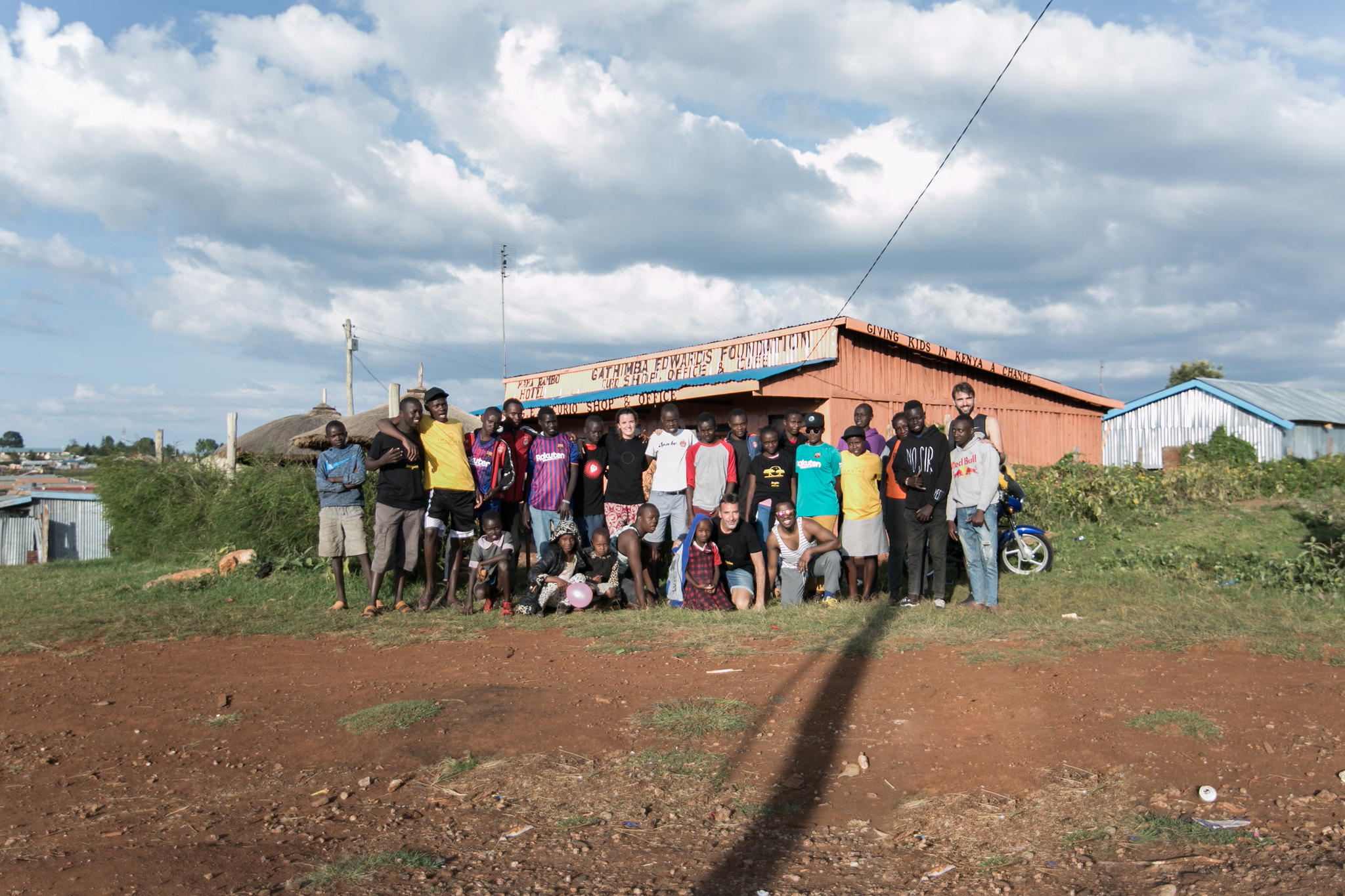
Alumni also return to help run programs. A 2019 report described a staffing culture in which people had first been dreamers themselves; Verdaguer had finally taken that role on an Atlantic sailing edition. There is a useful humility in the arrangement. Facilitators who have sat on the other side of the assignment know what an unfamiliar team and a short deadline feel like.
Borrow the deadline, then fund the next step
The most transferable part of Imagine’s approach is its sequence of commitments. Choose a problem specific enough to investigate. Assemble people whose skills differ. Give them access to someone who understands the problem. Require a tangible proposal, and put a person capable of approving further work in the audience.
These conditions matter more than scenery. If an employer cannot release staff time, provide useful feedback or assign responsibility after the presentation, a lively workshop has little room to become an operating project. A short sprint also needs permission to revise its initial premise. Otherwise, rapid prototyping becomes rapid decoration of a decision already made.
Imagine’s appeal is that it gives this uncertain early work a schedule, a team and a public finish. Its examples also suggest the right expectation: the trip can start a project, introduce a future colleague or help an employee make a case. On arrival, somebody still has to decide what to build next.