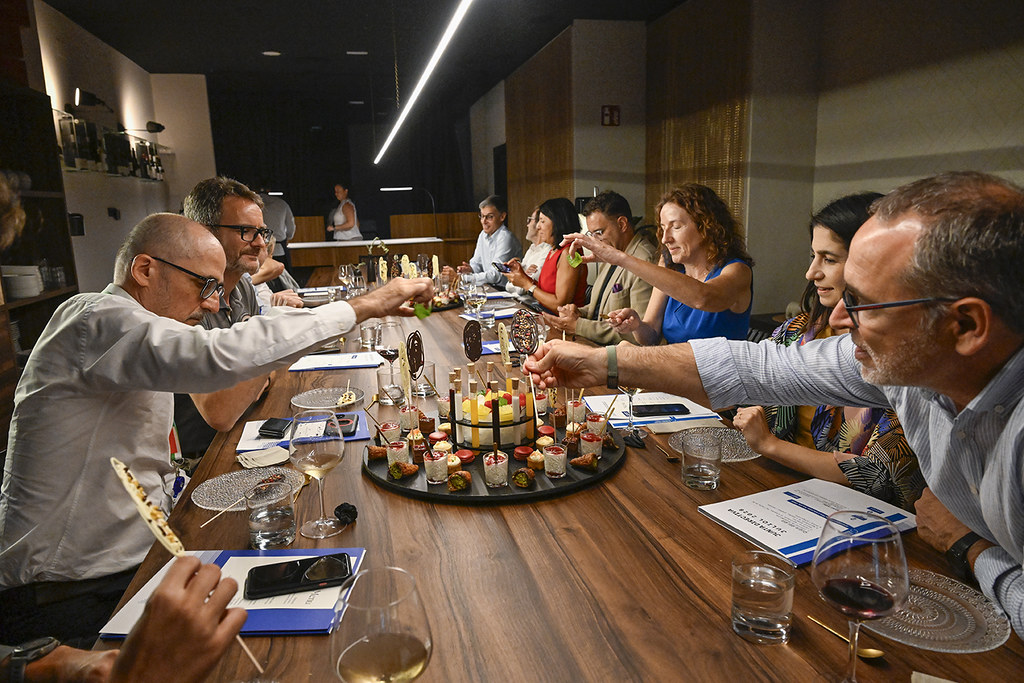
In May 2026, a Barcelona startup event reversed the usual seating arrangement. Investment funds took the stage. Entrepreneurs listened, questioned and tried to understand what the people holding the money actually wanted. The evening, organised by 22@Network Barcelona with Aticco Lab, was called “Meet the Investors: cuando el pitch cambia de lado”. The pitch had changed sides. For once, the supplicants could put down their slides.
It is a small episode, but a revealing one. A network becomes useful when it changes who can speak to whom, and what they can ask. This association’s business is arranging those encounters in a particular patch of Barcelona.
- The job: connect businesses, startups, universities and technology centres in the 22@ district.
- The mechanism: recurring events, working commissions, training and carefully arranged introductions.
- The practical lesson: being neighbours helps; having shared work helps more.
Six companies needed a welcome committee
Barcelona’s transformation of the industrial district began in 2000. The association arrived in 2004. Those four years matter. A city can change planning rules and invite businesses into a neighbourhood. The businesses still need help understanding the place and one another.
A 2014 city account describes an association initially composed of just six companies. Its founding president, Ginés Alarcón, recalled the early firms deciding to take the lead in making newcomers’ arrival comfortable. The original problem was wonderfully ordinary: how do you settle into a district that is itself still taking shape?
Today, 22@Network reports more than 400 member organisations. Its membership mixes large companies, smaller businesses, startups, universities, technology centres and institutions. The association did not build all the offices or invent the district’s companies. It supplies a way for the people inside them to find each other.
A calendar with a job to do
The offering is recognisable to anyone who has joined a business association: meetings, visibility, shared knowledge and member benefits. Its distinctive feature is the combination of a narrow geography and a broad cast. A sector-specific group might gather competitors. This one can gather a university, a corporate innovation team and a young company with something to test.
Working commissions give those meetings subjects. Entrepreneurship, talent, mobility, sustainability, urbanism and creativity are among the published areas. Breakfasts and afterworks create recurring occasions to attend. Tours help visitors read the district through business, culture, health or urban planning rather than through a single property brochure.
Membership also contains a useful design choice. When a company joins, all its workers receive the association’s benefits. Access need not end with the executive who approved the subscription. An employee with a recruitment problem or a technical question can have a reason to participate too.
For a prospective member, the sensible first move is the monthly information session. Then pick a commission that matches an actual need. “Meet interesting people” is pleasant. “Find a partner to validate this product” gives the conversation somewhere to go.
From introduction to something testable
The association’s Match & Play programme makes that progression explicit. Inspired by the Plug and Play ecosystem, it lists five stages: screening, selection, introduction, match and play. Established corporations meet technology startups with the intention of developing products or alliances. Both sides must have the interest and capacity to proceed.
That last condition is doing considerable work. An introduction cannot supply a corporate sponsor’s attention, a startup’s delivery capacity or agreement about the problem. The copyable method is to make those requirements visible before everybody congratulates themselves on having met.
Demo Day applies a related idea to capital. For its 2025 edition, the association reported 150 startup applications, 70 selected startups, 32 pitches, more than 50 investors and more than 200 matchmaking meetings. Those are counts of organised activity. They do not, by themselves, establish how much money changed hands.
22@Demo Day 2025 - figures reported by the organiser. Meetings are not completed investments.
The next edition is scheduled for 8 October 2026 at TBS Education Barcelona. Its agenda includes pitches, investor matchmaking and an ecosystem discussion. At the time of writing, that event is still ahead, not an achievement to be tallied.
The work after the handshake
Other programmes address what happens before a venture is ready for that room. Future Tech’s second edition launched in September 2026 with Fundación KIMbcn, offering a preacceleration route built around development and validation. IntraLab’s advertised September-to-December programme takes a real company challenge and adds 100 hours of specialised training and 80 hours of mentoring.
These services place the association between several familiar institutions. It is a business community, a programme organiser and a convenor of public and private participants. Coworking operators and accelerators are alternative routes to useful contacts, but they can also be its collaborators. The distinction is the district-wide remit.
The commercial logic is membership dues, alongside sponsor and institutional support for activities. A founder considering participation should examine the current terms for the particular programme. The practical cost also includes staff time: attendance, preparation and following up. A membership that sits in an inbox has little opportunity to become useful.
The neighbourhood gets a vote
The story has never been uninterrupted growth. In the city’s tenth-anniversary account, former president Josep Maria Vilà recalled incoming companies slowing from 2008 as the financial crisis took hold. The account describes a district-level setback, not evidence that the association’s own services failed.
By 2020, its incoming board was emphasising a more inclusive and sustainable district and economic recovery. Its ODS commission connects social responsibility with local needs through foundations, volunteering and efforts against the digital divide. The neighbourhood is part of the association’s stated purpose, not merely the view from an office window.
“The lack of housing can slow down the growth of the ecosystem.”Osmar Polo · July 2026 interview
Polo, who assumed the presidency in 2026 after Susana Prado, connects housing to attracting and retaining professionals. The association can convey needs and propose ideas; it cannot legislate. That boundary matters. Organised introductions work better where people have the time, resources and practical ability to stay.
The lesson travels more easily than the skyline. Start with a real shared problem. Bring together people who can act on it. Repeat the meeting, and build a route from conversation to a test. Six companies once wanted newcomers to feel comfortable. The enduring question is what those newcomers can do together once they arrive.