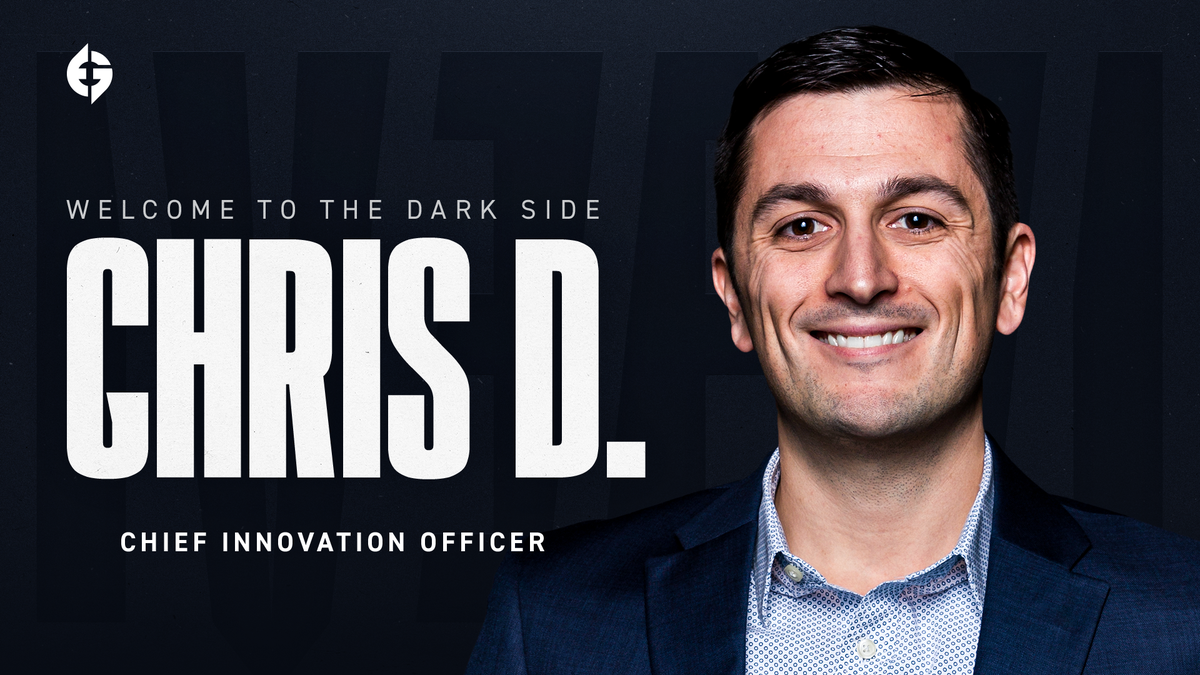
Chris DeAppolonio's office sits in Seattle, but his job description reads like something out of a sport that did not exist when he was born. He is the CEO of Evil Geniuses - "EG" to the people who follow it - the oldest esports organization in North America. The team has been competing, and winning, since 1999. That makes it older than the smartphone, older than most of the games it now dominates, and older than a good share of the players who wear its jersey.
The pitch he keeps returning to is simple. When he took the top job, his first move was not a rebrand or a flashy signing. It was a return to basics: refocus a famous organization on its core values and on the one thing that made it great in the first place - gaming. In an industry that loves to talk about lifestyle brands, content houses and creator collectives, that is almost a contrarian position. Win the matches. The rest follows.
How EG wins is where DeAppolonio gets interesting. He runs the place like a baseball front office that read Moneyball and took it personally. EG built its own data science team and proprietary analytics tools, then pointed them at the player market the way a scout points a radar gun at a teenage pitcher. The question is always the same: who is undervalued, and where is everyone else not looking?
"He pioneered the use of data and analytics in esports to build a championship-winning team."
- Evil Geniuses, on DeAppolonio's approach
It is not theory. EG's data-driven approach helped surface talent in the North American League of Legends scene and build the roster that took the LCS Spring Finals Championship in 2022. The proprietary tools became part of the machine that produced a VALORANT Champions world title in 2023 - the sport's biggest trophy. For a man whose whole thesis was that gaming would one day be measured, scouted and managed like a real sport, those banners are a quiet form of being right.
The kid who wanted to be a general manager
Long before any of this, DeAppolonio was a sports fan with an unusually specific dream: he wanted to be a general manager for a professional team. He went and got the credentials for it. A history degree from Lafayette College in 2006. A master's in Sports Business from NYU in 2008. And then the tell - a capstone thesis with the perfect title for a person about to bet his career on an idea nobody believed yet: "Playing with the Big Boys: The Rise of Professional Gaming."
He saw the boom coming more than a decade before it landed. But careers do not wait for the future to arrive on schedule, so he spent the next ten years inside traditional sports and marketing - directing strategy for blue-chip corporate clients at agencies like Jack Morton Worldwide and Genesco Sports Enterprises, with early stops that read like a sports-business starter kit: Major League Baseball, the New York Rangers. He learned the unglamorous machinery of the industry: sponsorships, partnerships, audience building, how money actually moves around a team.
Crossing over
The crossover into esports came through the business door, not the controller. He became Executive Vice President of Partnerships at Infinite Esports & Entertainment, the company that then owned the Houston Outlaws and OpTic Gaming. In 2019 he was named President of the Outlaws in the Overwatch League, running the whole operation - business and competitive - and pushing the brand into its home turf of Houston, Austin and San Antonio.
In 2020, Evil Geniuses brought him in as Chief Innovation Officer. Innovation, in his hands, meant the data engine. When CEO Nicole LaPointe Jameson stepped down in 2023, he stepped up as interim chief executive while keeping the innovation portfolio. In 2024 the "interim" came off the title. The general-manager dream, deferred for sixteen years, had finally found its team.
Taking it mainstream
Ask him where this goes and the answer is expansive without being vague. He wants esports to go mainstream - and he is specific about the levers. Deliver experiences fans actually want. Expand corporate partnerships. Make content people choose to watch. Push esports deeper into collegiate communities, where the next generation already lives. And keep pioneering AI - not as a buzzword, but as a tool to fuel player performance and find talent before anyone else does.
It is a tidy loop when you stand back from it. A sports-business student argued in 2008 that competitive gaming would become a real industry with real front offices and real scouting. Years later, that same person is running one of its most decorated franchises, using data and AI to prove the thesis match by match. The trophies are the footnotes. The argument was the work.