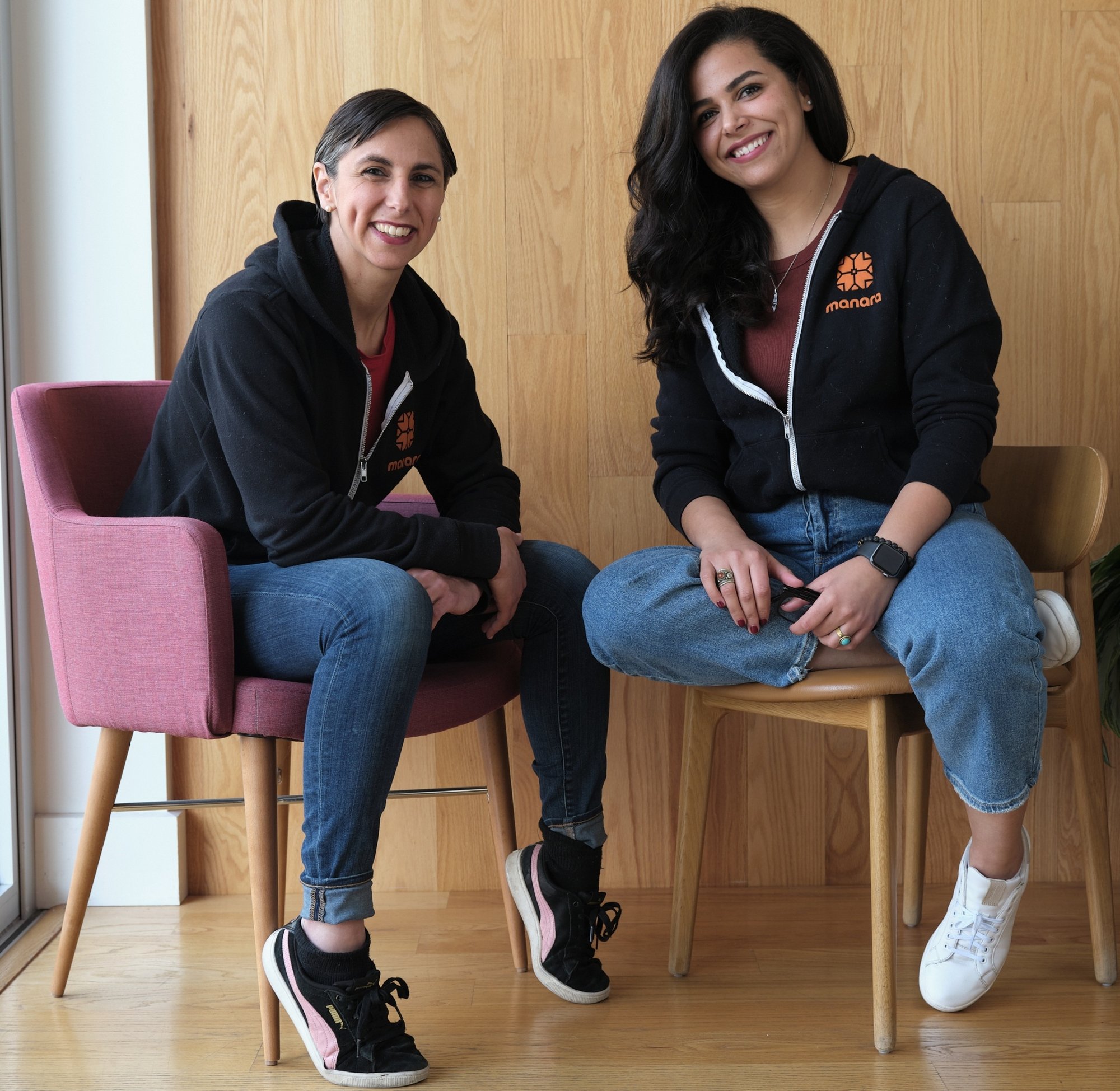
It was October 2013. Iliana Montauk had just landed in Gaza for the first time. She was there to listen to startup pitches - sixty of them, crammed into the room. Then the warplanes started circling overhead. The founders kept talking. One of them turned to Iliana and said: "Please don't get distracted by that. We're used to it - it happens here all the time." She didn't get distracted. She took notes. What she saw that day - ambition and capability existing in conditions most people wouldn't enter - would quietly shape the next decade of her life.
"Talent is universal while opportunity is not."- Iliana Montauk, Co-Founder & CEO, Manara
Iliana grew up in Poland and near San Francisco, which is an unusual combination that turns out to be exactly right for what she ended up building. She watched Poland evolve - from a country hemorrhaging talent to a country that became a serious tech hub - and filed that transformation somewhere useful. Years later, standing in Gaza, she would reach back for it constantly. The question driving Manara isn't complicated: what if the MENA region did what Poland did?
She graduated summa cum laude from Harvard in 2006 with a degree in the History and Literature of France and the Middle East. She picked up Arabic along the way, adding it to a personal language stack that eventually reached five. Her first job was at Google, where she learned what transformative opportunity looked like up close. Then she worked at Wamda, a media outlet focused on Arab startups, and at a microfinance nonprofit. She was accumulating a specific kind of knowledge: what happens when capable people get access to systems that were built without them in mind.
In 2012 she received a Fulbright Fellowship in Jordan, specifically to study startups in the Middle East. That fellowship took her into the region's entrepreneurial ecosystem at a moment when it was just starting to cohere. A year later she was in Gaza, running programs at Gaza Sky Geeks - the first startup accelerator in Gaza, launched by Mercy Corps - and raising money from people like Paul Graham and Marc Benioff. TechCrunch wrote about it. So did Wired and the New York Times. The idea that Gaza had a startup scene was, for most readers, a genuinely surprising fact. Iliana was not surprised. She had seen sixty founders pitch through warplane noise.
She ran Gaza Sky Geeks for years, moving back to Silicon Valley while continuing the work remotely. She took a detour through Upwork as a Senior Product Manager - a logical stop, given that Upwork is the world's largest marketplace for remote talent - and brought that perspective with her when she sat down with Laila Abudahi to co-found Manara in July 2020. Laila had been one of the engineers Iliana worked with at Gaza Sky Geeks. The founder and the engineer, building together - that dynamic is not accidental.
Manara does something that sounds simple until you look at the outcomes. It finds the best computer science students and software engineers in the MENA region. It teaches them how to pass technical interviews at top global companies. It vets them. Then it connects them to jobs - at Google, Meta, Amazon, Qualtrics, Zalando, and others. The kicker: students pay zero tuition. They commit to giving Manara 10% of their salary for the first two years after landing a job. The incentives are aligned. Manara only wins when the engineer wins.
The numbers are hard to argue with. Eighty-six percent of Manara's trained engineers receive job offers within five months of graduating. At Google specifically, 71% of Manara's most recent referral batch were hired. Some graduates see salary increases of up to 300%. In Palestine, where 52% of computer science graduates are women but 83% of them end up unemployed, Manara is doing something structural, not symbolic.
In 2021, Y Combinator accepted Manara into its W21 batch. The following year, Stripe led a $3 million pre-seed round. Reid Hoffman joined. Paul Graham joined. Eric Ries joined. Mudassir Sheikha, founder of Careem, joined. Iliana later said they received more appetite from investors than they could accommodate - a sentence that is either a flex or a genuine logistical problem. Probably both.
Then came October 2023. Manara had roughly 70 engineers in Gaza at the time, and 600 women across the MENA region in its network. When the conflict broke out, Iliana and her team began weekly check-ins with every Gazan engineer they could reach. They documented injuries, homelessness, 40 people crammed into single apartments, and stretches of complete communication blackout. Companies that had hired Manara's talent reached out with support. Iliana's assessment of the broader response was pointed: "Humans are humans everywhere." She was disappointed that more investors hadn't approached the crisis with nuance. She kept the check-ins going anyway.
"Humans are humans everywhere."- Iliana Montauk, on the 2023 Gaza conflict and Manara's response
By April 2025, Manara announced a $3.6 million partnership with Amazon Web Services to train 2,500 MENA software engineers in cloud computing and AI skills over two years. Participants earn AWS certifications. The community has grown to over 150,000 engineers, with a 90% AWS certification pass rate among those who go through the program. The goal Iliana has stated publicly: 1 million learners trained by 2027.
She writes for the World Economic Forum as an Agenda Contributor. She has spoken at conferences across the region and in Silicon Valley. She is one of those people who seems to move between worlds - Poland, Harvard, Google, Jordan, Gaza, San Francisco, Riyadh - without the usual friction, possibly because she made learning languages and cultures a professional habit rather than a social one.
She is also, according to anyone who has covered her in depth, a hobbyist bread baker. Given everything else on her plate - a 150,000-person engineering community, a $3.6 million AWS partnership, a co-founder relationship she's called irreplaceable, and ongoing support for engineers living through conflict - the bread baking detail is worth keeping. It suggests a person who understands the difference between systems that need to move fast and things that just need time and attention.
Manara is that second thing, too. The MENA tech talent pipeline wasn't going to be built in a sprint. Iliana Montauk has been on this particular trail since 2013, when the warplanes were circling and sixty founders were still pitching. She took notes then. She is still taking notes now.