In 1991, Sandisk sold a solid-state drive that held 20 megabytes and cost $1,000. That works out to $50 per megabyte. Today, an ordinary photograph can consume several megabytes. Imagine deciding which handful of pictures deserved a thousand-dollar home.
- Sandisk sells the flash inside cards, computers and data centers.
- Its manufacturing alliance with Kioxia spreads the cost of making chips.
- Its next bet is on customers committing to memory years ahead.
The price makes the early drive sound ridiculous. The proposition was practical: storage without a spinning disk, able to retain information with the power off. The interesting question was how many useful things would become possible as that storage grew cheaper.
01 / Twenty megabytes. One thousand dollars.
Eli Harari, Sanjay Mehrotra and Jack Yuan founded the original company, SunDisk, in 1988. It entered a market in which moving information meant accommodating the physical machinery that held it. Flash offered engineers another set of choices about size, power and movement.
In 1994, Sandisk introduced CompactFlash. The Computer History Museum records its adoption in consumer and professional devices, particularly digital cameras. Here was a business opportunity you could hold between two fingers: the camera could keep taking pictures because its memory could leave the camera.
That matters because Sandisk’s expertise crosses several jobs. A useful storage device needs the memory itself, a controller to manage it, firmware and an interface the customer’s equipment understands. Owning more of that engineering lets Sandisk work on the relationship between the parts.
“Everything starts with innovation and NAND is an incredible enabler.”
David Goeckeler · February 2025
02 / A familiar name, an unfamiliar business
The familiar products remain: SD and microSD cards, USB drives, portable SSDs and storage for gaming. A photographer needs room for another shoot. An editor needs to move footage. A gamer wants to install another game. Sandisk sells the capacity and access those activities require.
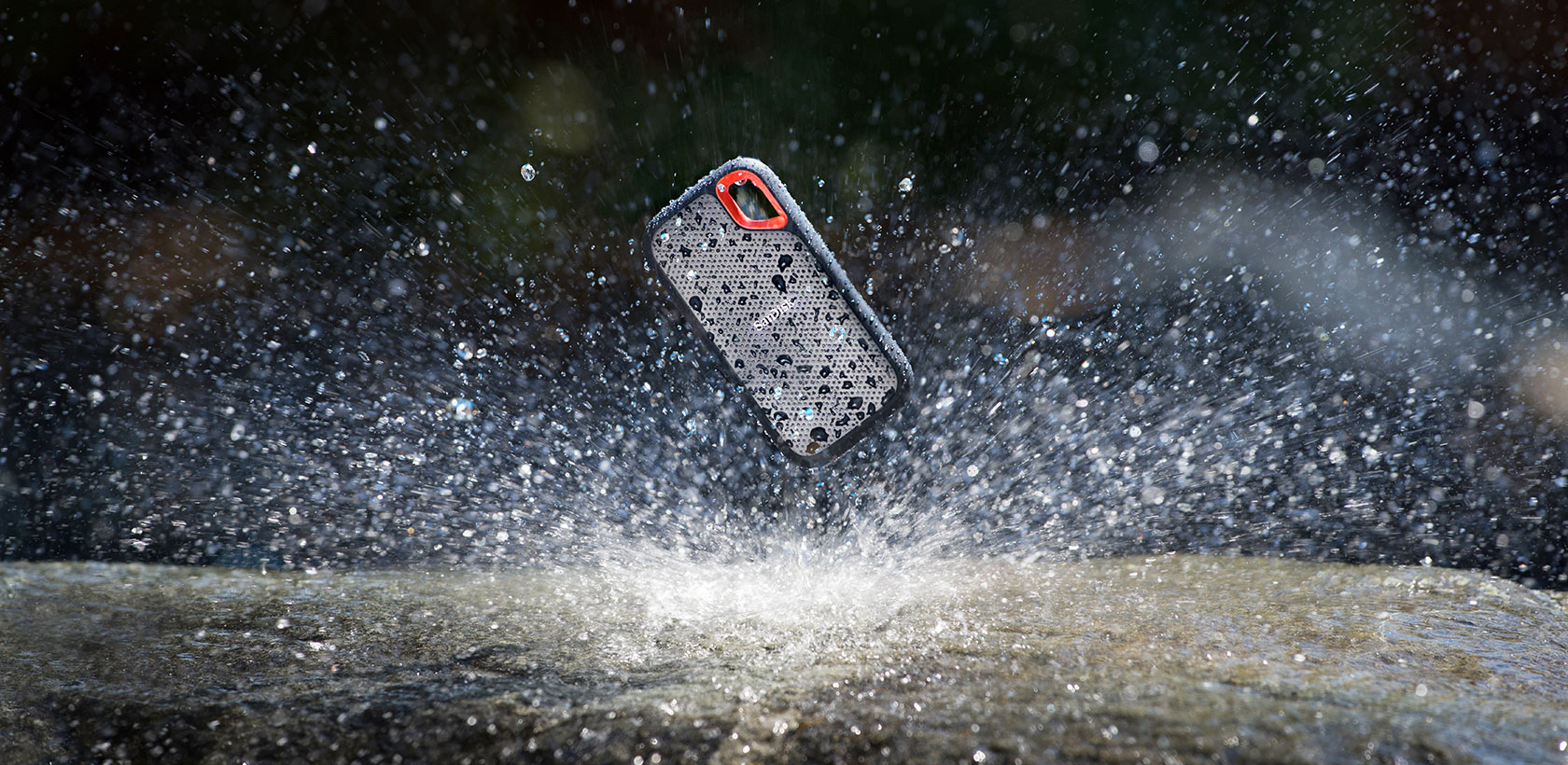
Then come the less visible customers: device manufacturers buying embedded storage, computer makers buying SSDs, and enterprise or cloud operators buying drives for data centers. These buyers judge combinations of capacity, performance, energy use, reliability and price. A recognizable retail logo helps explain only part of the company.
Sandisk sells finished products and components through direct relationships, distributors, retailers and its online store. It competes with Samsung, Micron, SK hynix, Kioxia and other manufacturers. Its position combines semiconductor development, storage-system engineering and consumer distribution. Kioxia appears on both sides of that sentence: partner and rival.
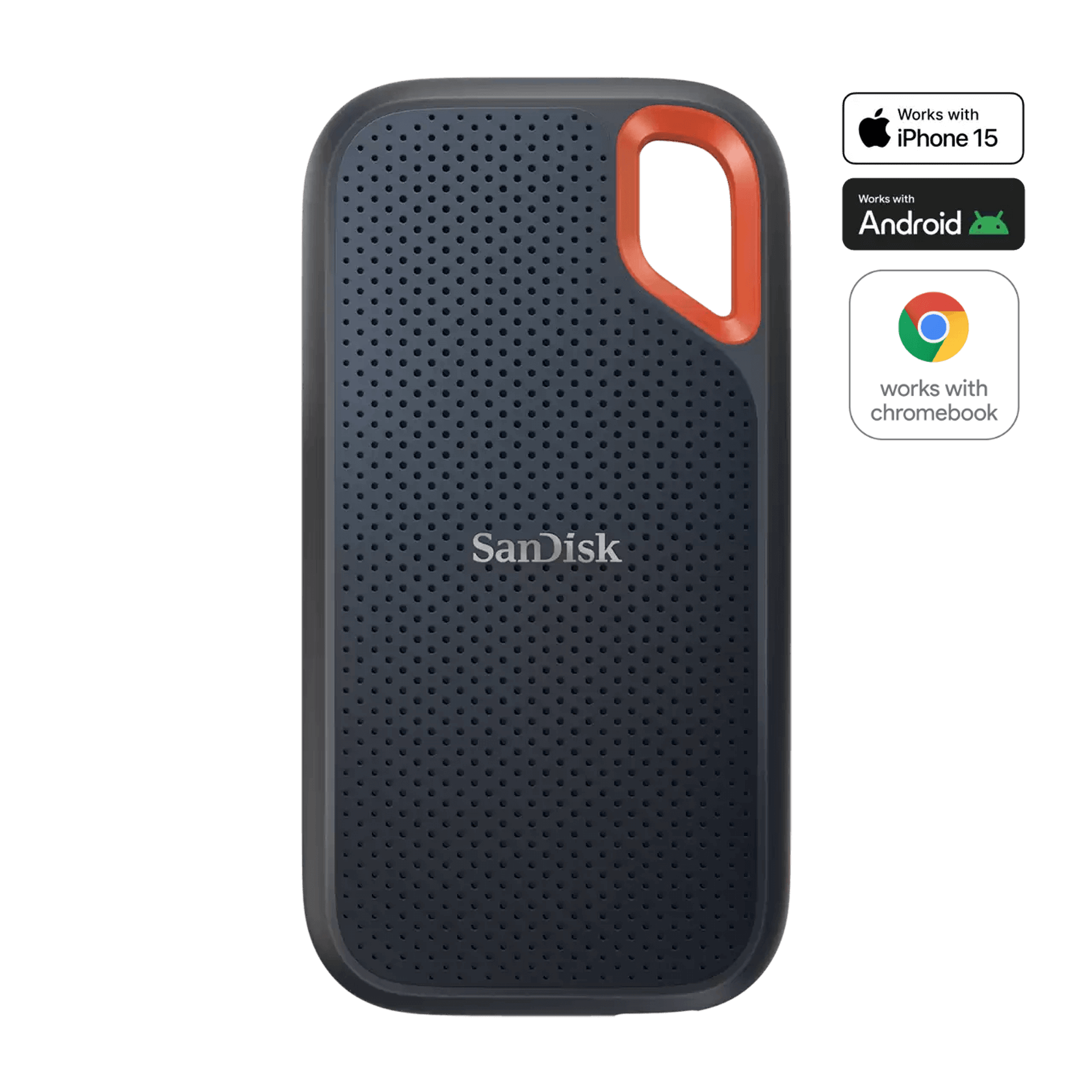
A familiar shape can hide a different generation. Match the model, interface and host before comparing the speed on the box.
Consider the February 2026 Extreme Portable SSD launch: advertised reads up to 2,000MB/s, with the 1TB model starting at $259.99 MSRP. That is a launch price, not today’s quote. Performance depends on the host and conditions. A USB-C connector alone does not establish how fast the connection runs.
Or consider Nintendo Switch 2. Its expandable game storage requires microSD Express. Sandisk sells licensed cards, but the important word is Express. Physical fit is a poor substitute for checking compatibility. The object looks familiar; the standard does the work.
03 / The expensive part is in Japan
Behind these small objects sits a very large industrial commitment. Sandisk and Kioxia develop and manufacture flash together in Japan. In January 2026, they extended their Yokkaichi joint-venture agreements through December 2034. In July, they announced the start of tenth-generation 3D flash production at Kitakami Fab2.
The partnership puts a useful qualification on the idea of vertical integration. Sandisk participates deeply in manufacturing without financing every factory alone. The companies said in August that their partnership had invested more than $50 billion in Japan over 25 years.
Anticipated joint investment through 2032.
Sandisk + Kioxia. Contingent on government support.
They also announced anticipated investment exceeding $31 billion through 2032, contingent on government support. Read those qualifiers carefully: shared spending, several years, a condition attached. This is the cost structure behind a product that can disappear into a pocket.
04 / A promise on paper
Sandisk’s corporate structure has changed too. Western Digital completed its acquisition in 2016, bringing magnetic and flash storage together. Sandisk separated in February 2025 and returned to independent Nasdaq trading under SNDK. The argument had shifted from breadth within one company to focus within two.
Today’s shift concerns buying behavior. At its August 2026 Investor Day, Sandisk described eight customers under agreements built around committed volumes, minimum financial guarantees and structured pricing. The company said they represented about half its fiscal 2027 bits and two-thirds of fiscal 2028 bits.
The implication is straightforward: a supplier can plan expensive capacity more confidently when buyers commit. Sandisk links the change to growing AI storage needs. Another business can copy the principle of securing commitments before expanding capacity. Copying the outcome requires customers willing and able to make those promises.
The earnings are striking, but need context. Sandisk reported fiscal 2026 revenue of $20.248 billion, up 175%. It attributed roughly two-thirds of fourth-quarter sequential revenue growth to higher pricing. Rising revenue therefore measures more than additional memory shipped. Contracts still depend on demand, enforceability and delivery.
05 / The file has to come back
For a customer, the test remains personal. In May 2023, an official notice identified a firmware issue that could make selected Extreme Portable SSD V2, Extreme PRO Portable SSD V2 and WD My Passport SSD products unexpectedly disconnect. The notice directed owners to a serial-number lookup and firmware guidance.
A rugged enclosure does not answer every reliability question. Check the exact model, maintain firmware and keep separate copies of important files. Sandisk’s long story comes down to a modest expectation: whatever you entrusted to that little object should still be there when you need it.