Sanjay Mehrotra had an admission letter from Berkeley and a problem that electrical engineering could not solve. In New Delhi in 1976, his application for a student visa had been refused three times. His father decided they would wait in the embassy lobby. Eventually, the consul returned from lunch. Mehrotra’s father approached him and argued his son’s case for about twenty minutes. The passport came back stamped. A life in American semiconductors became possible.
Mehrotra still returns to that episode when explaining his career. It supplies a useful complication to the familiar founder biography. Before the patents, the executive titles and the manufacturing announcements, there was a young person whose plans depended on somebody else answering a question differently. His father kept asking. The official agreed to listen. Both mattered.
Today, as Micron’s chairman and chief executive, Mehrotra works in a business where persistence has a substantial electricity bill. The product may be tiny; the factories most certainly are not. His working life stretches from the early effort to make flash storage commercially useful to the memory needed by AI systems. Across those changes, he has kept an unusually durable subject: how computers hold information, and how to make them hold more.
A ticket to Berkeley, then somewhere to sleep
Born in Kanpur, India, in 1958, Mehrotra grew up with an interest in mathematics and science. He studied at BITS Pilani before transferring to Berkeley. He earned his bachelor’s degree in 1978 and his master’s in 1980, both in electrical engineering and computer sciences. The education would equip him for an industry that was still deciding what a computer might become.
Arrival came with less glamorous business. Housing was hard to find. Mehrotra repeatedly visited International House to ask about a room until a vacancy appeared. His brother Pramod helped finance his start; campus work and financial aid subsequently helped him support his studies. These details make the polished career chronology feel properly inhabited. Admission is one thing. Finding a bed and paying for the next quarter are separate examinations.
“If you seek success, start with tenacity.”
Sanjay Mehrotra
The phrase is his own distillation of the lesson from his parents. Years later, he and his wife, Sangeeta, helped support Berkeley’s Jacobs Hall, a home for design and practical experimentation. He connected their gift to his parents’ encouragement. An opportunity received as a teenager had become something he could help supply to other students.
Three founders and a very small place to put your files
Engineering and leadership roles at Intel, SEEQ Technology and Integrated Device Technology preceded the venture that would make Mehrotra widely known. In 1988, he joined Eli Harari and Jack Yuan to found the company initially called SunDisk. Their backgrounds were complementary: Harari in device physics, Yuan in process engineering and Mehrotra in memory design. Bob Norman joined the early effort as a system architect.
The distinction between a memory chip and a useful storage product was central. Flash could retain information without continuous power. Yet a customer needed something dependable, with the awkward behavior of the underlying technology managed rather than passed along as homework. The team’s approach paired flash with a controller. Making a component work was only part of making a product people could trust.
Flash also wears with repeated writing and erasing. The early SanDisk team treated such limitations as problems for the whole system to manage. That choice mattered commercially as well as technically. A promising laboratory device does not come with a queue of satisfied customers attached. Someone has to turn its virtues, limitations and economics into an object worth buying.
Three jobs behind the screen
Keeps stored data without power.
Holds data being used while powered.
Stacked DRAM for rapid data movement.
A conceptual guide. The illustrations describe functions, not relative speeds or capacities.
Over time, flash storage became part of the ordinary furniture of digital life: camera cards, USB drives, mobile devices and solid-state drives. The smaller the package became, the easier it was for the engineering to disappear from view. A holiday photograph does not arrive with a diagram of the circuitry that preserved it. This is a peculiar occupational hazard for memory engineers: successful work can make itself almost invisible.
Mehrotra stayed with SanDisk through its evolution from startup to established business. He became president and CEO in 2011 and held those posts until Western Digital acquired the company in 2016. The long apprenticeship matters. He had worked inside engineering, product development and operations before taking the chief executive’s chair. His route to management ran through the machinery.
- 1978Berkeley bachelor’s degree
- 1988Co-founds SanDisk
- 2011Becomes SanDisk CEO
- 2017Joins Micron as CEO
- 2025Adds Micron chairmanship
A football lesson with an inconvenient marching band
There is a less predictable entry in his education: American football. Mehrotra arrived knowing little about the game and became a Cal supporter. In 1982, after completing his studies, he was in the stands for the Berkeley-Stanford game remembered as “The Play.” Cal’s final kickoff return continued through a Stanford band that had entered the field prematurely. It is an unusually noisy illustration of the danger of deciding something is over.
The story appeals because it makes room for adaptation. Continuing to run requires noticing where the openings are. Memory companies face an industrial version of that problem: demand changes, customers change their designs, and yesterday’s sensible production plan may require revision. His career offers ample reason to value persistence that can change direction.
When memory moved into the AI conversation
Micron appointed Mehrotra CEO in 2017, succeeding Mark Durcan. The move gave him responsibility for a different enterprise with its own history, factories and engineering teams. SanDisk had been part of his life for almost three decades. At Micron, the task was to lead an existing organization through the next set of technical and commercial decisions.
AI has made the memory part of those decisions easier for the wider world to see. A processor needs access to the data it works on. Keeping that data moving is a physical engineering task, with consequences for power, packaging and system design. Software ambition eventually reaches a piece of equipment. Somebody must manufacture it, test it and deliver it.
In February 2024, Micron announced volume production of its HBM3E memory, with its 24GB, eight-layer product destined for Nvidia’s H200 GPUs. High bandwidth memory places DRAM in stacks and provides wide connections for data movement. For Mehrotra, this was another application of the field he had spent decades in, now serving workloads that had attracted an entirely new audience.
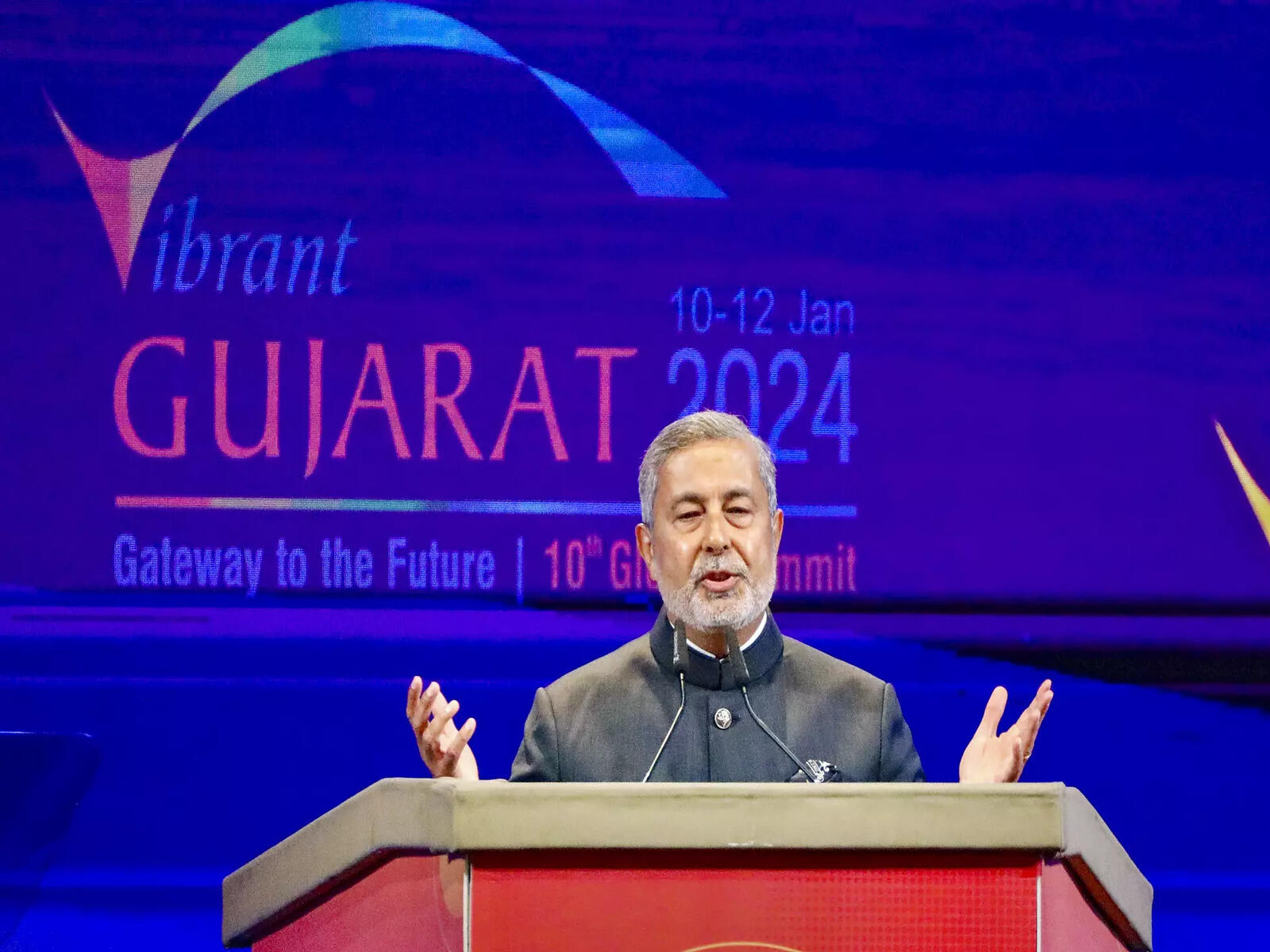
His technical credentials have remained part of his public identity. Election to the National Academy of Engineering in 2022 recognized his contributions to nonvolatile memory design and architecture enabling multilevel-cell NAND products. In plain language, that work concerns storing more information within memory cells. The honor points back to the engineering beneath the management career.
The following year brought the Semiconductor Industry Association’s Robert N. Noyce Award. Mehrotra has also served on the association’s board. The combination of engineering recognition and industry representation captures how his job expanded: from decisions about memory design to arguments about the conditions under which an entire manufacturing sector can operate.
The next chapter requires concrete
By 2022, he was making that argument before the U.S. Senate Commerce Committee. He called for manufacturing incentives, research support and investment in the workforce. His testimony connected chip production to supply security and competitiveness. It also acknowledged the scale of the undertaking: semiconductor capacity requires sustained investment over years, with suppliers and skilled workers alongside the buildings.
That puts a different frame around the immigrant student story. The education he crossed an ocean to receive became the foundation for a career advocating more manufacturing in his adopted country. The institutional connections are practical: universities train engineers, factories need them, and successful companies have reasons to invest in the next class. His support for STEM education fits within that circle.
In January 2026, Micron marked the groundbreaking of its planned New York manufacturing complex in Clay. In July, it celebrated the first concrete pour and raised its planned U.S. investment to more than $250 billion through 2035. Those are commitments and construction milestones. The work of converting them into operating capacity remains a substantial part of the story ahead.
The near-term business has been moving too. On September 30, 2026, Micron reported fiscal-year revenue of $133.19 billion, compared with $37.38 billion a year earlier. The company attributed its results to AI demand and execution. For a chief executive, those figures bring their own demands: customers expect supply, and investment decisions must reach beyond the current reporting period.
Mehrotra’s story is often compressed into an inspiring sequence: refusal, persistence, success. Its more interesting feature is the number of other people in it. A father makes an argument. A brother supplies support. Colleagues bring different engineering skills. Students receive a place to build. The work grows through those connections, even when the public photograph contains a single executive.
There is a pleasing fit between his subject and his favorite lesson. Memory preserves something for later use. Mehrotra has spent a career returning to one afternoon in New Delhi, drawing on it long after the immediate problem was solved. The passport got him to California. What he took from watching his father has traveled considerably further.