The chip can be brilliant and still spend its day waiting. In an AI system, the arithmetic engines want a steady diet of data. Memory holds it. Connections move it. When that movement costs too much time or power, adding more compute begins to look like buying more cooks for a kitchen with one narrow door.
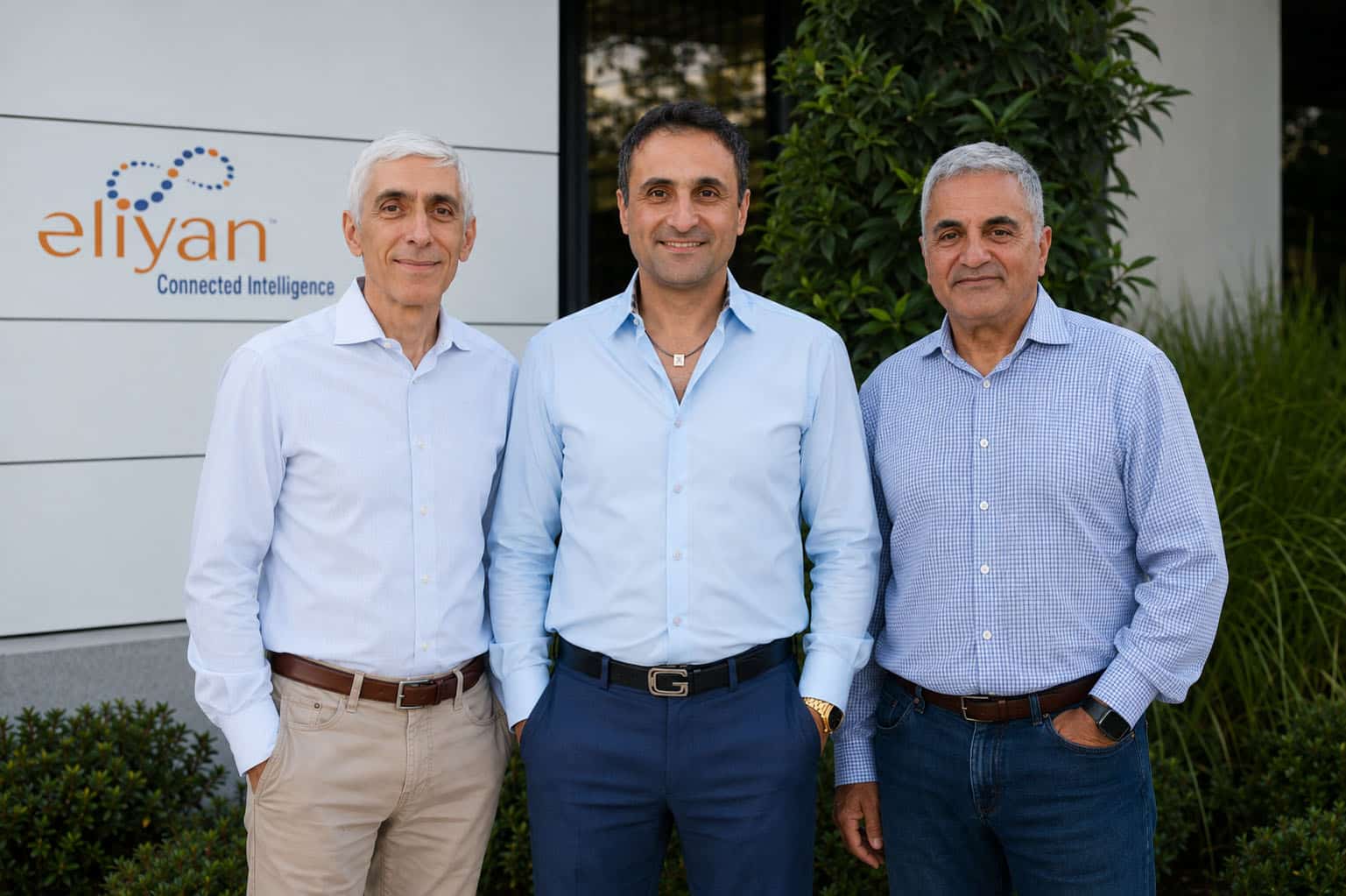
Eliyan, founded in Santa Clara in 2021, works on the door. It develops the physical interfaces that connect small chips within a package, packaged chips on a board and, increasingly, chips to optical modules. Its customers are chip designers and builders of AI and high-performance computing systems, not people shopping for a laptop. The product is mostly hidden inside somebody else's design. That is precisely its importance.
- What it sellsNuLink interconnect IP and NuGear chiplet products for memory and I/O.
- Why buyers careMore bandwidth can make compute useful; packaging choices shape cost and supply.
- What changedIts scope now runs from die-to-die wires toward 224G electro-optical links.
First, make the ordinary package work harder
Chiplets divide a big processor into smaller pieces. The arrangement can help designers mix functions and manufacturing processes. But it turns a single-chip problem into a conversation problem: every piece must move data to its neighbors. Advanced packaging, including silicon interposers, can make those conversations fast. It also brings cost, size, testing and capacity tradeoffs. Eliyan's original wager was that a standard organic package could handle more of that traffic than designers expected.
CEO and co-founder Ramin Farjadrad began developing the underlying architecture in 2016, years before Eliyan existed. His team later brought it to market as NuLink, a physical-layer interface, or PHY. The company says its design can work with the open UCIe and Bunch of Wires standards, alongside its own signaling modes. In a simultaneous bidirectional mode, the same wire carries traffic in both directions at once. It is a clever trick with a practical aim: more use out of scarce space along a chip's edge.
In 2022, Eliyan announced a 5-nanometer tapeout, the step of sending a finished design toward fabrication. A tapeout is a promise that must still survive silicon. The more telling marker arrived in October 2024, when the company reported working NuLink-2.0 silicon in a 3-nanometer process at 64 gigabits per second per bump. That does not prove every prospective buyer's full system will achieve the same economics. It does show the company had progressed from diagrams to a device it could characterize.
The bill arrives with the memory
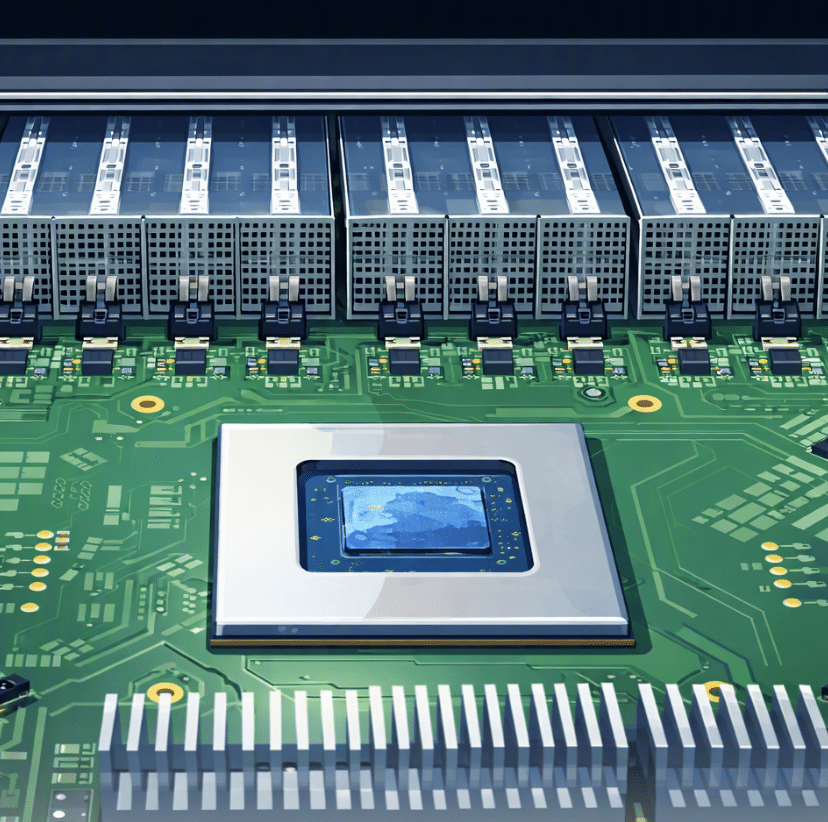
This is where Eliyan's engineering becomes a business story. AI systems do not merely need more calculation. They need larger pools of memory and faster paths into them. Eliyan's UMI interface and NuGear chiplet family target that memory and I/O bottleneck. The company markets NuLink PHY cores for die-to-die and die-to-memory links, NuLink-XS for connections between packages on the same board, and NuLink-XD for longer chip-to-chip and chip-to-module links.
Each step buys reach. Each step also changes the power, cost and signal-integrity calculation.
The customer pays for a component of a design, not a miracle cure. Eliyan lists IP cores and chiplet products and handles product inquiries directly. A chipmaker might use the PHY in an ASIC that needs more memory bandwidth, or place I/O chiplets near a compute die to widen the route out of a package. The savings case is strongest when standard packaging can meet the required signal, yield and thermal targets. A design that needs the density of advanced packaging may still choose it; Eliyan supports that route too.
“Our strategy is to provide maximum flexibility in choice of packaging options.”Ramin Farjadrad, on Eliyan's 2024 3nm tapeout
The capital behind the bet is considerable: $40 million in a 2022 Series A, $60 million in a 2024 Series B, another $50 million in strategic investment in January 2026, and a $145 million Series C that July. It announced the last round at a $1 billion valuation. Those are financing amounts, not the price of a customer's implementation. They do show that working silicon, qualification and customer trust take years of financial support.
When the wire gets longer
The surprising turn is that Eliyan no longer confines its ambition to the inside of a package. Its July 2026 NuLink-XD announcement described a configurable 224G PAM4 SerDes for chip-to-chip and chip-to-optical-module connections. In plain English, the company is following the same data problem outward, from neighboring dies toward boards and optics. A rack full of accelerators is still a conversation, only with a much bigger table.
The investor list follows that widening map: Intel Capital and Micron Ventures joined the early round; Samsung Catalyst Fund and Tiger Global co-led the Series B; AMD, Arm, Coherent and Meta appeared in the 2026 strategic investment; Cisco Investments and Lumentum joined the Series C. These are investors, not proof of volume purchases. Eliyan has said it serves roughly a dozen customers. Treat the cap table as evidence of industry attention, not a substitute for a purchase order.
There is a crowded alternative: large chip companies can build links in-house, and other IP suppliers can sell them. Eliyan's answer is compatibility plus specialized signaling, with packaging flexibility as the economic pitch. It joined Arm Total Design in 2025 and contributed to the Open Compute Project's BoW memory work. Standards matter here because no buyer wants a sophisticated bridge that leads to one supplier's island.
A lesson from the least glamorous part
The sequence is steadier than a cinematic pivot: architecture before the company, tapeout before working silicon, then a product family that reaches farther as the data problem spreads. The question seems to have changed from “Can we connect chiplets efficiently?” to “How far can the same expertise carry?”
Other hardware teams can copy the method, if not the patents. Start with a constraint buyers already pay for. Build around standards so adoption does not demand a new ecosystem. Demonstrate a working device before selling performance as settled fact. Then expand only where the original know-how actually travels. Eliyan's particular path requires deep analog design talent, expensive process access and customers willing to make a long design commitment. A team without those conditions cannot simply paste “chiplets” onto a slide and expect the same result.
The most useful way to understand Eliyan may be this: the AI boom is creating a market for the parts that prevent expensive processors from sitting idle. Compute gets the applause. The wire gets the invoice.