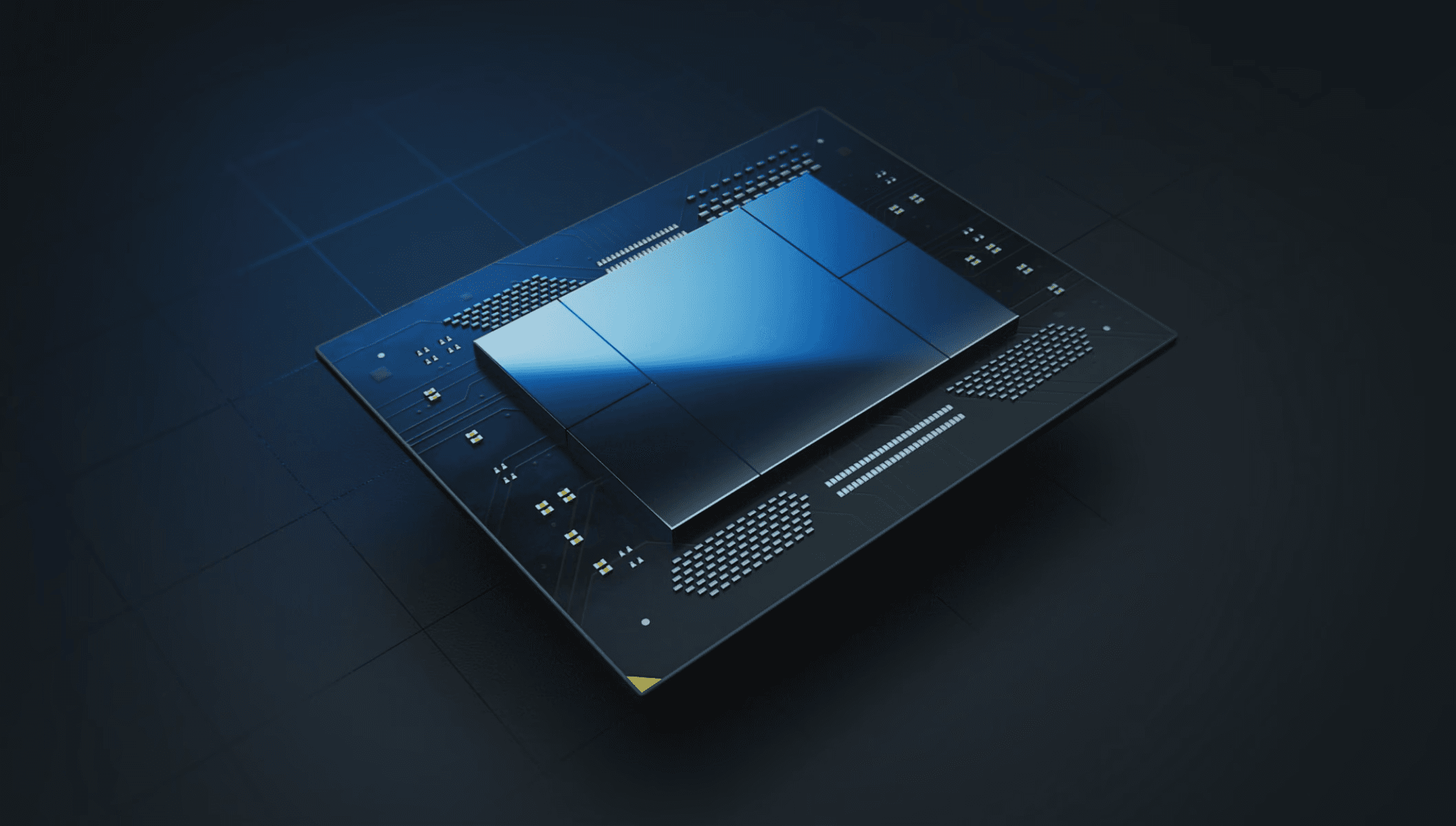
A lab in Milpitas, on a quiet Tuesday.
Who they are nowWalk past the door of an unmarked office on McCarthy Boulevard and you'd never guess. No signage to speak of, no "we're hiring" posters, no founder Twitter beef. Inside, about a hundred and thirty engineers are arguing about picoseconds. The arguments matter. The chips that move data inside the next generation of AI clusters, 6G basestations, lidar units, and quantum control racks need analog blocks that can sample faster, swing harder, and burn less power than anything in production today. Omni Design Technologies builds those blocks. Then it licenses them, by the IP core, to the fabless chip companies you have heard of.
That is the whole pitch. It is also why, in September 2025, a company most people had never heard of closed an oversubscribed $35M Series A - ten years after it was founded.
The problem they saw before the rest of us did.
The problemFor most of the last decade, the semiconductor conversation has been a digital one. More transistors, smaller nodes, bigger matmuls. The interesting part - the part where electrons turn into bits and back again - was treated like plumbing. Necessary, but not glamorous.
Then everything got faster. 5G needed multi-GHz RF sampling. Wi-Fi 7 needed wider channels with lower noise. AI accelerators needed PVT monitors crawling all over the die to keep them from melting. Lidar needed ADCs with dynamic range that would have been research-paper material in 2015. Quantum control needed DACs that worked next to cryostats. Suddenly, the plumbing was the story.
Omni Design saw this when it was still impolite to say out loud. The bet was simple, if not easy: build the very best data converters and mixed-signal IP in the industry, license them under NDA to anyone serious about silicon, and wait for the rest of the world to catch up. The rest of the world is now sprinting.
Three veterans, one stubborn idea.
The founders' betOmni Design was founded in 2015 by Kush Gulati, Hyun H. Boo, and Sid Dutta - three semiconductor lifers who had each spent careers inside the analog and mixed-signal groups of companies you would recognize. Gulati, who runs the company as president and CEO, is a data-converter specialist by training. The kind of person who can talk about ENOB at dinner and not notice the room emptying.
Their bet had two parts. First, that customer demand for high-performance, foundry-qualified analog IP would outrun what the in-house teams of fabless companies could deliver. Second, that being patient about it - shipping silicon, qualifying on real nodes, banking trust before raising headlines - would compound. For roughly ten years, they ran the company on commercial revenue rather than venture capital. The Series A in 2025 is, in this light, less a beginning than an acceleration.
The product, in plain English.
The productOmni Design's catalog goes under two brand names. Swift is the Wideband Signal Processing family: high-speed ADCs and DACs running at multi-GS/s, analog front-ends, RF transceivers, and the high-bandwidth interfaces needed to push the data off the chip without losing it. Droplets is the hard-macro and chiplet-ready line - pre-baked, layout-complete blocks a customer can drop into an SoC floorplan and stop worrying about.
There are also PVT monitors for AI silicon (the sensors that keep modern accelerators from quietly cooking), AEC-Q100-grade IP for automotive lidar and radar, and an emerging line of cryogenic-compatible and radiation-tolerant converters aimed at quantum control and satellite payloads. The common thread: ultra-low power, very high performance, ready for advanced process nodes.
Swift
Multi-GS/s data converters, analog front-ends, high-bandwidth interfaces for AI, RF, optical.
Droplets
Hard macros and chiplet-ready blocks for SoC integration without the in-house headache.
Auto IP
AEC-Q100 compliant lidar and radar converters - the kind of compliance work that takes years.
Quantum / Space
Cryogenic-compatible and radiation-tolerant converters for the strangest customer requirements in tech.
A decade, abridged
The proof: who's writing the checks.
The proofThe Series A is the cleanest evidence. It was led by CDIB-TEN Capital (a joint venture between CDIB Capital and TEN Capital) along with CDIB-Innolux II, FM Capital, Tipping Point Ventures and Tipping Point Capital. Following on were VentureTech Alliance, Foothill Ventures, ASMedia, and Monta Vista Capital. Several of those names are strategic - the kind of investors who tend to be customers, or one degree of separation from them.
The other evidence is the quiet kind. Foundry qualification on multiple TSMC processes. Automotive-grade compliance. A growing list of applications in chip press releases that never quite name the IP vendor. In the semiconductor IP business, that absence of name-checking is exactly what success looks like.
Where the IP shows up
The mission, said without the brochure voice.
The missionThe official line is "enable next-generation SoCs with faster, lower-power data transport and acquisition." Translated: make sure that as the world tries to push more data through more chips for more applications, the analog edge does not fall over. Power matters because data centers already consume small countries' worth of electricity. Speed matters because everything else is sprinting. Performance under both constraints is what Omni Design sells.
There is a useful contradiction at the heart of the company. The market is loud - AI hype, 6G announcements, quantum chest-thumping - and the work itself is intricate, slow, and almost defiantly unglamorous. Mixed-signal design rewards taste and patience. The Series A press release was, fittingly, the loudest thing Omni Design has ever done.
Why it matters tomorrow.
What's nextThe roadmap is the market's roadmap. AI infrastructure is moving to chiplet-based designs where mixed-signal IP gets re-used across many dies; Omni Design's Droplets line was already pointed that way. 6G will need RF sampling at frequencies that make today's 5G look conservative. Automotive sensing keeps wanting more dynamic range and lower noise so cars can see better. Quantum control hardware is leaving research labs for actual product timelines, and it needs DACs that can sit next to a cryostat without sneezing.
None of these are speculative bets anymore. They are line items on engineering schedules. Omni Design's job is to make sure the analog blocks are ready before the customer asks. That is a harder job than it sounds, and it pays off precisely when it is invisible.
Back on McCarthy Boulevard.
The room, revisitedThe unmarked office is still unmarked. The arguments about picoseconds are still happening. Now there is a Series A to deploy, a CFO who arrived in January, and a marketing leader whose job - it is fair to guess - will involve carefully turning the volume up just a little. Not too much. The thing that worked for ten years still works.
Somewhere, right now, a fabless company is finalizing tape-out on a chip aimed at an AI inference rack, or a Wi-Fi 7 router, or a lidar puck on the roof of a car you'll drive in two years. There is a very good chance an Omni Design IP block is sitting on the critical path. You won't see the name. You will see the performance. That, at last, is the whole point.