Consider the unfinished chip. Its circuits may be exquisite. Its transistors may be tiny. Yet somebody still has to connect it to the outside world, protect it, manage its heat and establish that it works. A semiconductor factory has done something difficult. Amkor Technology has another difficult job waiting at the exit.
- The work: package and test other companies’ silicon.
- The buyers: chipmakers, foundries and electronics companies, including Apple and Qualcomm.
- The bet: advanced packaging capacity, with a planned $12 billion Arizona campus.
Packaging is an unfortunate word for this business. It suggests cardboard, tape, perhaps an argument with a delivery driver. Here, the package helps determine how closely different chips can cooperate. The connections become part of the computing problem. That makes Amkor, a company many device owners never encounter by name, worth understanding.
Five machines and an ocean
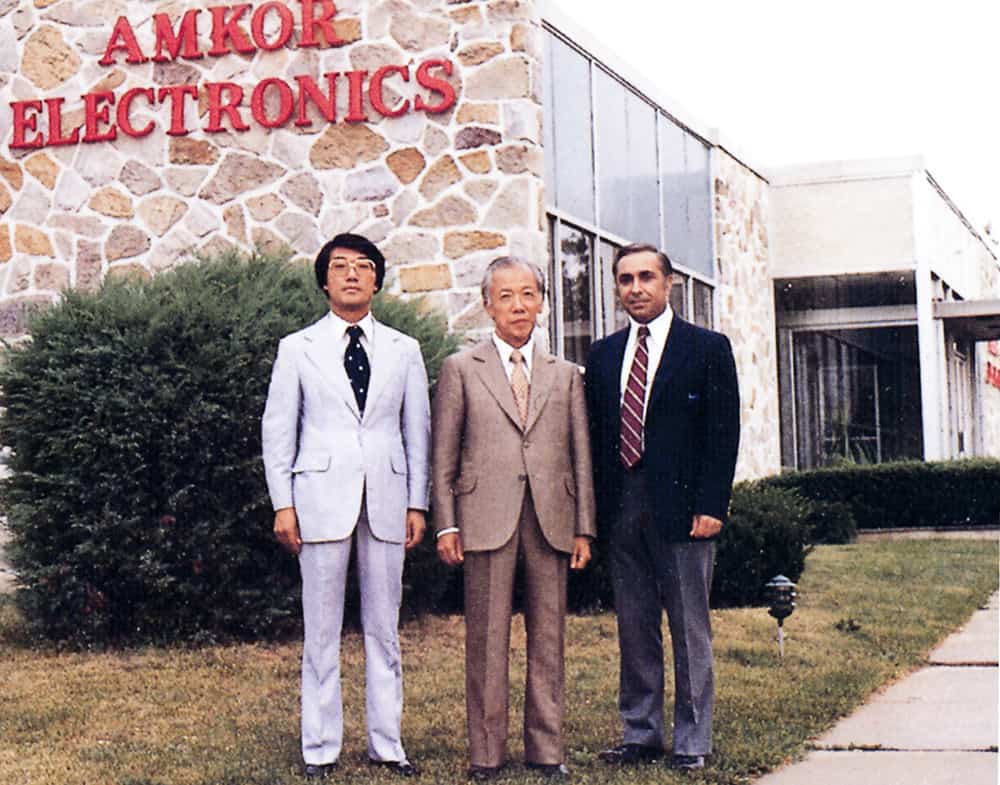
The origin is refreshingly mechanical. ANAM’s semiconductor operation in Korea began with three wire bonders and two die bonders. In 1968, James Kim established Amkor Electronics and a Philadelphia sales office. His father, Hyang-Soo Kim, developed the Korean manufacturing business. One side made things; the other found customers.
Even the name contains the arrangement: America plus Korea. By 1970, ANAM was exporting semiconductors in metal cans to the United States. The division of labor anticipated a familiar feature of today’s electronics business: a product could cross national boundaries long before anybody bought the finished device.
Amkor went public in 1998. It now sells manufacturing services across a broad package portfolio. Customers generally supply the wafers; Amkor supplies processes, equipment, materials and expertise for subsequent work. The useful thing it sells is repeatability: making a complicated design manufacturable again, and again, and again.
That places an unusual burden on the workforce. A promising package concept must become a process that colleagues can reproduce on the factory floor. Amkor’s Philippines recruiting materials emphasize cooperation and customer satisfaction; its Portugal careers page stresses continuous learning. These are the employer’s stated priorities. They also fit the work: packaging requires engineers, manufacturing teams and customers to solve problems together, then preserve the solution in a repeatable process.
The package joins the design team
A customer can ask Amkor for wafer bumping, package design, assembly and test. A small sensor needs different treatment from a networking processor. An automotive component brings reliability demands. A wearable brings an unforgiving space budget. Amkor’s catalog runs from wirebond and power packages to wafer-level packaging and system-in-package modules.
For a hardware team, the practical benefit is access to specialized manufacturing without constructing every capability internally. Engineers can discuss electrical behavior, thermal performance and qualification with the company doing the assembly. The consumer benefits indirectly, through the device that survives those engineering decisions.
Amkor’s services sit after wafer fabrication. Exact steps depend on the device.
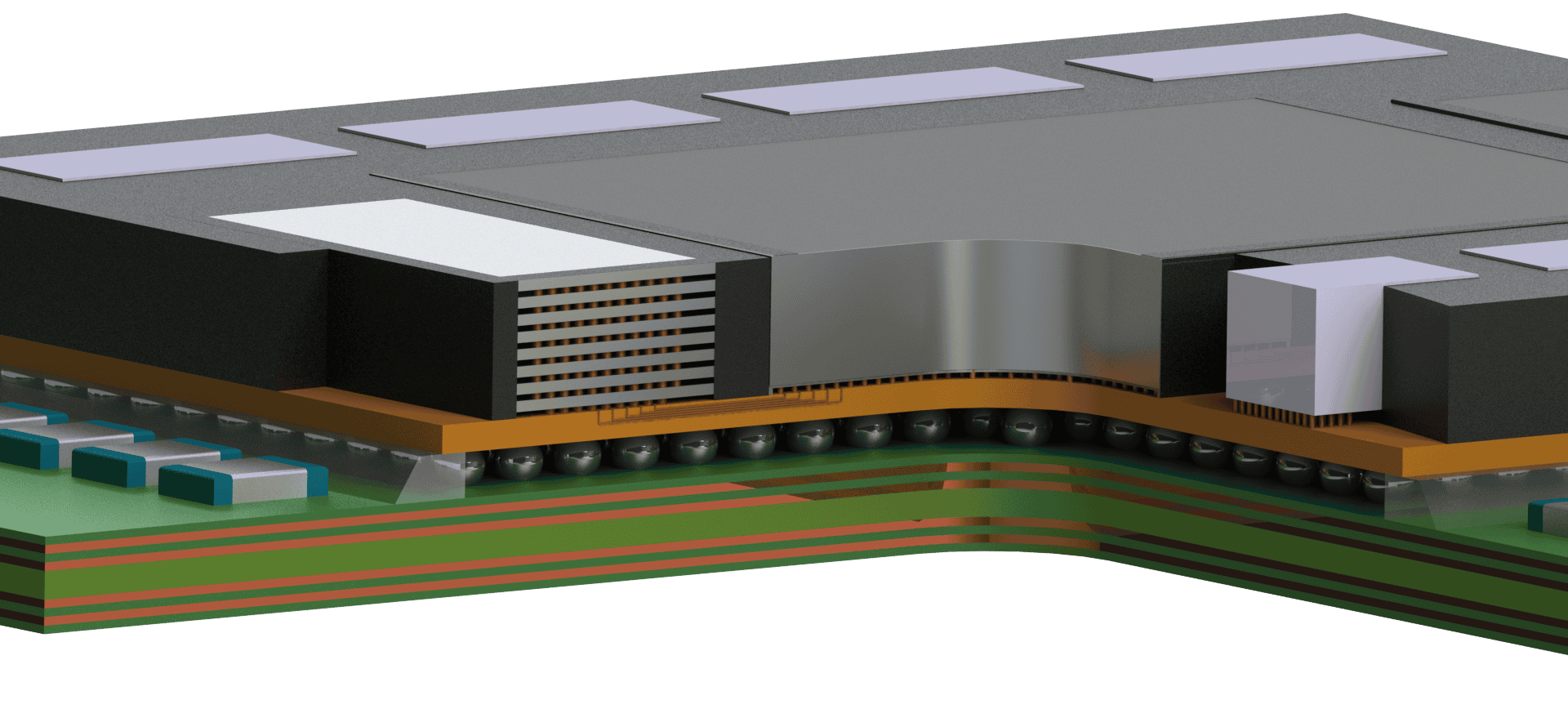
The more interesting products address how separate pieces of silicon communicate. S-Connect uses an embedded silicon bridge to connect dies within one package. S-SWIFT combines high-density fan-out routing with a substrate, supporting the integration of chiplets and memory. The ambition is tangible: shorter connections and more integration inside a constrained footprint.
Testing belongs in the same conversation. Wafer probe, final test, burn-in and system-level test examine devices at different stages and under different conditions. A beautifully assembled package is expensive waste if the resulting device cannot do its job. Manufacturing expertise includes finding that out before shipment.
The customer arrives before the factory
Amkor competes with ASE Technology, JCET and Powertech, alongside some foundries offering their own packaging. Its distinction is the combination of a broad outsourced-service portfolio and an expanding American manufacturing proposition. TSMC can be both a partner and part of a competitive landscape in which foundries also package chips.
In June 2026, TSMC and Amkor announced a ten-year agreement establishing a framework for TSMC to procure advanced packaging and testing in Arizona. Apple had already said it was investing in Amkor’s new facility and would be its first and largest customer. The project connects neighboring stages of manufacturing that otherwise need not share a country.
Then the proposed scale changed. In September, Amkor said customer commitments had exceeded the cleanroom capacity planned for Arizona’s first phase. It added a second phase and raised planned campus investment to approximately $12 billion. The stated reason was capacity demand, a rather more useful explanation than a vague enthusiasm for AI.
93,000 m² combined. Phase 2 completion targeted for end-2029. Planned capacity; not operating floor space.
On October 21, Amkor announced another NVIDIA agreement supporting South Korean expansion. It reported that its multi-year NVIDIA agreements across Arizona and South Korea totaled $3 billion. Customer prepayments help connect capacity spending to a customer’s manufacturing roadmap.
“Growing demand for accelerated computing is increasing the need for advanced packaging capacity.”Debora Shoquist / NVIDIA / October 2026
The lesson other businesses can borrow is specific: give an important customer a reason to commit before adding expensive capacity. A long agreement or prepayment makes demand more concrete. It still leaves the supplier responsible for delivering the technology and the factory.
The invoice keeps coming
The economics temper the excitement. Amkor generated $6.71 billion in 2025 sales and $374 million in net income. Second-quarter 2026 sales reached $1.90 billion, up 26% from a year earlier. Those are operating results. The Arizona investment figure is a future capital plan, measured across a different timescale.
The capital has several channels. Commerce awarded up to $407 million in milestone-dependent CHIPS funding in December 2024. In April 2026, Amkor priced a $1 billion convertible-note offering. Customer prepayments are another mechanism. Grants, borrowing and commercial commitments each come with different obligations.
What gives way when demand cools? Orders can weaken before factory costs do. In early 2024, Amkor linked a 22% annual decline in automotive and industrial sales to elevated customer inventories. Its filing explained that substantial fixed factory costs make margins sensitive to utilization. Cleanrooms do not become cheap because customers have enough chips.
That limits the lesson. Expanding ahead of orders works poorly when forecasts disappoint, qualifications slip or equipment sits idle. Amkor’s challenge is to turn commitments into working production. Its opportunity begins with a deceptively simple observation: the unfinished chip still needs somebody who knows how to finish it.