Imagine specifying a chip for a satellite. On your desk, it is a small component with a price and a delivery date. In orbit, it becomes part of a machine that nobody can casually open. A saving made during procurement can look rather different after launch. This is the calculation that makes Microsemi interesting.
The California semiconductor company sold into places where power, timing, security and reliability were engineering requirements with consequences. Its customers built aircraft, communications networks, industrial equipment and space systems. Microsemi rarely received the attention given to the finished machine. Its business depended on being chosen long before that machine became visible.
- Reliability and low power shaped the product choices.
- Acquisitions added programmable logic, timing and storage.
- Microchip bought the company in 2018; its technology continues.
01The price of getting it wrong
Consider RTG4, its radiation-tolerant field-programmable gate array. An FPGA lets engineers configure digital circuitry for a particular job. In a satellite, that job might involve processing information before sending it home. The device must do useful work inside a demanding power budget while facing radiation that ordinary office equipment can ignore.
In August 2018, Microsemi announced QML Class V qualification for RTG4. The announcement described hundreds of thousands of testing hours. Qualification made the devices eligible for space programs requiring that assurance level. Here, the testing history belongs in the buying decision alongside speed and capacity. A promising specification alone cannot replace it.
That distinction helps explain the competitive position. Microsemi faced companies including Xilinx, Altera, Analog Devices and Texas Instruments across different product categories. Its pitch joined programmable logic to expertise in power, secure hardware and difficult operating environments. The comparison was often about whether a part fit a particular mission, including its qualification requirements.
“reliability is vital and security is non-negotiable.”
FROM MICROSEMI’S HISTORICAL VISION
02A catalog assembled one capability at a time
Microsemi began as MicroSemiconductor in 1959. Decades later, acquisitions changed what the company could offer. In 2010, it agreed to buy Actel in a transaction valued at about $430 million, net of projected cash. Actel brought low-power, nonvolatile programmable logic, including radiation-tolerant FPGAs. That was a substantial addition to the engineering toolkit.
Symmetricom followed in 2013, with an announced value of roughly $230 million net of projected cash. Its specialty was precise time and frequency. Then came PMC-Sierra in January 2016, with recorded consideration of approximately $2.485 billion. Storage and communications became a larger part of the company. The catalog grew through the purchase of established capabilities.
The result could look untidy from outside: power components, clocks, Ethernet, storage controllers, programmable chips. Inside a customer's equipment, these functions have to cooperate. The strategic attraction was a supplier able to solve several neighboring problems. That is an interpretation of the portfolio, rather than evidence that every customer wanted the whole collection.
03Start with the engineer’s power budget
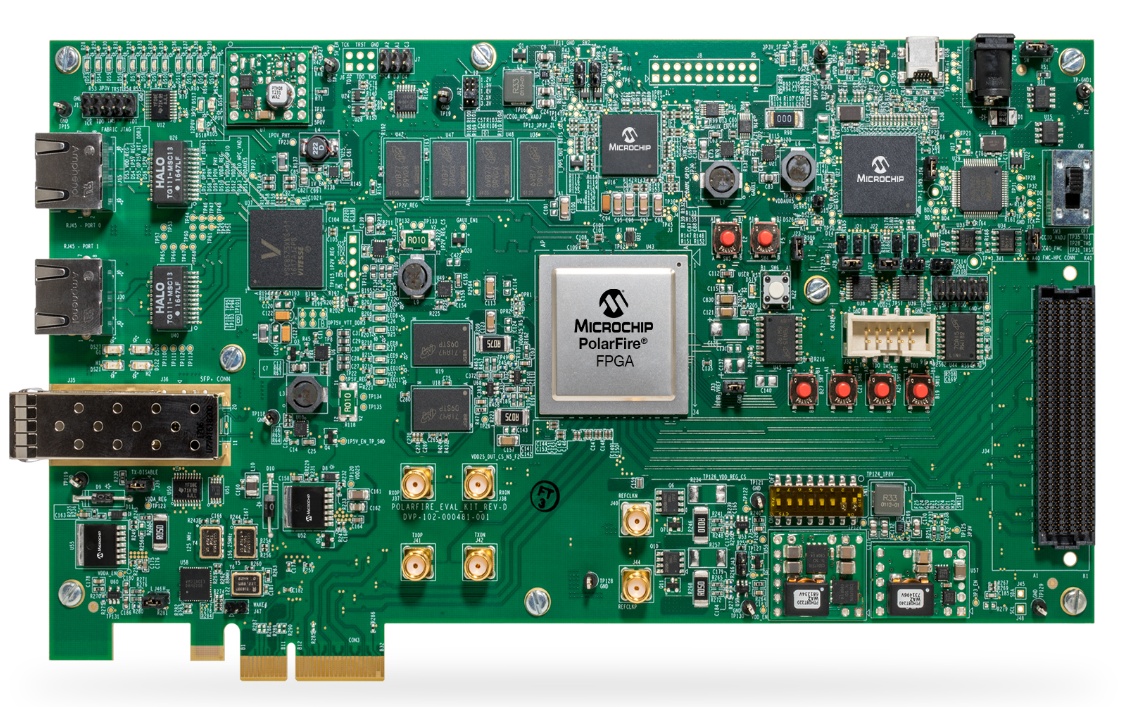
PolarFire arrived in February 2017. Microsemi claimed up to 50 percent lower power than competing mid-range FPGAs, a vendor comparison that depended on the design being compared. Lower power can ease cooling requirements and help equipment fit a constrained enclosure. For an engineer, those effects can matter well beyond the chip itself.
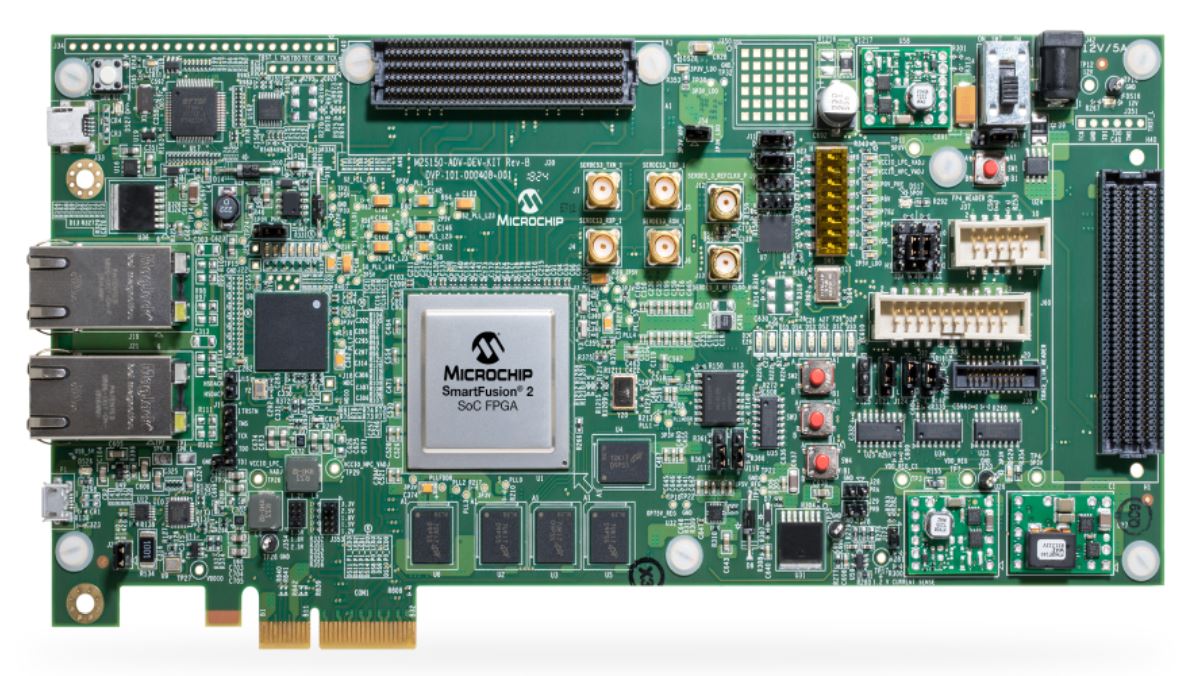
SmartFusion2 offered another route: flash-based programmable logic and an Arm Cortex-M3 processor on one device. Engineers could combine software control with custom digital hardware for jobs such as interface bridging, image processing and system management. Development boards and Libero software gave them a way to implement and evaluate those designs before committing to their own hardware.
Power over Ethernet made the breadth of that offering tangible. Microsemi sold both the integrated circuits and the midspans used to supply power over network cabling. A manufacturer designing equipment could buy components; an installer working with a network could use a separate system. Those are different customers buying related technology at different levels of integration. The same pattern appeared in timing, from embedded devices to complete systems. Understanding which layer a customer wanted to buy was part of understanding the company’s sprawling product list.
Timing solved a different practical problem. In 2018, Danish cable provider Stofa used Microsemi's TimeProvider 4100 grandmaster clock in a Remote PHY network trial. Moving network functions into a distributed architecture created demanding synchronization requirements. A clock became part of making the network architecture work. This was infrastructure selling, with the interesting machinery mostly out of sight.
04The buyer bought the whole collection
Microsemi earned money by selling components and systems to equipment makers and through distribution channels. In fiscal 2017, it reported $1.812 billion in net sales. Communications was its largest end market. The company’s space and defense identity was memorable, but its commercial network and data-center businesses also mattered to the financial picture.
Microchip agreed to buy Microsemi in March 2018 for $68.78 a share. The announcement put equity value at about $8.35 billion and enterprise value, accounting for net debt, at about $10.15 billion. Those figures describe different things. The acquisition closed on May 29. Microchip subsequently reported approximately $8.24 billion in consideration transferred.
The buyer wanted broader products, markets and customer reach. But the integration quickly exposed a separate problem. In August, Microchip chief executive Steve Sanghi said Microsemi's distributors held about four months of inventory, compared with roughly two and a half months in Microchip's channel. This was the acquirer's assessment, rather than an independently established finding of misconduct.
Microchip reduced shipments and said it was unwinding spending commitments. Its later quarterly filing reported that Microsemi distributor inventory had declined following the acquisition. The episode supplies a useful acquisition question: how much product is reaching customers, and how much is waiting on somebody else's shelves? A shipment can be real while the demand behind it remains further away.
05The name changed. The engineering continued.
Today, Microsemi's products and technologies sit within Microchip. In June 2026, Microchip announced TimePictra 12, software for managing synchronization networks of up to 5,000 elements. In August, it released a revised PolarFire Ethernet Sensor Bridge using NVIDIA Holoscan technology. Programmable logic and precise timing remain active parts of the successor portfolio.
The useful lesson for buyers is to begin with operating conditions. Estimate the consequences of failure, check the exact device's qualification, and include software, cooling and validation in the bill. For inexpensive equipment that is easy to replace, elaborate screening may buy little. For hardware headed somewhere inaccessible, the same expense can be easier to justify. The destination changes the arithmetic.