A young engineer can arrive at a factory with a perfectly reasonable solution and discover that nobody wants to use it. Kimberly Fields learned early to take that resistance seriously. At Owens Corning, working in glass melting, she began asking operators about the problems that bothered them. The work drew her toward a question that would keep returning throughout her career: what does the person on the other side of the process need?
Today she is board chair, president and chief executive of ATI, the Dallas-based materials producer. Her responsibilities extend from industrial operations to the boardroom. Yet the distance between those places can be overstated. A production problem has people inside it. So does a strategy. Fields’s career is interesting because she has spent years working at their intersection, first as an engineer and later as the executive responsible for making decisions across a business.
The operator’s side of the problem
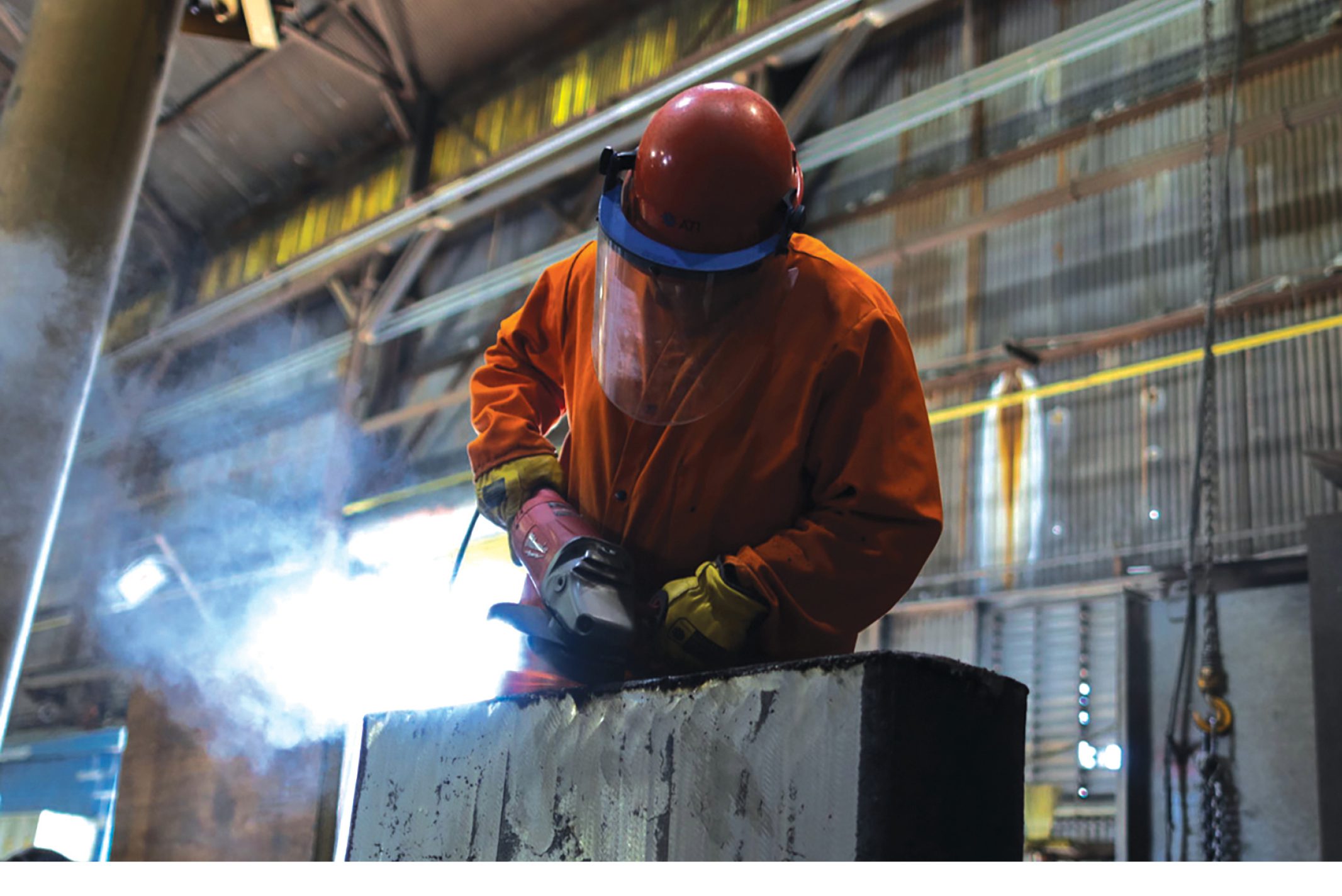
She was born in Skokie, Illinois, and studied ceramic engineering at the University of Illinois. During college, an internship at Coors Ceramics in Golden, Colorado, put her on a team developing a ceramic oil filter. Research met manufacturing. The attraction was seeing operators turn engineering ideas into something that could actually be made.
There is a practical education in that encounter. A design has to survive the journey from an engineer’s intention to somebody else’s working day. Questions about how to make it can expose weaknesses that were comfortably invisible on paper. For a future industrial executive, the people doing that translation are a useful place to begin.
Her early work at Owens Corning deepened the lesson. She later described becoming increasingly interested in people and the potential they could discover in themselves. Engineering had supplied one kind of problem to solve. Organizing people around the work supplied another. The two would remain connected as her responsibilities grew.
A chair at the table
One early encounter with Bob Wetherbee gave that development a rather literal push. As a consultant at Boston Consulting Group, Fields prepared presentation materials for a meeting of metals executives. Wetherbee moved her into the center of the table and asked her to deliver the presentation. She had prepared the work; suddenly, she had to speak for it.
It is a compact example of what a mentor can do. Responsibility becomes real when the person being developed has to exercise it. There is no particularly comfortable way to discover whether you can address a room of senior executives without addressing a room of senior executives. Someone has to let you try.
Fields went on to build experience across Alcoa, GE Energy and EVRAZ North America. At GE Energy, her industrial remit included metals, petrochemicals and mining. At EVRAZ, she took responsibility for its North American flat-products business. She also became a founding member of MetalSpectrum, an online metals trading venture. Her career crossed the physical business of making materials and the commercial work of finding markets for them.
An MBA from Northwestern’s Kellogg School of Management added business training to her engineering education. At IDEX, she served as president of GAST Manufacturing and later group president for industrial and energy. Fluidics systems and engineered products brought another set of operations and customers into view. By the time she joined ATI in 2019, the background was broad, but the recurring subject was recognizable: industrial businesses, their people and their capacity to grow.
Five years before the top job
At ATI, Fields entered through a business leadership role in Advanced Alloys & Solutions. Her remit widened to both business segments. She became chief operating officer in 2022 and president in 2023. These were years of getting to know the company through its operating responsibilities before taking charge of the whole enterprise.
On July 1, 2024, she succeeded Wetherbee as CEO in a planned transition. He became executive chairman. The company’s emphasis at the handover was on operating as an integrated organization, expanding capabilities and making more of the materials its customers valued. Fields inherited a transformation already underway, along with responsibility for carrying it forward.
That distinction matters to the story. A chief executive’s arrival is a convenient dividing line for a corporate biography. Industrial change rarely observes it. Facilities, customer commitments and production processes cross the date on the appointment letter. Fields had helped run the business before becoming CEO; the succession joined her earlier operating work to a wider set of obligations.
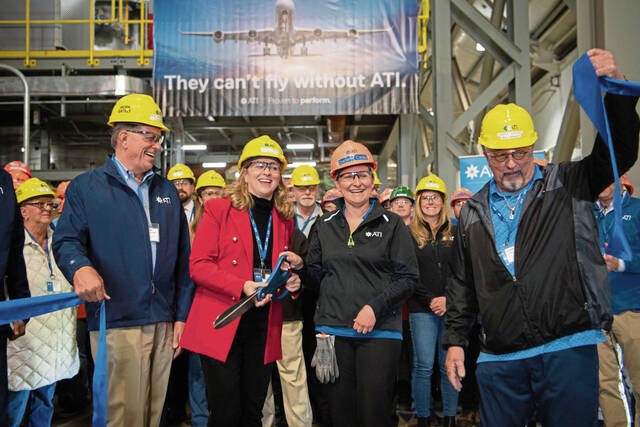
In May 2026, she also became board chair as Wetherbee retired from the board. Leroy M. Ball became lead independent director. The arrangement put the CEO and chair responsibilities together while retaining a designated leader for the independent directors. For Fields, it added oversight of the board’s work to the job of leading the company.
A customer request, made tangible
The business she leads makes specialized materials for aerospace, defense and energy. In her account of ATI’s direction, customer relationships help identify where its capabilities can make a difference. Her work across the company gave her a view of products and processes that relatively few suppliers could provide in combination.
Consider ATI’s titanium alloy sheet operation in Pageland, South Carolina. The company brought the facility online in 2025 after customers had asked it to add the offering. The material serves aerostructure components and assemblies. Production draws on capabilities across ATI, from melting to rolling. A request at the customer end becomes work across the enterprise.
That sequence helps explain the appeal of integration for an operator. Adding an offering involves more than finding a customer willing to buy it. The material has to move through the necessary processes. Those processes have to work together. The commercial promise eventually becomes a production obligation, with all the coordination that entails.
- 01Customer requirement
- 02Materials & processing
- 03Production
- 04Delivery
A different investment makes the point with more force. At Bakers, North Carolina, ATI installed a 12,500-ton billet forging press, paired with larger-capacity furnaces. Its description of the project emphasizes how equipment, transfer times and the layout of the operation work together. The press can handle titanium and nickel. The surrounding process helps determine what that machine can contribute.
It is tempting to tell an industrial growth story through the largest piece of equipment. The furnaces deserve some attention too. A press has to be fed. Material has to arrive at the right point in the process. A larger machine gives a business something to work with; coordinating the operation determines how useful it becomes. This is the territory Fields occupied before her name went at the top of the organization chart.
The work behind the numbers
ATI’s second-quarter 2026 results give a dated picture of the business under her leadership. Sales were $1.26 billion, up 11 percent from a year earlier. Net income attributable to ATI was $151 million, compared with $100.7 million in the second quarter of 2025. Backlog reached $4.4 billion. These are company results, produced by an organization rather than a single executive.
The operating details also describe friction. ATI reported higher manufacturing and period costs in its High Performance Materials & Components segment, including costs connected with revised qualification requirements for new capacity. Demand and capacity have to meet through the exacting work of production. An order book can grow more quickly than the ability to supply it.
For a leader with Fields’s background, that leaves a familiar set of tasks: understand constraints, decide where effort belongs and help teams deliver. A backlog represents work still to be done. Its value to the customer depends on what happens after the order arrives.
A coach with a materials problem
Fields describes herself as a coach. Her mother and grandmother were teachers, a family connection she sees in her own enjoyment of developing people. A colleague, ATI’s Natalie Gillespie, has described her readiness to let someone try an idea they believe will work. The recurring theme is giving people enough responsibility to find out what they can accomplish.
“I see myself as a coach.”
Kimberly Fields
Her career also suggests why coaching appeals to an engineer. Both involve paying attention to how something works before deciding how to improve it. In a team, the useful information can come from someone whose contribution has been overlooked. Giving that person a demanding assignment tests a leader’s judgment as well as the employee’s ability. Wetherbee’s invitation to present made the possibility concrete for Fields early in her career.
There is humor alongside the operating vocabulary. Asked for her karaoke selection, she chose “Material Girl.” A specialty-materials executive could hardly ask for a more accommodating song title. She also remains a Chicago Bears fan while enjoying the convenience of Dallas Mavericks games near ATI’s Uptown headquarters. Geography can change faster than sporting loyalty.
Next on ATI’s public calendar is an Investor Day scheduled for November 12, 2026, with discussion of its transformation, growth opportunities and new targets. Any fresh ambition will eventually return to the practical world Fields entered as an engineer: people interpreting a problem, processes being adjusted, a customer waiting for something to work.
Her stated aspiration is for teams to keep questioning established assumptions about what they can achieve. It brings the story back to those early conversations with operators. Before prescribing the answer, understand the work. Before accepting a limit, ask what would have to change. Then give someone the responsibility to try.