Consider the unglamorous problem inside a glamorous machine. An aircraft engine needs metal that can tolerate heat, stress and repeated use. The airplane manufacturer gets a name on the fuselage. The material supplier gets a specification to meet. For ATI, that specification is where the business begins.
- ATI turns specialty alloys into materials and components for demanding industrial jobs.
- It exited standard stainless sheet production in 2021 to concentrate on more specialized work.
- Aerospace and defense generated 68% of its 2025 sales.
There is something pleasingly awkward about calling ATI a metals company. It is accurate, but it leaves out the part customers pay attention to. An alloy’s chemistry matters. So do the sequence of melting operations, the way it is formed, its consistency and the evidence that it meets requirements. ATI works across that chain. Its commercial proposition is that fewer gaps between those steps can make a difficult purchasing decision easier.
01 / The machine was never the whole answer
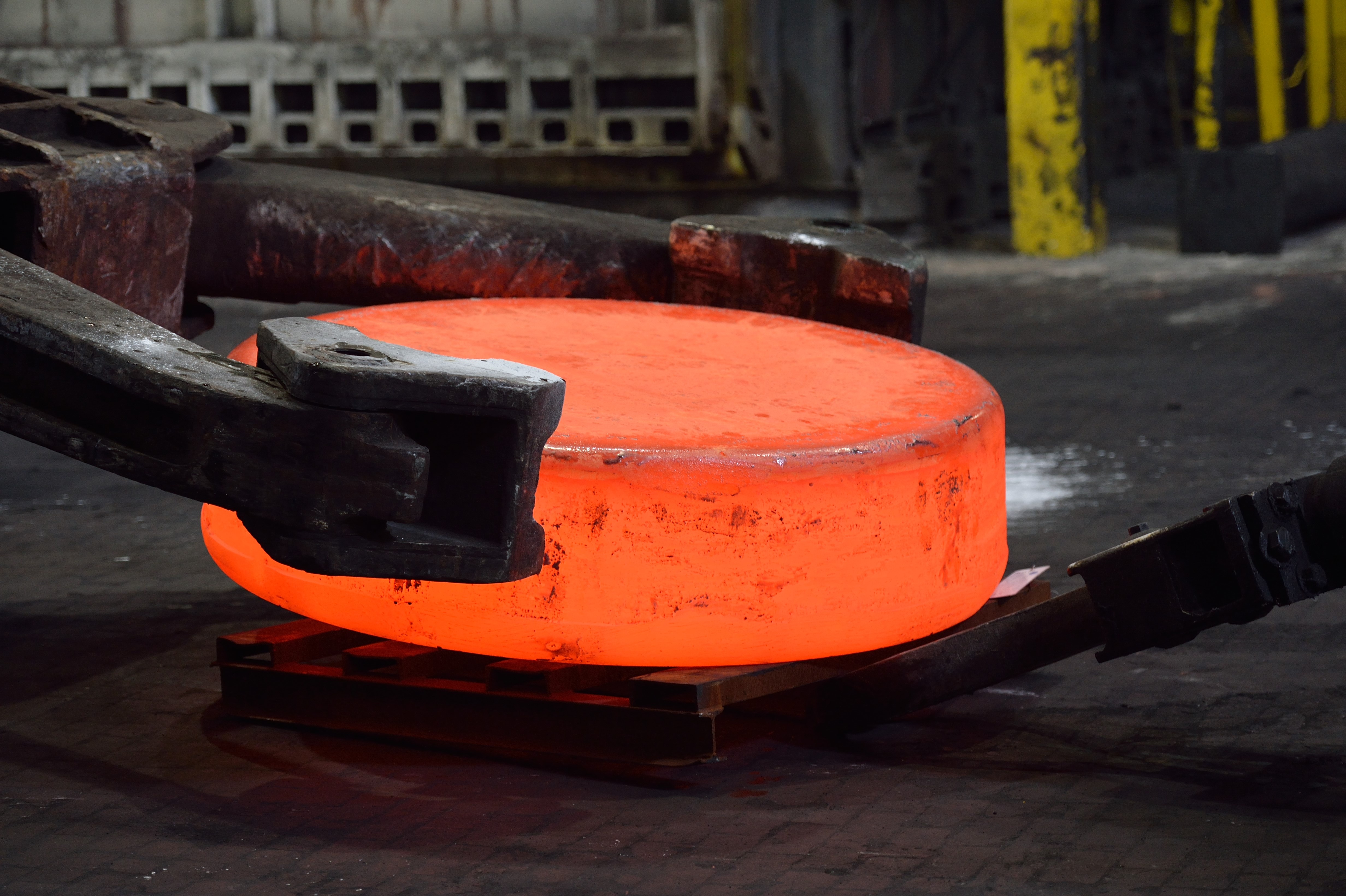
Take Brackenridge, Pennsylvania. ATI’s hot-rolling and processing facility represented a $1.2 billion investment. Here was substantial industrial muscle: equipment able to process specialty metals into useful forms. Yet owning sophisticated equipment did not settle the question of what should run through it.
In December 2020, ATI announced it would exit standard stainless sheet production and redirect its operations toward higher-value products. The weakness was economic. Standard sheet was a low-margin business; technical capability alone could not make every order attractive. The pandemic also battered the company’s markets. Annual sales fell to roughly $2.98 billion from $4.12 billion in 2019.
The accounting was bruising. Fourth-quarter 2020 restructuring and other pre-tax charges totaled approximately $1.105 billion, including $1.042 billion in long-lived asset impairments, primarily connected to Brackenridge operations. Those impairments were noncash write-downs, separate from the rolling facility’s investment cost. Severance and facility-idling costs were also part of the charges. A strategy change reaches people as well as spreadsheets.
The transition also ran through a labor dispute. A United Steelworkers strike ended in July 2021. ATI reported $38.2 million of strike-related costs in the second quarter, primarily from lower productivity and utilization. That was a separate operational bill, and a reminder that changing a product portfolio still depends on the people operating the plant.
02 / Make the difficult thing worth making
ATI’s answer was to concentrate on applications where specialized processing matters to the buyer. Titanium products serve aircraft structures and engines. Nickel-based alloys and superalloys serve high-temperature applications. Forgings become engineered shapes and components. Zirconium, hafnium and niobium extend the range into other demanding markets. Powders support additive manufacturing and powder metallurgy.
For an industrial buyer, those capabilities offer several entry points. Buy plate or sheet for further fabrication. Specify billet for downstream processing. Work with ATI on an engineered forging, a machined component or an alloy powder. Laboratory and failure-analysis services help investigate materials and performance. The company sits upstream of the finished aircraft, medical device or energy system, sometimes supplying material and sometimes carrying it further toward a finished part.
Powder production offers a compact example of that expertise. ATI describes vacuum induction melting and induction skull melting atomizers, with batch sizes ranging from development lots to production volumes. A customer testing a material and one planning repeat production need different quantities, but both need a manufacturing process that suits the alloy.
This breadth accumulated over time. ATI’s corporate foundation was the 1996 merger of Teledyne and Allegheny Ludlum. Its Allvac heritage brought vacuum-melting expertise; Ladish, acquired in 2011, added forging capabilities. The result is a collection of processes with a commercial reason to work together.
“ATI is exceptional for its ability to perform end-to-end across the entire jet engine supply chain.”
Jim Meudt · ATI Forged Products · July 2024
Competitors include Precision Castparts businesses, Carpenter Technology, Howmet Aerospace and Aubert & Duval, depending on the product. ATI’s argument is the connected production route. That is an advantage to evaluate against a particular specification, delivery requirement and approved supplier list. It is too broad to reduce to a contest over who makes the better metal.
03 / Two rivals. One titanium supplier.
The customer agreements make the shift tangible. In May 2025, Airbus signed a multi-year agreement for titanium plate, sheet and billet. ATI described it as a guaranteed-share contract that more than doubled its previous support. In July, Boeing extended and expanded its titanium agreement, covering narrowbody and widebody commercial programs.
Both announcements pointed to titanium alloy sheet from ATI’s new Pageland, South Carolina operation. Capacity had a destination. The agreements connect investment in production to identifiable customer requirements, while serving two airframers with competing aircraft programs.
of sales came from aerospace & defense
ATI sells physical products through a capital-intensive B2B model, with multi-year agreements important to its aerospace relationships. Some pricing mechanisms adjust for raw-material costs. The difficult work is earning money on conversion, expertise and product mix while managing inventories and equipment. In 2025, revenue reached $4.587 billion and net income attributable to ATI reached $404 million.
04 / A furnace is ready when the customer says so
ATI’s Richland expansion illustrates the next constraint. Electron-beam melting and vacuum arc remelting support the move toward premium titanium for engine applications. Installing equipment is one milestone. Producing material that meets customer qualification requirements is another.
The distinction remained visible in 2026. ATI’s second-quarter release identified costs associated with revised qualification requirements for its new Mexico facility and titanium electron-beam furnace. Even while sales reached $1.26 billion and backlog reached $4.4 billion, the company was still doing the work between installed capacity and dependable output.
There is a lesson here for businesses without furnaces: identify where your expertise changes a customer’s decision, then connect investment to evidence of demand. ATI’s example also carries conditions. Aircraft production can slow. Qualification can take longer. Equipment outages, raw-material volatility and labor disputes can interrupt delivery; a 2021 strike already demonstrated the disruption work stoppages can cause.
Kimberly Fields, CEO since July 2024 and board chair since May 2026, now leads a business increasingly tied to those demanding customers. ATI’s stated values include safety, integrity and accountability. In a factory, those words acquire practical tests: a sound process, a repeatable result, a shipment that meets its requirements. The metal has to behave. So does the organization making it.