In 1915, the Lockheed brothers had a repaired seaplane and a practical question: would anyone pay for a ride? At San Francisco’s Panama-Pacific Exposition, more than 600 people did. The ticket was $10. Their aircraft had previously been damaged against a dock, forcing the brothers to buy it from their investors and spend more than a year repairing it. Before the defense contracts came the familiar business of finding customers and fixing broken equipment.
- Lockheed Martin builds aircraft, missiles, spacecraft and the systems connecting them.
- Governments buy the hardware, then years of training, repairs and upgrades.
- Its F-35 delivery record and readiness problems reveal why those are separate jobs.
Today’s Lockheed Martin operates on a different calendar. An air force buying a fighter is choosing a technical relationship that can last decades. Pilots need training. Components need replacement. Software needs updating. A machine that looks finished on the factory floor is the start of another organization’s work. That is where this company becomes interesting: the transaction extends far beyond the photograph of the airplane.
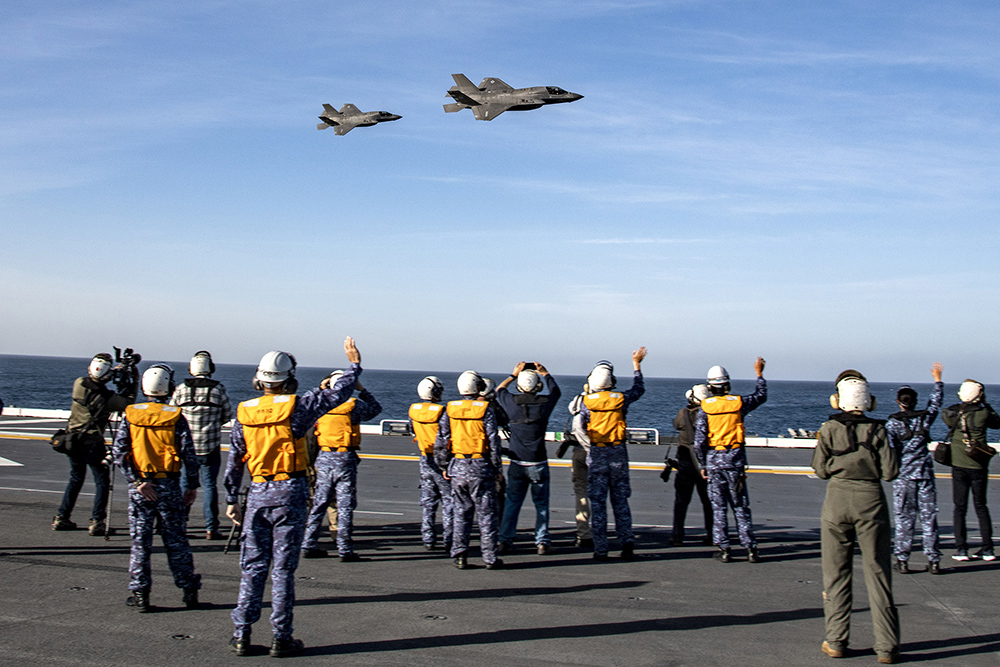
A factory for complicated relationships
The present company arrived in 1995, when Lockheed and Martin Marietta merged. Its aviation ancestors began separately in 1912: Glenn Martin on one side, Allan and Malcolm Lockheed on the other. The merger’s own history records a small naming problem. Martin Lockheed sounded too much like a person. Lockheed Martin became the name on the building.
The catalog is broad, but it has a recognizable logic. F-35 fighters and C-130J transports move through the air. Sikorsky helicopters carry people and equipment. PAC-3 MSE and THAAD interceptors defend against incoming threats. Aegis ties naval sensors and weapons together. Orion is NASA’s exploration spacecraft. The shared expertise is systems engineering: making hardware, software, people and procedures cooperate under demanding conditions.
That breadth does not make every product interchangeable with a rival’s. A buyer choosing a transport aircraft faces a different set of alternatives from a navy choosing a combat system. Once equipment enters service, changing suppliers can also mean changing training, maintenance procedures and compatible infrastructure. The useful comparison therefore includes the cost of operating and replacing a system, alongside what the first contract promises.
The customer is usually a government. The U.S. defense establishment and other federal agencies account for most of the business; allied governments buy aircraft and other systems too. NASA supplies the civil-space connection. For these buyers, the practical attraction is access to a contractor that can develop equipment, integrate it with other systems, train operators and support it afterward. Ordinary readers encounter that capability through public budgets rather than a shopping basket.
Annual net sales across four operating segments.
Lockheed earns money from development, production, integration and continuing support. Fixed-price contracts expose it to a different balance of risk than cost-reimbursable work. Overruns can therefore become the contractor’s problem, depending on the agreement. This is a public company, traded as LMT, rather than a venture-backed startup waiting for another funding round. Its expansion has also involved buying established capability: the Sikorsky acquisition carried a $9 billion price tag in 2015.
Its position among defense contractors also makes the word competitor slippery. Northrop Grumman, BAE Systems and RTX are F-35 partners, even while competing for other work. Boeing and General Dynamics occupy overlapping parts of the broader market. Lockheed’s appeal rests partly on its combination of aircraft, missiles, space systems and integration skills. The customer is evaluating a network of industrial relationships as well as an individual product.
Two scoreboards, one aircraft
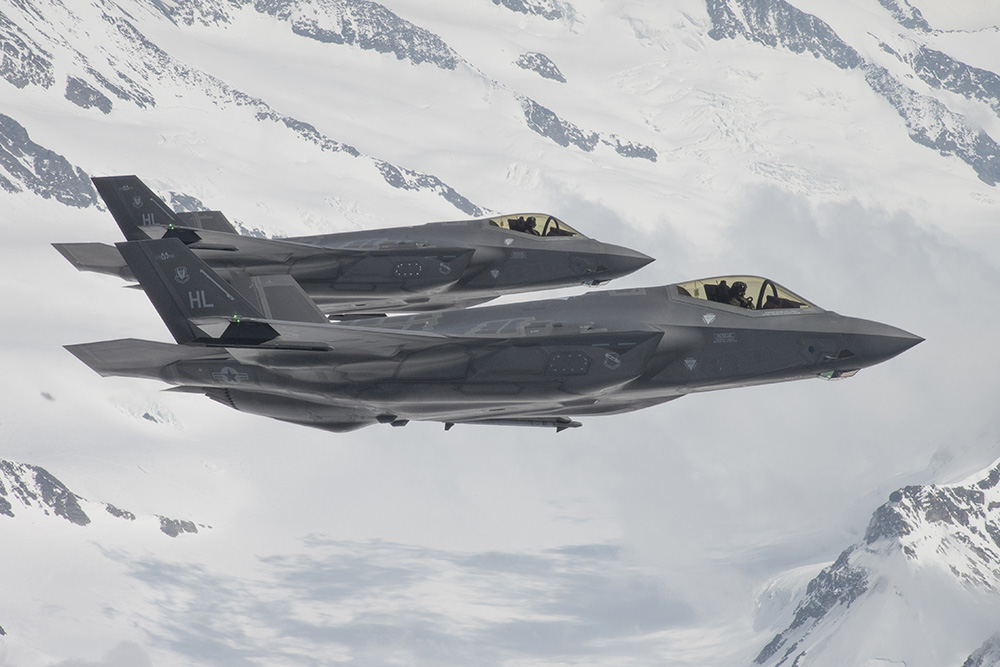
Consider two numbers that seem to disagree. Lockheed delivered 191 F-35s in 2025, a program record. Yet a June 2026 government audit found that the U.S. fleet’s mission-capable rate fell from 67 percent in fiscal 2021 to 44 percent in fiscal 2025. One number counts handovers. The other measures the share of time aircraft could perform at least one assigned mission. They describe different populations and different achievements.
Share of time able to perform at least one assigned mission. Fiscal years; GAO, June 2026.
The delivery disruption had an identifiable bottleneck. Technology Refresh 3, a $1.9 billion hardware-and-software upgrade suite, was the primary driver of late aircraft deliveries in 2024, according to GAO. Building an airframe did not settle whether its new computing systems were ready for acceptance. In July 2024, the program began provisionally accepting aircraft with TR-3 hardware before they were combat capable. The handover and the capability had come apart.
The maintenance problem produced another change of direction. The F-35 program office launched a sustainment reset in 2025, with estimated needs $13.7 billion above previous plans through fiscal 2031. Officials told auditors that performance would worsen as the fleet expanded without significant changes. GAO still identified risks, including industry’s capacity to supply parts. Extra money can place an order; it cannot instantly create the people and machinery needed to fulfill it.
The small-team idea has conditions
There is a useful contrast inside Lockheed’s own history. In 1943, Kelly Johnson’s Skunk Works team designed and built the XP-80 prototype in 143 days. The company still promotes the organizational principles behind that effort. Small teams. Clear authority. Early testing. Fewer reports. Those are attractive instructions for anyone exhausted by meetings, but Johnson’s rules also demanded financial discipline.
“There must be a monthly cost review”
Kelly Johnson · Rule 6
The review covered spending, commitments and the projected cost of finishing. Other rules required timely funding, specifications agreed in advance and close cooperation between contractor and customer. The celebrated autonomy depended on those conditions. Copying the tiny team while leaving its authority or financing unresolved misses much of the operating method.
For a buyer, that suggests a more demanding conversation before signing. What counts as acceptance? Which capabilities will be available at handover? Who controls the repair information, and how will missing parts affect the schedule? These questions follow from the gap between producing equipment and operating it. They are useful well beyond military procurement: any organization buying a complicated system has to decide who remains responsible when the delivery team has left.
For readers managing less dramatic projects, the transferable lesson is concrete. Give someone authority, test the difficult dependency early and keep a forecast of the remaining cost. Then measure what happens after delivery. A prototype team cannot, by itself, solve fleetwide repair capacity or a shortage across suppliers. Lockheed Martin’s history contains both the quick experiment and the long obligation. Its customers ultimately need both to work. That requires a second kind of engineering: organizing the work that continues after the machine arrives.