The interesting number in SPARTA’s history is $77.60. That was what shareholders received for each common share when Cobham completed its purchase in June 2008. In an employee-owned engineering business, a corporate transaction could land in the same household as a paycheck. The people doing the calculations had a stake in what those calculations were worth.
- SPARTA built expertise in missile-defense engineering, cybersecurity, and federal mission support.
- Cobham bought it in 2008; Parsons acquired the services business in 2011.
- The lesson: make technical judgment useful enough that customers pay for it.
The product was a better question
Picture the problem a defense customer faces. A sensor detects something. Software interprets it. A communications network passes the information along. Another system must act. Each component can look satisfactory on its own while the combination disappoints. Someone has to ask what the whole arrangement is supposed to do, and whether the pieces will cooperate.
SPARTA worked in that territory. Its scientists and engineers analyzed requirements, developed simulations, supported integration and testing, and helped customers navigate competing demands on performance, schedules, and budgets. The deliverable might be an analysis or an engineering service rather than an object you could place on a conference table.
By the 2011 sale, its Defense Business Unit covered missile defense, tactical systems, space systems, and network-centric systems. Its National Security Business Unit handled intelligence production, information assurance, and computer network operations. The customers were predominantly federal: defense, intelligence, and homeland security organizations. This was specialized work purchased through contracts and institutional relationships.
- 01Define
- 02Model
- 03Integrate
- 04Test
The people owned a piece
SPARTA began in 1979. Co-founder Wayne Winton brought experience from the Army and companies including McDonnell Douglas, Mission Research, and SAIC. That background matters because the company’s work required fluency in both technology and the institutions buying it. A clever calculation becomes commercially useful when somebody understands the decision it is meant to support.
The ownership arrangements gave the story another dimension. Winton later served as a trustee of the Beyster Institute, an organization devoted to employee ownership. SPARTA’s merger materials discussed retirement-plan shares, personally held shares, vested options, and unvested options. These were practical financial arrangements with different rules, rather than a vague promise that everyone belonged.
For the Cobham transaction, vested options were cashed out at the offer price less their exercise cost. Unvested options became rights to future cash payments on the existing vesting schedule. A proposed $15 million equity bonus addressed awards the merger agreement prevented SPARTA from issuing. Ownership had mechanics. Those mechanics became especially visible when the company changed hands.
“We believe that the proposed transaction provides tremendous value for our employee-owners.”
Bob Sepucha, SPARTA CEO · January 2008
The price of belonging
Cobham’s January 2008 announcement put the acquisition’s aggregate purchase price at $416 million, net of specified cash, option proceeds, and bonus payments. The merger closed that June. SPARTA became the British group’s engineering and scientific services platform, subsequently known as Cobham Analytic Solutions.
There was a particular complication: classified work under foreign ownership. The transaction presentation described a Special Security Agreement, administered through cleared U.S. citizens, to protect classified information. Corporate resources could cross borders more readily than sensitive information. The safeguards were part of the operating arrangement.
Three years later, Parsons agreed to acquire SPARTA and its subsidiaries for $350 million. The business had reported $322.7 million in 2010 revenue and roughly 1,100 employees across 15 primary U.S. offices. Composites manufacturing was excluded. The two sale prices therefore describe different packages; subtracting one from the other would produce a misleading verdict on the investment.
Announced net purchase price
Announced services acquisition; composites excluded
For Parsons, the attraction was a broader services portfolio and stronger cybersecurity capabilities. Its later annual reporting recorded the SPARTA purchase price as $349.3 million. The important change was strategic: an engineering and infrastructure company had acquired more of the expertise needed to advise national security customers.
From interceptors to internet addresses
One revealing chapter happened in public. In 2013, the Internet Society formalized cooperation with Shinkuro and Parsons/SPARTA on DNSSEC deployment. DNSSEC adds authentication protections to the domain name system. The collaboration concerned getting that protection adopted, bringing together organizations already working on a shared technical problem.
By 2015, Parsons was opening a Cyber Solutions Center in Virginia. It credited the acquisitions of SPARTA and Secure Mission Solutions with strengthening its cybersecurity capabilities. The center could replicate customer environments and examine vulnerabilities without putting actual operations in danger. Its applications included industrial control systems and critical infrastructure.
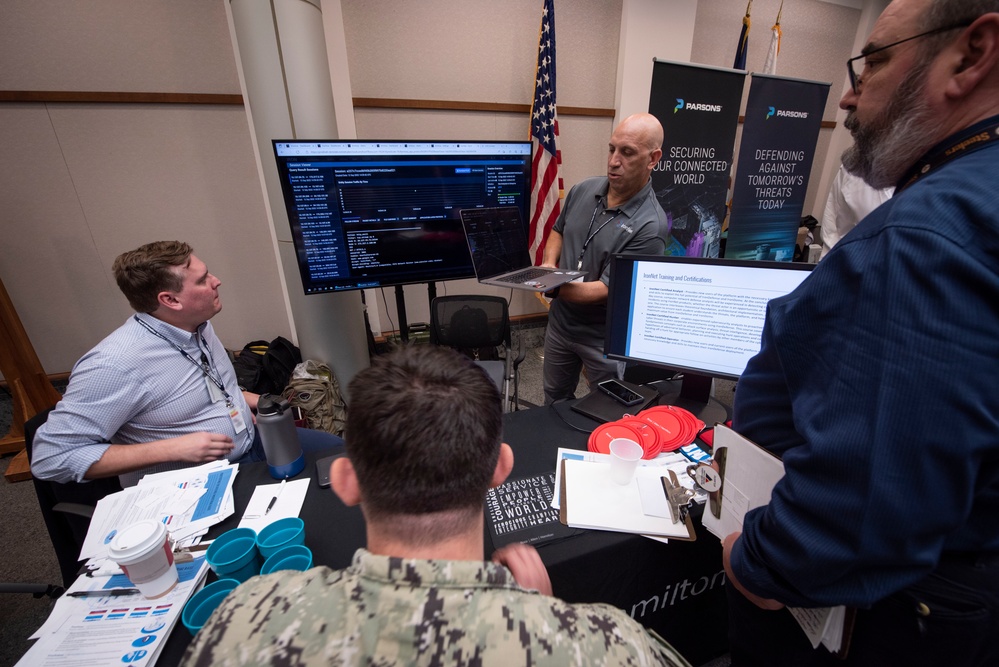
The lineage remains relevant. In July 2026, Parsons reported a two-year, $514 million extension of its Missile Defense Agency systems engineering contract. That award belongs to Parsons. It also helps explain why an older acquisition still deserves attention: expertise can remain useful long after a company stops being the name on the announcement.
There is a useful distinction here between an invention and the expertise that makes it deployable. A program can need requirements analysis before hardware exists, integration support while it is being assembled, and testing as the design changes. That spread of work helps explain SPARTA’s position in the market: an engineering services business could participate across a system’s life rather than depend on selling one finished device.
The part worth copying
Specialization carried a cost. SPARTA’s 2007 missile-defense revenue rose, yet total sales barely increased as other programs declined. Success in one area could be consumed by weakness elsewhere. Government priorities were embedded in the business model, alongside technical ability.
The portable lesson is an inference: learn a customer’s difficult decision deeply enough to help make it. SPARTA earned money through cost reimbursement, fixed-price, and time-and-materials contracts. Applying that approach requires specialized staff, procurement access, and the patience to work within institutional rules. It offers little guidance to a business seeking quick, self-service purchases. For the right customer, though, a better answer can be the thing worth buying.