deep-tech
(206)
Alchemist Accelerator teaches the art of getting paid.
Technical founders can build remarkable things and still struggle to sell them. Alchemist sells a six-month education in the people, budgets and buying decisions on the other side of the demo.
PsiQuantum is betting on the factory
A useful quantum computer needs more than clever physics. PsiQuantum is betting that the route to a million qubits runs through chip fabs, optical fiber and some very cold plumbing.
Hanhai Investment sells a desk. The real offer is an introduction.
Behind Hanhai’s Bay Area offices is a practical proposition: give technical founders somewhere to work, then help them find the people who can move their business across an ocean.

IQ Capital bets on the parts the future is missing
Quantum computers need networks. Robots need power. Factories need better systems. IQ Capital backs the companies fixing those awkward details - and helps them find a market.
Chalmers Ventures gives good science a business partner
A discovery needs more than a patent to become a company. Chalmers Ventures pairs research with entrepreneurs, invests in the result and puts the proceeds back to work.
Nordic Startup Ventures makes founders do their homework
A Finnish venture builder puts customer questions before investor applause. Its school and deep-tech program tackle the awkward distance between a clever invention and a business someone will pay for.

Sidec: from online shops to silicon chips
Selangor’s digital economy company began by helping merchants sell online. Its next wager is harder: give Malaysian businesses the people, tools and connections to design what the world buys.
Cycle Capital bets on the parts that save power
A chip, a membrane, a better molecule: Cycle Capital backs the machinery behind a less wasteful economy. Its wager is that climate technology wins customers when it improves the bill as well as the planet.
KIT-Gründerschmiede and the art of getting out of the lab
A research result can be brilliant and still have no customers. In Karlsruhe, KIT-Gründerschmiede helps founders make the awkward, necessary journey between the two.

Hello Tomorrow makes science worth a meeting
A laboratory breakthrough needs someone willing to buy, fund or build it. Hello Tomorrow has made a business of getting those people into the same room.
The Yellow SiC Group bets on the powder before the chip
Once known for turning sunlight and water into hydrogen, the company now trading as Y-SIC is taking aim at an earlier bottleneck: how Europe makes its silicon carbide.
SINE IIT Bombay: Great science needs a first customer
A laboratory can prove that an invention works. SINE helps answer the more awkward question: who will buy it? Inside IIT Bombay’s incubator, patient support now has a venture fund behind it.
IKP Knowledge Park and the expensive art of getting science to market
A laboratory can prove an idea. Building a business requires rather more plumbing. In Hyderabad and Bengaluru, IKP Knowledge Park has spent decades assembling the missing pieces.
TechConnect knows who should meet your invention
An obscure engineering search reveals the business behind TechConnect: getting a precise problem in front of people who can solve it, then giving them somewhere useful to meet.
AIC-SKU wants the next founder to stay in town
In Anantapur, a university incubator is building a route from classroom ideas to rural businesses. Its wager: talent should be able to find opportunity without first buying a ticket out.
Ikove Capital builds the company a patent can’t
A university invention can be brilliant and commercially homeless. Ikove Capital’s Startup Nursery supplies the people, capital, and market work that turn research into a business.
SETsquared Partnership: the value of a second opinion
Six UK universities share a business-building network that helps founders test markets, untangle research deals and meet investors. Sometimes its most useful contribution is persuading a company to chase a different customer.

VeniSIA wants Venice to manufacture its future
Venice has plenty of admirers. VeniSIA is recruiting builders, turning university research and corporate problems into ventures that might give the city a different kind of economy.
Venture Kick puts Swiss science on a nine-month clock
A CHF 10,000 grant starts the experiment. Three jury rounds later, Swiss researchers are expected to have something much harder than a clever invention: a business people want.
ARTPARK and the robot that had to begin with a joint
At IISc, a publicly backed venture builder tackles the expensive distance between a clever experiment and a useful machine. Its wager: share the tools, fund the awkward early work, and let some inventions belong to everyone.
Imperial Enterprise Lab makes room for the unfinished idea
Before a startup can impress an investor, it has to survive a conversation with a customer. Imperial Enterprise Lab gives founders a place to have that conversation - and free help with what happens next.
InnovX knows who should be in the room
The Bucharest accelerator connects founders, banks and corporate buyers. Its most interesting move is applying the startup playbook to companies that already have a business.

AI NATION buys founders time to find a customer
Germany’s AI researchers can build a prototype. AI NATION gives them six months, equity-free support and a more awkward assignment: proving someone wants it.
INAM and the art of finding your first industrial customer
A clever material can spend years waiting for someone to use it. Berlin’s INAM brings scientists, manufacturers and investors together around a more useful question: what would it take to buy this?
Axilor Ventures: good advice needs a cheque
The Infosys veterans behind Axilor built a 100-day accelerator, then listened when founders asked for capital. Its evolution explains what a seed investor can do between a promising idea and a business someone will pay for.

Jack Industries asks the question your pitch deck dodges
Can someone else retell your idea? Rafferty Jackson’s advisory practice helps space and autonomy founders answer that question - then tackle the work of scaling the company behind it.
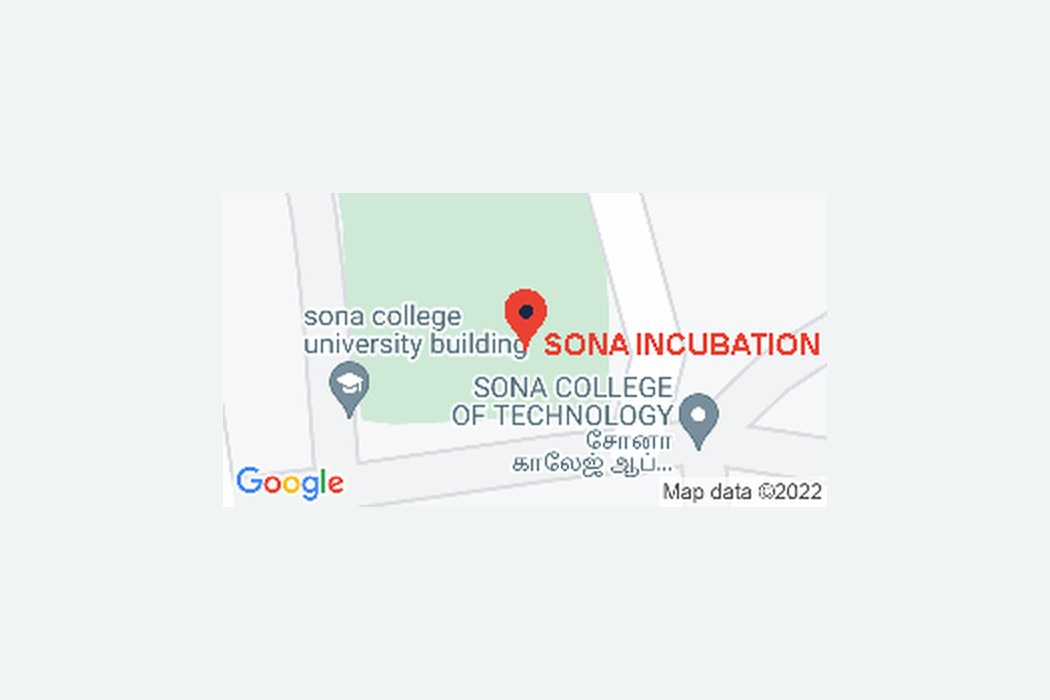
Sona Incubations puts a machine shop behind the startup pitch
In Salem, a campus incubator pairs fabrication tools with an IIT Madras connection. Its proposition is practical: give early founders somewhere to build, someone to question them, and a route to seed support.
Start2 Group turns foreign markets into first customers
A Singapore materials startup needed a European customer. Start2 Group helped turn the introduction into a pilot, and the pilot into a contract. Its business is making that awkward middle happen.
InnoSource Ventures and the business of the right introduction
A Zurich advisory firm connects startups with European buyers and investors. Its real subject is what happens before the meeting - and who keeps working after it.
APY Ventures bets on the work before the applause
A game before launch. A factory visit before a cheque. Inside the Turkish venture-fund umbrella that treats the next milestone as the real pitch.