In 2013, the researchers behind what became Atley Solutions had a prototype. They were working on equipment for making medicines with astatine, a radioactive element used in experimental cancer treatments. The scientific proposition was compelling. The company did not yet exist. It would be founded in 2019, after Chalmers Ventures introduced the researchers to entrepreneur Milton Lönnroth. Six years is a considerable interval between having something ingenious and having something somebody can buy.
- It builds research-based businesses and invests in them.
- Scientists can find entrepreneurial teammates before incorporation.
- Commercial validation precedes investment; admission is conditional.
- Investment returns help support another generation of ventures and research.
That interval is where Chalmers Ventures earns its place. The Gothenburg organization combines venture building with equity investment. It helps identify a market, assemble people, shape the business and recruit further capital. A brilliant invention can be its starting material. A viable company is the intended result. Anyone who has watched a promising research project linger in a presentation deck will recognize the difference.
A prototype cannot sign a customer
Atley’s story makes the distinction unusually tangible. Its technology concerns production equipment for investigational drugs, rather than a claim to have cured cancer. Astatine presents awkward practical constraints, including limited production infrastructure and a short half-life. Researchers must also contend with patents, licenses and commercialization. Scientific progress brings administrative companions, and they seldom travel light.
Chalmers Ventures helped connect the science with someone who could lead a business around it. Lönnroth became CEO when Atley was founded. The underlying research came from the Sahlgrenska Academy at the University of Gothenburg, a useful reminder that Chalmers Ventures’ orbit extends beyond discoveries made at its namesake institution. In the published startup story, the team credits both the introduction and knowledge exchanged with other portfolio companies.
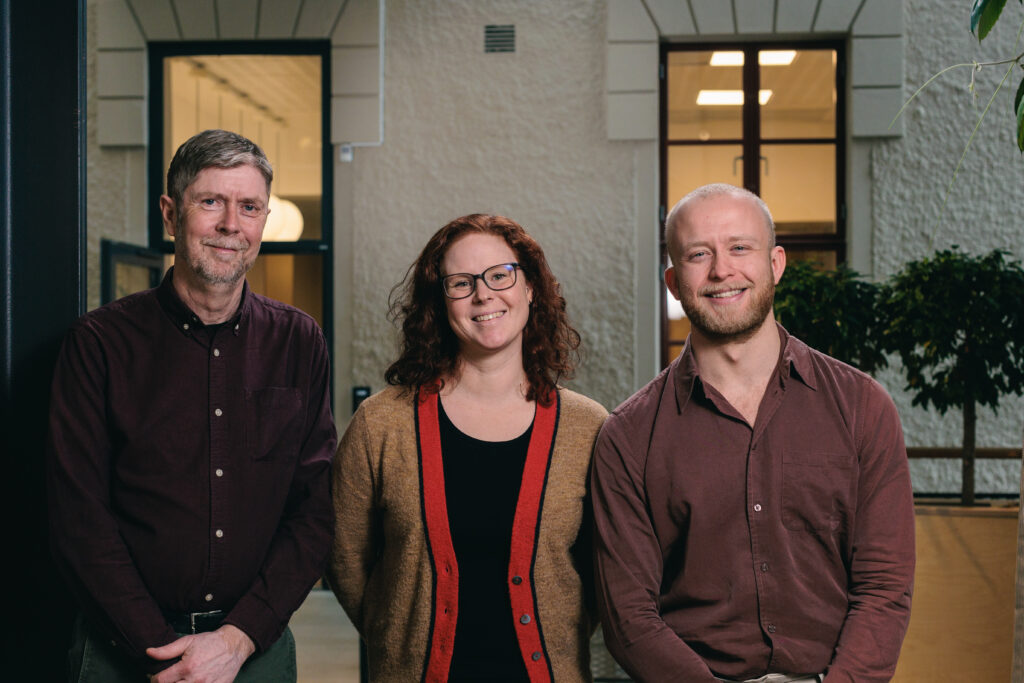
“Chalmers Ventures saw the potential and connected us.”Atley Solutions team
Bring the entrepreneur to the invention
The same logic appears in Tech Matching for Encubation. Selected research or technology is paired with students from Chalmers’ entrepreneurship master’s program. Over a project year, the entrepreneurs work full time on market validation and business development. A collaboration agreement provides structure; incorporation and investment follow if the commercial case proves convincing. A meeting between disciplines becomes a sustained piece of work.
Kathleen Murphy’s experience offers a particularly revealing detail. After participating in the matching process, she co-founded Valys with members of her entrepreneurial team. “Our CEO came from the Tech Matching program,” she says in its published testimonial. She describes gaining fresh perspectives on the idea. The change was in who examined the research, and the commercial questions they could bring to it.
Researchers who want an active role can explore the Tech Transfer route. Those still wondering whether a company makes sense can try Startup Camp Deep Tech: four workshop evenings covering the value proposition, startup roles, financing and a final pitch. Its current criteria require a West Sweden connection, clear rights to the idea and global market potential. Open Coaching offers a shorter, 15-minute conversation about the available paths.
- 01 Identify research
- 02 Match the team
- 03 Test the market
- 04 Build and invest
- 05 Scale, then exit
Each step asks for another kind of evidence. A promising laboratory result is the beginning.
Patient capital has a price tag
This machinery needed money of its own. In 2015, Chalmers brought together activities from Chalmers Innovation, Encubator and Chalmersinvest to create Chalmers Ventures. The university’s 2017 annual report records a ten-year commitment of SEK 300 million in investment capital from the Chalmers Foundation, alongside nearly SEK 150 million in operating support from the university. Coordinating expertise was a substantial institutional bet.
Today’s published financing stages set out a progression from pre-seed to growth. These are investment ceilings, not an entitlement for completing a program. Seed and growth funding involve co-investors. Companies must still make a case for their technology, team, commercial prospects and impact.
Up to these amounts; 25m is the total per selected portfolio company, not three additive cheques.
The evergreen model supplies a further distinction. Profits are reinvested, with proceeds also supporting research through Chalmers. In February 2022, the company reported SEK 81 million in profit for 2021 and said it would reinvest. Its October 2024 exit from email infrastructure business Halon illustrates the other end of the journey: that business had belonged to the Chalmers portfolio since 2013.
The customer lives beyond campus
Chalmers Ventures serves researchers, entrepreneurial teams and co-investors. Their eventual customers supply the sterner examination. In February 2026, it led Vesiro’s €1.6 million seed round, with Industrifonden as co-lead. Vesiro makes an Elasticsearch plug-in intended to improve performance and reduce server costs and energy use. The pitch concerns infrastructure customers already operate, giving an advanced algorithm a specific commercial destination.
In August 2026, Chalmers Ventures also participated in Solinide Photonics’ €4 million seed round. Solinide develops chip-based optical technology for moving data, initially targeting AI data centres. Funding is intended for engineering, commercialization and manufacturing preparation. Neither company’s financing is proof that every promised benefit has arrived. It shows investors funding the work required to reach customers.
Copy the sequence, earn the conditions
Chalmers Ventures sits where a university commercialization office, a venture studio and an early-stage investor overlap. Its useful distinction is continuity: the organization helping shape a venture can become its investor and active owner. Other investors remain necessary partners. The model gives specialist capital a company to assess, with more of the early organizational work already done.
The transferable lesson is to recruit commercial talent alongside technical talent, then test the customer problem before treating incorporation as victory. It depends on defensible technology, ownership rights, committed people and a market large enough to justify the effort. A local service business or a project without clear rights would struggle to fit. Institutions copying it also need money for operations, not merely an investment pot. Science deserves an audience; a business needs a buyer.