remote-monitoring
(51)
Ivideon gives the security camera a second job
A camera can catch a thief. Ivideon also wants it to explain a queue, connect distant branches, and show you who walked past the shop without coming in.

Glassbeam and the expensive art of keeping scanners busy
A scanner can be perfectly capable of seeing inside a patient and remarkably poor at explaining its own troubles. Glassbeam turns its machine logs into warnings, maintenance decisions and a clearer picture of where the working day goes.
Ranchbot and the expensive art of checking nothing
A full water tank can be surprisingly expensive to look at. Ranchbot connects remote tanks, troughs and pumps to a phone, helping ranchers decide which journeys are worth making.

Flagler Health is treating the clinic
The founders considered buying medical practices. Instead, they built software to handle the work between appointments - and raised $50 million to take it further.
Bsquare and the expensive art of keeping machines boring
A connected device is easy to celebrate and awkward to maintain. Bsquare built a business around that awkwardness - and Kontron paid about $38 million to bring it in-house.
Envera puts the guard everywhere but the gatehouse
A gated community can buy a barrier, a camera or a person to answer the call. Envera bundles all three - then moves the person off-site.
Anova and the Art of the Unnecessary Trip
A tank cannot tell you it is thirsty. Anova gives it a voice - and gives industrial distributors a chance to stop driving out just to ask.
Patients Know Best wants your medical record to follow you
Eight million patients have registered with a company built around a stubborn idea: the person receiving care should control a copy of the record. Making that work means changing how hospitals buy software, share information and involve patients.

Ground Control and the art of sending less
A water level, a missing buoy, a glacier’s temperature: Ground Control makes a business of getting small, consequential messages out of places ordinary networks cannot reach.

EPIC iO Bet the Camera Was Never the Point
The Fort Mill company is stitching cameras, sensors and wireless links into one operating layer for remote sites - a useful idea whose economics depend less on magical AI than on good placement, clean signals and humans who still make the call.

Syncro’s Bet: Charge for the Technician, Not the Machines
Most IT platforms meter every device. Syncro bets a lean technician should be able to manage thousands - and keep the margin. Here is where that math sings, where it squeaks, and what an MSP can copy.

Larry Rubin Has Been Building AI Since Before It Was Fashionable
A 1991 neural-network patent, a career crossing laboratories and startups, and one durable idea: make difficult measurements useful outside the room where experts usually take them.

Bill Hunter Put a Voice Inside the Implant
A physician-founder spent three decades teaching medical hardware to do more than sit quietly. His latest chapter turns implants into long-lived witnesses, sending useful signals from inside the body.
RxPx Merged Two Health-Tech Companies to Fix the Moment Specialty Medicine Falls Apart
Specialty drugs can be brilliant in the lab and maddening in real life. RxPx sells pharma companies one connected system for the paperwork, monitoring, coaching and human handoffs that determine whether a patient starts therapy - and stays on it.

The 65-Person Engineering Firm That Gets the Call When a Cell Tower Starts to Move
Varcon built a national business around an unglamorous truth: towers age, bolts crack, and paperwork can be as dangerous as wind. Its advantage is closing the gap between the engineer who finds the problem and the crew that fixes it.
The Dog That Built a Sensor Company
A near-miss with a dog named Daisy turned a 30-year security engineer into an RV-sensor entrepreneur. The result is a phone dashboard that watches the things you can't - and pings you before they go wrong.
The company that turned a $6,000 diabetes gadget into a $249 ring
Piyush Gupta left Abbott, watched his wife struggle with gestational diabetes, and decided the fix wasn't a better sensor - it was a cheaper one. A decade later, Ambrosia Systems sells glucose tech in 100-plus countries and just put the whole thing on your finger.
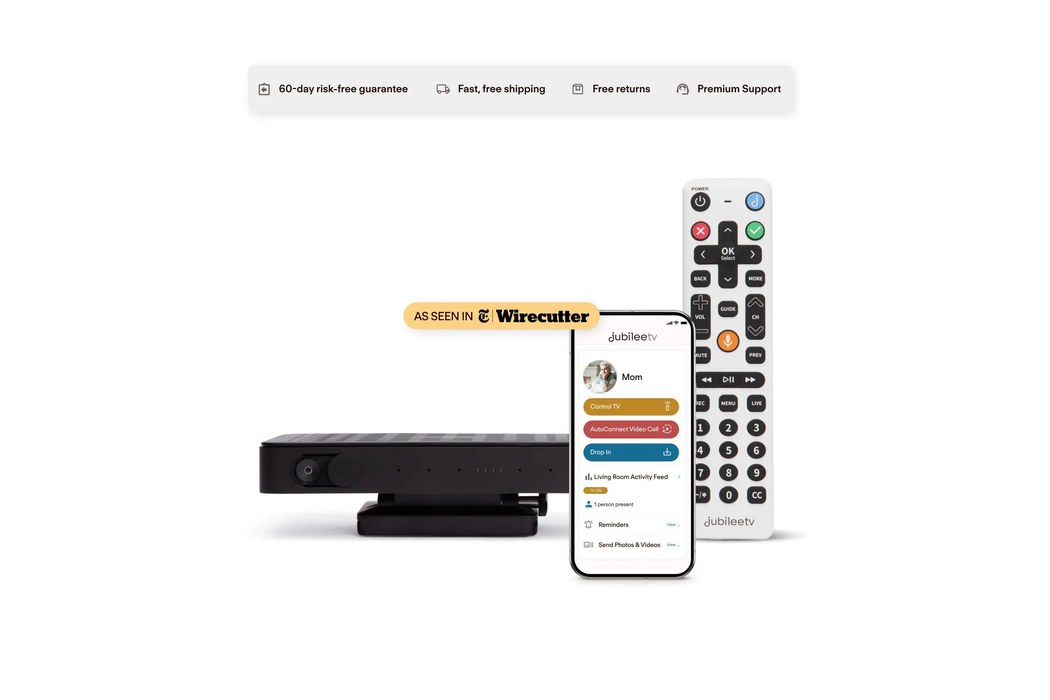
The Startup That Turned Grandma's TV Into a Caregiver
A failed universal-remote company rebuilt itself around one uncomfortable truth: the hardest part of caring for aging parents is the 300-mile drive to fix their TV. JubileeTV turns that TV into the caregiving hub instead.

CamDo Turned a Paraglider's Battery Hack Into a $999 Jobsite Camera - Here's What Builders Can Copy
A camera that wakes up, takes the right frame and goes back to sleep sounds modest. On a construction site, that small trick became a hardware-and-software business built around fewer site visits, cleaner project records and equipment that can stay outside for months.

The Fighter Pilot Who Traded Jets for a Camera That Watches Your Back 40
A retired fighter pilot from a Nebraska ranching family set out to build a water-tank sensor. His customers told him what they actually wanted: eyes on the land, no Wi-Fi required.

Ring Put a Camera on the Doorbell - Then Built a Business Inside the Ding
A garage-built doorbell became a reported $1 billion Amazon acquisition by turning the front porch into software. The playbook is worth stealing; the privacy bill is not optional.
The Watch That Talks Back: How a Retired Chip Engineer Built a Medical Alert Seniors Actually Wear
Jean Anne Booth sold two chip companies to Texas Instruments and Apple, then un-retired to solve one stubborn problem: her 80-year-old mother would not wear anything that looked like a call-for-help button.
Blue Pillar Made Old Machines Talk - Then Generac Bought the Conversation
Hospitals, utilities and microgrids were full of useful machines that could not share data. Blue Pillar found a practical business in connecting the awkward old stuff - often in days, sometimes for a few thousand dollars - and became part of Generac in 2022.

David Kuraguntla Built Alio by Learning When to Leave the First Idea Behind
A planned surgical career became a decade-long lesson in risk, reinvention and patient-centered product design. The result is Alio - and a founder’s playbook built around fast decisions, aligned incentives and the discipline to change course.

The Software That Runs the Companies That Run Your IT
Most people have never heard of ConnectWise. But if a small business somewhere fixed your laptop last week, the outsourced IT shop that did it was probably running on ConnectWise software.

Amir Reuveny
The Wesper founder spent years making electronics bend. Then he built a company around a harder discipline: making complex technology disappear into an ordinary routine.
Pelago
Pelago is a virtual clinic for substance use management, delivering physician-led, evidence-based care for tobacco, alcohol, opioid and other substance use. Founded in 2017 as Quit Genius by three Imperial College London physicians, the company combines cognitive behavioral therapy, medication-assisted treatment and at-home monitoring tools into a program sold to employers, health plans and pharmacy benefit managers. Pelago says it has supported more than 750,000 members and validates its approach with 13 peer-reviewed studies.

Wesper
Wesper is a New York-based sleep-health company that has built a wireless, wearable patch and cloud platform for clinical-grade, at-home sleep apnea testing. Founded in 2017 (originally as Tatch) by Dr. Amir Reuveny and Adi Mordechai, Wesper combines flexible printed electronics, machine learning, and a provider portal to replace the wires and single-night snapshots of traditional sleep labs with comfortable, repeatable, longitudinal testing. The FDA-cleared Wesper Lab lets patients test at home while giving physicians high-resolution data that correlates closely with in-lab polysomnography.

Delfina
Delfina is a San Francisco-based maternal health company that pairs an AI-powered clinical platform with a consumer pregnancy app to make prenatal care proactive rather than reactive. Its predictive models flag rising risk - preterm birth, hypertensive disorders, gestational diabetes - while patients track vitals from home and connect around the clock with bilingual virtual doulas, dietitians, and mental health support. Founded in 2021 by physician-scientist Dr. Senan Ebrahim and his co-founders, Delfina sells to health plans, providers, and employers, and has raised roughly $22M to date, including a $17M Series A in January 2025.

SuperOps
SuperOps is an AI-native IT management platform that folds professional services automation (PSA), remote monitoring and management (RMM), unified endpoint management, service desk, patching, and documentation into one system. Founded in 2020 by Arvind Parthiban and Jayakumar Karumbasalam, it targets managed service providers (MSPs) and in-house IT teams, pitching a single pane of glass that replaces the 10-15 tools an MSP typically stitches together. Backed by $54.4M in venture funding, it added an agentic AI assistant, 'Monica,' and expanded from MSP tooling into internal IT teams with a cross-OS UEM product.