The least cinematic part of a time-lapse film is everything required to keep the camera alive. Batteries fade. Memory cards fill. Wi-Fi vanishes. A pole vibrates in the wind. Somebody erects scaffolding directly in front of the lens. Six months later, the concrete is poured and the footage is useless. CamDo built a Vancouver company around this collection of small, expensive annoyances.
Its construction systems combine a camera, weather-resistant enclosure, scheduled power, battery or solar supply, cellular or Wi-Fi connectivity and CloudX, the software that receives the images. Contractors can check progress without driving across town. Owners can see a current frame. Marketing teams can turn thousands of stills into a 4K film. Newer computer-vision tools are meant to flag safety observations and produce reports. The camera is visible; the workflow is the product.
The CamDo stack
The company began in the air
The origin is unusually literal. Founder Peter Jennings liked paragliding and wanted to photograph long flights, but a camera left running would exhaust its battery. He devised a controller that woke the camera, captured a frame and shut it down again. That extended the useful life of a small action camera and became the seed of CamDo. In 2014, the operation transitioned into CamDo Solutions. Todd McCann, a mechanical engineer with years of international construction experience, became co-founder and CEO.

Todd McCann had managed large engineering teams and MEP work on high-rises, airports, tunnels, hospitals and data centers. CamDo's eventual move toward construction was less a pivot into an unknown market than a return to terrain he understood.
The early catalog wrapped extra intelligence around GoPro cameras: interval controllers, motion triggers, external power and housings. Customers pushed the gear into strange assignments. CamDo says its equipment has captured wildlife for National Geographic, imagery on the International Space Station, rocket launches for NASA and SpaceX and pictures 2,000 feet below the ocean. Those adventures produced a useful commercial reputation. If a box can work on Antarctic ice, leaving it above a building site for nine months sounds less alarming.
“We were looking for low cost, high quality, and a reliable camera, and we got that with CamDo.”Douglas MacAyeal, University of Chicago glaciologist
A catalog built around two choices
Today the buyer first chooses between integrated convenience and modular flexibility. DataLens is the simpler object: a 4K camera, storage, modem and power system in one unit, with a battery-only version listed at $999 and a solar-and-battery version at $1,299. It is designed to upload through built-in cellular service and work with CloudX. CamDo pitches installation in minutes, though its own guides correctly spend many pages on placement, signal, safe access and future obstructions.
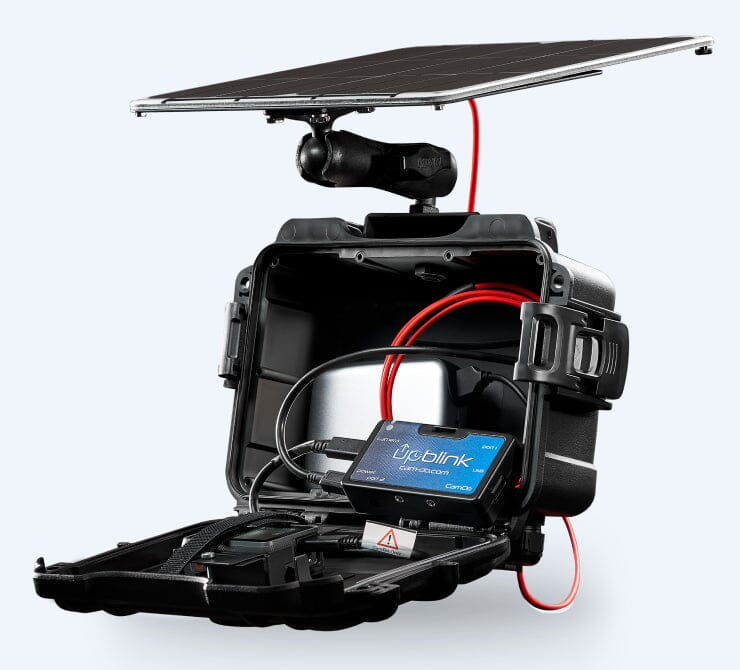
SolarUp and PowerUp are the more configurable route. They package a GoPro or Sony camera with a controller, enclosure, battery and solar or AC power. CamDo lists starting comparisons around $2,094 for AC and $2,643 for solar, while a configured current pack can run higher. The advantage is resolution and replaceable parts: a GoPro HERO12 can capture 27-megapixel stills. The tradeoff is more pieces, more setup and, in some configurations, an external cellular modem.
Published hardware starting points
CloudX is the recurring layer. Current product pages list Pro, Plus and Max subscriptions at $69, $99 and $159 per month. The software uploads and stores images, reports device status, sends email updates, shares a latest frame and creates time-lapse videos. Connections to Procore, Autodesk Construction Cloud, BIM 360 and CMiC let teams surface camera output in the systems they already use. That matters because the quickest way to kill a field tool is to make a superintendent remember one more login.
What failed first
Battery life was the original failure. Then came the less romantic breakdowns. In a Fire Island photographer's first deployment, configuring the hotspot took time. She later switched from a Sony RX0 II to a GoPro HERO5 because the Sony lens was not wide enough for her small lots. At Topcon's Livermore training-center build, construction equipment knocked over one of four 16-foot camera posts. The enclosure saved the camera, but retrieving memory cards still required a lift every two or three months.
The most revealing failure happened in software. CamDo launched CloudX in 2018, then publicly wrote that the platform was not quite up to what the team had in mind. It rebuilt the product with a clearer dashboard, remote firmware updates, flexible sharing, subscription controls and better troubleshooting data. The company's mind changed because connection alone was insufficient. Customers did not merely need photographs in the cloud; they needed confidence that an unattended device was healthy.
CamDo's August 2026 installation guide carries the scar tissue forward. It tells crews to frame the completed roofline, not the empty excavation; account for future scaffolds and cranes; check seasonal sun; avoid mounts that will move; test cellular strength at the actual camera position; and retain local storage for outages. No camera can repair a poor sightline or unstable pole. This is where a modest hardware company becomes a repository of field expertise.
Who buys the view
General contractors use the image history to confirm progress. Owners and school districts share frames with boards, parents and taxpayers. Marketing teams turn construction into proposal footage. Photographers add a recurring service. Researchers need a low-power camera in places humans cannot routinely visit. CamDo publicly cites customers or users including Skanska, Kiewit, AECOM, Fluor, SpaceX, Topcon and a University of Chicago glaciology project, alongside smaller production companies and residential builders.
The economic buyer changes with the use. A project manager values an avoided site visit. A lawyer values a timestamped record during a scope dispute. A communications team values a finished film. A safety leader values more observations. One image stream can support all four, but only if permissions, retention and privacy rules are agreed in advance. A school, for example, may prefer interval photography from a distance over continuous video around students.
The bit a reader can steal
CamDo's most copyable case belongs to Lauren Chenault, a photographer whose Fire Island business was busy in summer and thin in the colder months. A construction client asked for time lapse. Chenault bought a weatherproof, solar CamDo package and used CloudX to give the owner daily progress. She then converted the setup into three monthly offers: $300 for stills and a weekly video, $450 with daily pictures and drone footage, and $600 with more frequent video and checks.
Her operating recipe was equally plain: survey the site, decide the camera count, install standard posts, configure the connection, create a private customer portal and schedule occasional card maintenance. Homeowners shared the finished videos, which generated referrals. CamDo had provided the machinery for a tiny local monitoring business. The broader lesson is to package a technical product around a job customers can describe and resell.
From documentation to judgment
Construction cameras are a crowded category. EarthCam, OxBlue, TrueLook, Sensera and Evercam compete for site visibility, while DSLR rigs offer more photographic control and consumer cameras cost less. CamDo's position is ownership, relatively low entry pricing, solar and cellular options, high-resolution time lapse and construction-software integration. It is neither a cheap doorbell camera nor a fully managed cinema crew.
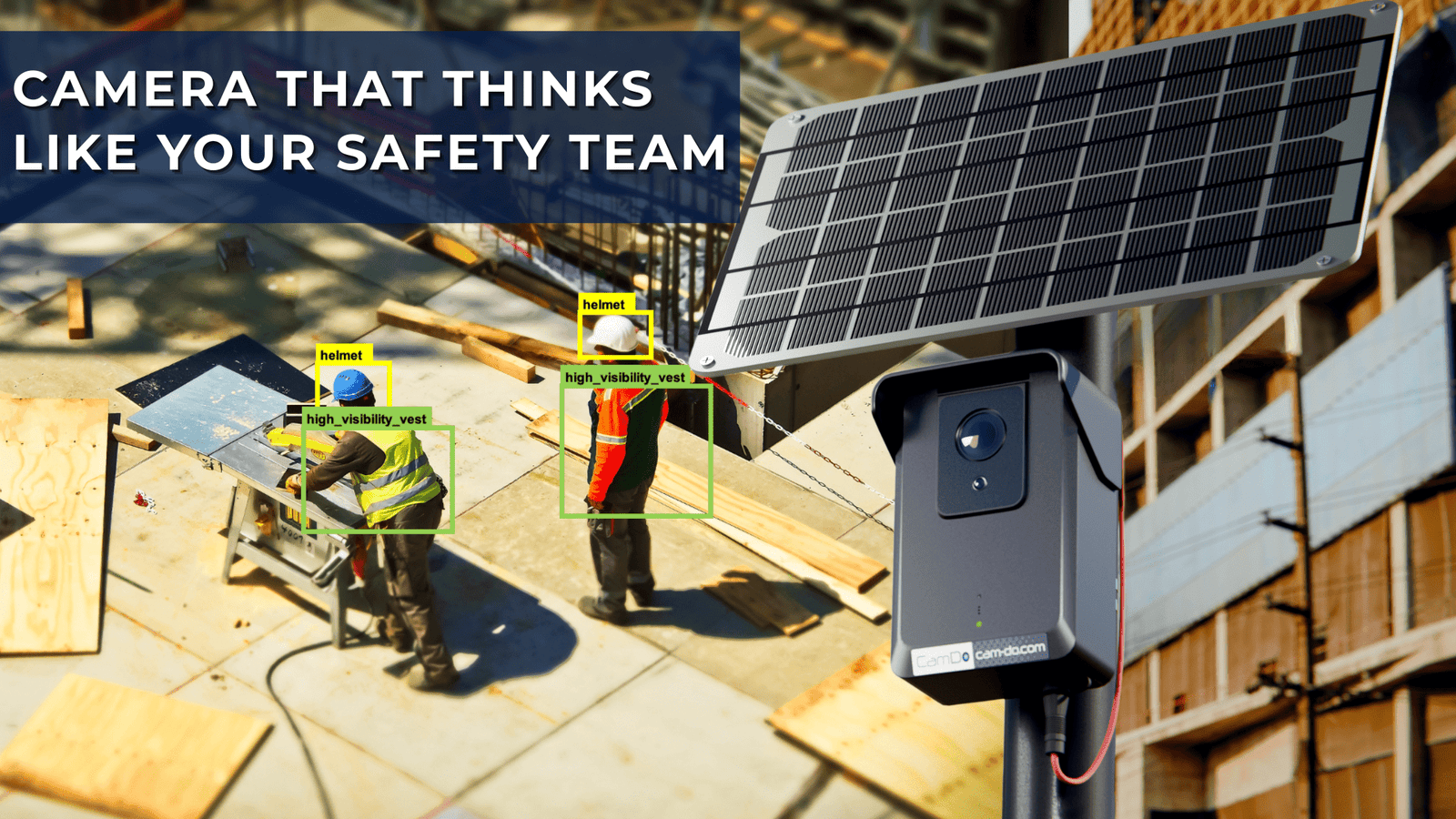
Its strategic bet is that scheduled imagery can become data. In 2025, CamDo introduced AI-assisted Jobsite Intelligence around DataLens and placed second at the SafeTech Summit NYC. The system captures frames every few minutes, then CloudX can flag possible missing protective equipment, trip hazards or fall risks and help build reports. The company is also previewing SecureLens, a separate $1,499 perimeter product with 4G, solar power, tamper detection, local storage and active deterrence. The distinction is important: CamDo's own guidance says a time-lapse camera is not a security system.
This expansion could deepen the subscription relationship, but it also creates risk. Progress documentation, automated safety observation and perimeter response have different reliability thresholds. A missed marketing frame is annoying. A missed safety event is consequential. CamDo will have to preserve the simple, economical workflow that made the original product attractive while explaining exactly what its AI does and does not see.
Where the playbook breaks
- Continuous video is mandatory. Scheduled frames and on-demand images are not a replacement for staffed or real-time security.
- The site has no dependable power, sunlight or cellular path. Local storage helps, but remote visibility still depends on a workable system design.
- The mount or view will change. A crane, scaffold, growing roofline or vibrating pole can spoil months of otherwise perfect captures.
- The project is brief or low value. Hardware, installation and monthly software must cost less than the visits, reporting work or media production they replace.
- The buyer needs cinema-grade control. A specialist DSLR rig and crew may justify the extra expense when lens choice and maximum dynamic range matter most.
CamDo's story is not really about making cameras smarter. It is about making them need less attention. The product starts with one small act - wake, shoot, sleep - and expands outward until power, weather, files, status alerts, sharing and industry software all behave. That is a sturdy model for vertical technology: own the irritating edges, charge for the continuing assurance, and let the customer forget the device is there until the image becomes useful.