The glamorous version of invention begins with a flash. Shiva Dhawan’s version begins with a polite instruction from his father: before you start a company, work somewhere. Dhawan had just finished mechanical engineering at IIT Delhi and wanted to build immediately. He took the advice, spent about a year in management consulting, then concluded that employment had merely confirmed the original diagnosis. He wanted his own thing.
What thing? That remained inconveniently vague. Artificial intelligence was beginning to escape the research lab and acquire business cards. A senior from college suggested that Dhawan start with services: build image models for companies, encounter real problems and allow the useful idea to introduce itself. It was sensible advice. It also produced a company that would change its mind several times in public.
A company auditions its own future
Attentive began in 2017 with computer vision for CCTV surveillance. The team worked with large property businesses, including DLF. The technology functioned; the business shape did not. Winning the market would have pulled the young company toward becoming a camera vendor. Dhawan wanted to build intelligence, not boxes. So the first version went into the drawer.
Next came satellite data for Indian businesses and fast maps for navigation. That found customers, but selling business software in the home market proved difficult. The third take carried the same image-analysis skill abroad. Attentive served mapping companies and property-and-casualty insurers that needed to understand buildings from aerial pictures. Dhawan says the services operation reached about $2 million in annualized revenue.
Revenue usually settles an argument. Here it sharpened one. Each new contract created more work, and project work ended when the project did. Dhawan described services as a treadmill. It moved, sometimes briskly, but it offered no obvious destination. The company had found service-market fit without finding the repeatable economics its founder wanted.
Four takes on one image-AI company
The valuable habit was taking the business seriously without treating its current form as sacred. Founders are routinely advised to persist. They hear less about the peculiar courage required to leave a product that is working. Failure can throw you out; moderate success invites you to decorate the room.
Two designers, one conference, hundreds of pages
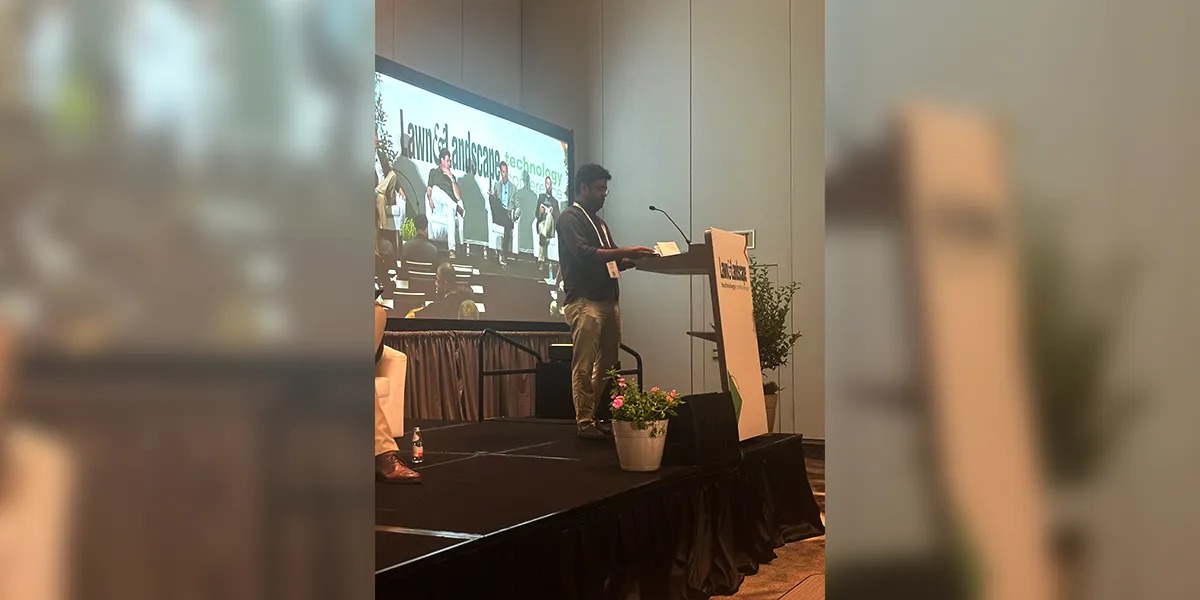
In 2019, just before the pandemic, Dhawan met a pair of landscape construction designers at a conference in San Diego. They saw the company’s work with insurance imagery and posed a practical question. Could the same machinery extract quantities from blueprint designs? Producing those takeoffs by hand consumed hours. Automating them would be useful.
This was the closest the story came to a light bulb, though it looked more like a customer request. The team first applied aerial imagery to property measurement for commercial landscaping, paving and snow work. Instead of driving to a site with a measuring wheel, a contractor could enter an address and receive measurements of lawns, sidewalks and other surfaces. During Covid, when site visits became harder, the convenience acquired urgency.
The landscaping customers brought another clue. Their construction divisions suffered from the same appetite for measurement, except the source material was more unruly. A commercial takeoff must list quantities of materials, labor and equipment from drawings and specifications. It sits beneath the estimate. Miss too low and a contractor may win an expensive mistake. Miss too high and the job goes elsewhere.
Dhawan gives the arithmetic without perfume: a two-percent error on a $10 million project is $200,000. One estimator may spend four to eight hours on hundreds of plan pages. A company can be perfectly capable of doing the work and still lose because nobody had enough time to price it.
The future of construction arrives as a PDF
Dhawan’s mechanical-engineering education returned by an unexpected door. Construction plans made intuitive sense to him, while his co-founders brought civil engineering and technical depth. Yet the market opportunity depended on something decidedly unromantic: before a North American job is awarded, contractors commonly receive PDFs rather than data-rich CAD or BIM files. Owners and designers guard the source files as intellectual property. Bidders get flattened drawings and a deadline.
A PDF has lines and labels, but it does not politely announce which symbol represents which valve, or how one trade’s conventions differ from another’s. Beam AI, Attentive’s takeoff product, reads those documents across more than 15 trades. Mechanical equipment is not structural steel; concrete rebar is not plumbing. The shared computer-vision problem fragments into many specialist problems.
Dhawan’s answer to this complexity is unusually candid for an AI founder: the machine does not get the last word.
How a takeoff travels
In late 2025 he described roughly 300 India-based estimators reviewing outputs, many of them mechanical or civil engineering graduates trained by the company. At that point, AI performed about half of the effort on complex construction takeoffs. For standardized aerial measurements such as lawns and sidewalks, Attentive had pushed the split toward 90 percent software and 10 percent human work. Dhawan wants construction to move in that direction, too, while preserving the checkpoint.
There is no embarrassment in this hybrid. Construction judgment extends beyond marks on a plan. An experienced estimator understands local subcontractors, the habits of a particular general contractor and the distance between what a drawing says and what a job will cost. Dhawan likens the product to a junior estimator handling the mechanical work. Trust accumulates when the quantities return correct and the bids leave on time.
What happens after the ruler
Attentive’s capital story followed the product’s narrowing. The company raised $5 million in 2022 around automation for outdoor services, announced a $7 million round in 2024 as Beam AI pushed further into construction, and completed a $12 million Series A in January 2025. That December it announced a $30.5 million Series B led by Insight Partners, with Vertex Ventures, Tenacity Ventures and InfoEdge Venture Fund participating. Attentive reported more than 1,100 customers then; its later company profile put the number above 1,200.
The geography is almost as revealing as the funding. Attentive is a Delaware corporation selling mainly to the United States and Canada, while Dhawan remains based in Delhi and much of the company’s technical and takeoff operation sits in India. He crosses the distance often enough to have acquired Air India Platinum status, a detail volunteered in a podcast with the weary cheer of somebody who has learned the menu. The flights connect two halves of the model: North American contractors with too much work and too few estimating hours, and trained Indian engineers who can review the machine’s quantities around the clock.
Dhawan was rehearsing that bridge long before it had a product name. At IIT Delhi he studied mechanical engineering, joined the quizzing club and served as overall coordinator of Enactus, the student social-enterprise organization. The combination is suggestive without being mystical: comfort with technical systems, an appetite for questions and early practice making an organization move. His later public manner follows the same register. He likes clean operating lessons. Early users should pay something, even if the amount is small. Conversion tells the truth when polite interest does not. Fewer people who deliver beat a larger team hired merely because it is cheaper. These are the rules of someone who has already paid tuition to several business models.
The ambition now widens again, this time along a customer’s workflow. A takeoff answers what the job contains. Pricing answers what it costs. Bid management tracks whether the opportunity is worth pursuing and when the answer is due. Procurement turns the winning estimate into material orders. Dhawan wants those pieces connected, with BIM CoPilot extending the company from winning work toward coordinating it.
Expansion introduces a familiar danger. Attentive found its business by becoming specific. It now proposes to become broad. The useful constraint is the one Dhawan has carried through the pivots: begin where the output can be checked. Quantities are either right or wrong. Deadlines are met or missed. Customers pay, or they offer the fatal courtesy of saying the demo was interesting.
At a private founder gathering in Noida in 2026, attendees distilled one of Dhawan’s lessons into a line: stay loyal to the company, not the idea. It sounds ruthless until one considers the alternative. An idea can demand loyalty while quietly shrinking the future around it.
Dhawan’s nine-year route has been full of machines that look: cameras, satellites, aerial photographs, construction drawings. His more consequential skill has been deciding what those images are for. CCTV was a beginning. Mapping taught the team to work at scale. Insurance taught it the limits of services. Landscapers supplied the measurement problem. Estimators supplied the stakes.
The map kept changing because he kept listening to the terrain. For a founder, that may be the sounder form of attention.