A building site is a machine for producing change. Steel rises, walls close, crews arrive and vanish, and yesterday’s open floor becomes today’s finished room. Yet the people accountable for that change cannot stand everywhere at once. Todd McCann has spent much of his working life inside that problem. First he helped design the mechanical, electrical and plumbing systems that make buildings habitable. Now, as co-founder and CEO of CamDo, he works on a different layer of infrastructure: the cameras and software that let a project remember what happened.
McCann is a mechanical engineer by trade, with 16 years of international construction experience. His published biography reads less like a tidy specialty than a tour through the built world: commercial high-rises, airports, tunnels, data centers, hospitals and retail. At one point he was an associate director and engineering manager responsible for a team of more than 100 engineers. Later, as chief operating officer of an electronics manufacturer, the abstractions of design met the stubborn particulars of making and selling hardware.
That combination explains CamDo better than any fashionable label. The company sells cameras, but the harder product is continuity. A device must survive weather, preserve power, find a connection and send usable images for months or years. Only then can a dashboard, an automated report or a computer-vision model do anything interesting. Software gets the applause. The waterproof enclosure has already done the shift.
The apprenticeship in complexity
McCann’s early career began in fire protection. He worked as a project engineer at FlameSafe Fire Protection and then led fire protection services at NDY. From there came engineering management and associate-director responsibilities at Medland Engineering, code consulting at CFT Engineering, and a return to Medland as Queensland state manager. The geography moved between Australia and Canada; the recurring subject was coordination.
MEP engineering is an education in interdependence. A duct cannot politely occupy the same space as a beam. A pipe route affects a ceiling. A late decision travels. Every discipline can be locally correct and collectively impossible. Good managers learn to see the interfaces before they become collisions.
A recommendation on McCann’s public profile describes him improving coordination across MEP disciplines and raising the quality of engineering and client service. It also calls him a high-emotional-intelligence leader who thought beyond the usual boxes. The wording is generous, but the underlying pattern is practical: his work sat between people, plans and the consequences of misalignment.
“Think ‘platform agnostic’ as often as possible.”Todd McCann, writing after a construction-technology conference
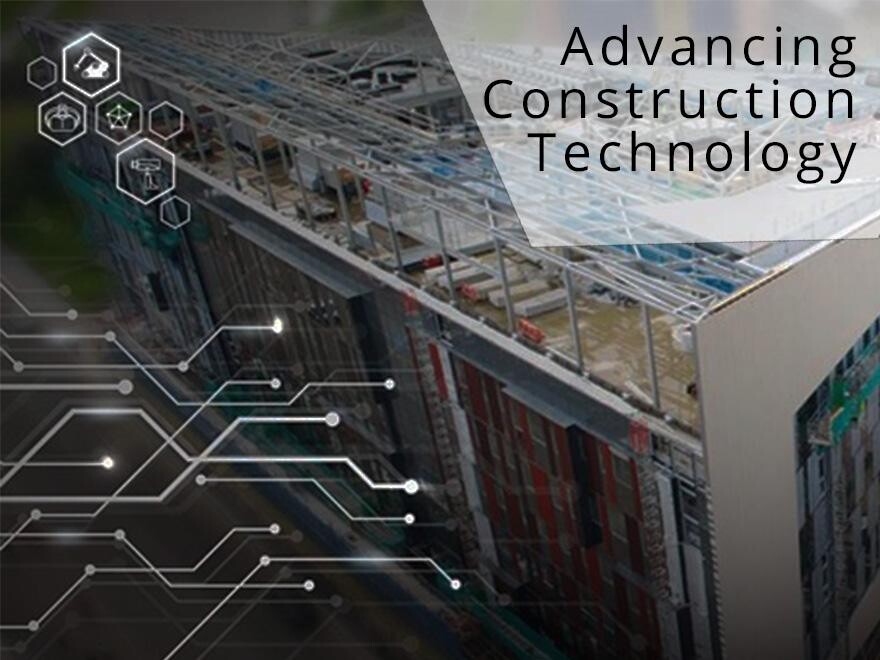
In 2018, after presenting at the Advancing Construction Technology conference, McCann argued that consolidation among construction applications was inevitable. His prescription was adaptability, open interfaces and customer control of data. This was not a futurist’s performance. It was an engineer’s suspicion of anything that cannot connect to the rest of the system.
a frame
reliably
a change
context
A flying camera finds a ground job
CamDo began somewhere less dusty than a construction site: high in the air. Co-founder Peter Jennings loved paragliding and wanted to capture long flights, but his camera battery could not last the journey. His solution was frugal. Wake the camera for only a few seconds, take the picture, let it sleep again. The battery problem became a product, and the product began attracting assignments no sensible camera would volunteer for.
CamDo equipment went to national parks, Norwegian ice fields and deep water. Its systems have supported imagery associated with the International Space Station, Google Street View, NASA and SpaceX launches, and National Geographic footage of lions. The list has the pleasant absurdity of a well-traveled suitcase: orbit, ocean, rocket pad, savannah.
When McCann wrote to CamDo’s broader community in 2015, he put customer imagination at the center of the story. Their requests to “capture the impossible,” he wrote, were the catalyst for innovation. He also framed the company’s vision in simple terms: bringing the viewer closer to the source. Cameras were not merely recording machines. They collapsed distance.
Construction gave that idea a durable business setting. A project runs long enough for battery life to matter and changes often enough for a visual record to earn its keep. A time-lapse may eventually become a handsome marketing film, with the crane pirouetting at impossible speed. During the work, the same frames can answer plainer and more valuable questions: What changed? Is the site active? Can an owner see progress without traveling? Does the team have a record of a disputed day?
The camera grows a second job
The company McCann now leads pairs long-term 4K time-lapse systems with CloudX, its remote monitoring platform. More recent products add cellular connectivity and computer-vision features. The direction is clear: move from saving images to making those images easier to inspect, organize and use.
McCann’s product writing stays close to field friction. Manual site visits consume time. Jobsite Wi-Fi may not exist. The capture interval affects power and data more than a casual buyer expects. A useful camera has to be simple enough to mount quickly and hardy enough to be forgotten for a while. The romance of artificial intelligence survives only if somebody remembered the SIM card.
At SafeTech Summit NYC in 2025, CamDo placed second with an AI-assisted approach to jobsite safety. On stage, McCann asked the audience when they had last decided they did not need more unsafe conditions documented. The question works because it exposes an uncomfortable asymmetry. Serious incidents receive attention. The smaller unsafe conditions beneath them are numerous, scattered and easy to miss.
The camera never attends the coordination meeting. It may still become the project’s most patient witness.
McCann’s argument is that greater visual coverage can help teams notice more of that lower layer. The ambition should be described carefully. A camera is neither a safety manager nor a substitute for judgment. It is an additional pair of tireless eyes, producing evidence that people can review and route into workflows they already use.
That modest framing is also the more interesting one. Construction does not lack grand technology promises. It lacks dependable little bridges between the physical work and the people making decisions about it. A current image, delivered without a site visit, can be one of those bridges. A sequence of images can reveal pace. An organized archive can settle memory. Analysis can draw attention, provided the capture beneath it remains trustworthy.
Progress, at the speed it happens
There is a pleasing symmetry in McCann’s path. As an MEP engineer, he worked on the hidden systems that make a finished building function. At CamDo, he works on a visible system that helps people understand the unfinished building. Both require respect for sequencing. Both punish missing information. Both are less glamorous when they are working well, because the absence of trouble rarely asks for a photograph.
His recent work pushes CamDo toward what the company calls jobsite intelligence: cameras joined to cloud software, automated documentation and AI-assisted insights. The aspiration is not simply to make a prettier movie at the end. It is to give owners, project teams and safety leaders a better view while choices remain available.
The useful lesson in McCann’s story is not that every mechanical engineer should start a camera company. It is that deep industry experience can be converted rather than discarded. The years managing engineering teams became knowledge of coordination. Electronics operations became respect for manufacturing. Construction became a map of the constraints a new product must survive.
And the humble time-lapse became something else. It still compresses months into minutes and makes a building appear almost effortless. But before the music starts, every frame can do a day’s work: reassure a client, document a milestone, spare a drive, reveal a change. McCann is betting that the closer we get to the source, the less construction has to depend on guesswork.
That instinct also shows in the way he talks about the company. His first public letter as CEO thanked customers before it celebrated products. Years later, his conference notes emphasized education, standards and compatibility. On LinkedIn, his practical explanations circle installation, capture cadence, power, data and the small decisions that determine whether a deployment works. The personality visible through that record is an operator’s: curious about possibility, but attentive to the handoff, the weather forecast and the person who will receive the alert.
Construction rewards that sort of patience. A dramatic breakthrough may happen in a lab; a useful system proves itself through hundreds of undramatic mornings. The battery wakes. The lens remains clear. The upload lands. Someone miles away understands the site a little better. McCann’s career has moved across disciplines and continents, yet the question beneath it has stayed remarkably stable: how can a complicated project become easier for people to see together? CamDo’s answer arrives one frame at a time.