Consider the peculiar embarrassment of an idle scanner. It has the machinery to produce extraordinary images, a room arranged around it and a schedule full of people who would rather be somewhere else. Then a component fails. The engineering problem becomes an appointment problem. The appointment problem becomes somebody’s disrupted day. Glassbeam’s business begins in the gap between a machine developing trouble and a hospital discovering it.
- Reads the equipment: Clinsights translates machine logs into maintenance warnings and fleet views.
- Reads the working day: utilization analytics tracks exams, delays, referrals and equipment use.
- Sells to the people responsible: hospitals, imaging centers, manufacturers and independent service providers.
The one-percent ambition
Gateway Diagnostic Imaging, operating in the competitive Dallas-area outpatient market, wanted to move equipment uptime from 98% to 99%. That sounds like a rounding error until you remember what occupies the missing hours: cancelled exams, stranded capacity and engineers trying to diagnose trouble under pressure.
In Glassbeam’s published case study, Gateway gained 70–80 productive hours per machine per year, with $70,000–80,000 in potential lost revenue avoided. Those are reported customer results, rather than a promise to the next buyer. The useful detail is the mechanism: shifting unexpected stoppages into planned maintenance windows. An inconvenience becomes something the organization can arrange around.
Productive scanner time recovered per machine. Scheduled repairs can protect the time patients actually need.
A translator before a fortune-teller
Glassbeam’s expertise starts with an unfashionable task: making machine data legible. Equipment logs arrive in different formats, carrying errors, operating measurements and fragments of context. Its Semiotic Parsing Language, abbreviated SPL, gives those fragments structure. The platform underneath the applications is called SCALAR.
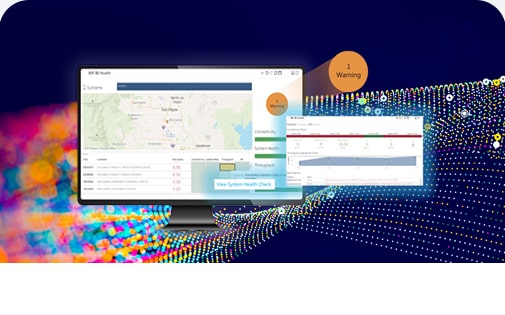
Clinsights Service Analytics applies expert rules and machine learning to that structured information. A CT scanner can emit warnings about tube arcs and scan errors. An MRI system records helium levels, magnet pressure and cooling measurements. Glassbeam presents patterns, anomalies and potential part failures through dashboards and alerts. Its product materials describe some failures being predicted more than a week ahead; that claim belongs to supported cases, not every component on every scanner.
- 01CollectEquipment logs and operating data
- 02InterpretStructure, rules and failure models
- 03ActEngineer review and planned repair
An explanatory workflow, not a prediction-accuracy chart.
The commercial value lies in what happens next. An engineer who receives a credible warning can investigate remotely, arrange a replacement and choose a maintenance window. A prediction is a head start. It still needs a person, a part and a plan.
Several makers, one maintenance department
A hospital’s equipment rarely has the courtesy to come from one manufacturer. Glassbeam positions Clinsights as a multivendor view, including major imaging makers such as GE, Siemens, Philips and Canon. That matters to an engineering department responsible for the whole fleet rather than a single brand.
RENOVO’s case study supplies the before picture. Its teams mined service records manually, lacked visibility into machine performance and reacted to failures. Manufacturer tools existed, but their coverage followed manufacturer and modality boundaries. RENOVO wanted a centralized view across both.
“Before the Glassbeam Clinsights solution manual processes predominated.”
Al Moretti / RENOVO, company-published case study
The alternatives are therefore more varied than another analytics vendor. They include OEM service portals, computerized maintenance records and an organization’s own reporting work. Glassbeam’s proposition is to connect equipment signals with a medical-service workflow. The comparison is about the work a team must otherwise assemble itself.
The scanner works. Now fill the schedule.
Availability answers whether a machine can scan. Utilization asks whether it is being used well. Clinsights Utilization Analytics combines logs with DICOM, HL7, radiology information systems, electronic medical records, billing and scheduling data. It tracks exam volumes, operator patterns, changeover times, late starts and physician referrals.
These are distinct questions. A scanner can be healthy while its schedule contains gaps. A busy department can still have uneven demand across sites. A long exam may merit investigation without proving that an operator did anything wrong. The software offers comparisons and outlier views; managers supply the local explanation.
For buyers, this places Glassbeam between equipment maintenance and imaging operations. Clinical engineers want warnings they can investigate. Radiology leaders want capacity and workflow information. Executives want evidence before spending on another machine. The same fleet supplies data for different decisions.
How a broad platform found a specific job
Co-founders Puneet Pandit and Kumar Malavalli brought experience from the storage-networking world. In a 2018 interview, Pandit described Glassbeam’s launch as a brand inside an IT services company in 2009, followed by a SaaS relaunch on AWS in 2014. The original idea covered connected machines broadly. Healthcare became a focus where that technical skill could address particular maintenance and operating problems.
The company sells cloud software to organizations, directly and through partners. Canon Medical Systems USA announced a Clinsights relationship in November 2020 for customers with service plans. RENOVO, Brown’s Medical Imaging and Agiliti appear in its partner ecosystem. Those relationships put analytics alongside the businesses already servicing the machines.

In December 2021, Glassbeam raised a $10 million Series B led by Appian Way Asset Management, with customer MultiCare participating. It reported more than 75 customers across over 200 US facilities. The funding was intended to expand commercial capacity, customer success and product capabilities. A customer becoming an investor is a telling vote, although it does not establish anyone else’s return.
Richard Jones now leads Glassbeam as CEO. His background includes serving as president of radiology at Akumin, bringing an imaging-operations perspective to the company.


The price of acting early
Glassbeam’s public sales path leads to a demo and a quote. Buyers can begin with a more useful calculation than a sweeping savings percentage: the hours lost to unplanned downtime, the cost of service visits and the value of exams that recovered capacity could accommodate. Then count deployment, integration and the staff time needed to respond.
The conditions matter. A fleet needs accessible, supported data. A warning needs enough lead time and an engineer able to act. Some failures will offer few useful signals. If parts remain unavailable or appointments cannot move, better information alone cannot recover the day. These are practical limits of the approach, not reported Glassbeam trial results.
Recent developments extend the setting. Northeast Georgia Health System announced a five-hospital imaging pilot in December 2024. The federal marketplace records Clinsights certification from May 23, 2025; Glassbeam’s June announcement described work with the VA and a VISN 2 deployment. Security qualification opens a procurement door. Useful maintenance decisions must still happen beyond it.
What can another organization copy? Start with a measurable interruption, connect the evidence to a named decision-maker and track what changed after the alert. The scanner’s diary becomes valuable when somebody does something with what it says.