A scan can be finished while the work is still waiting to begin. The machine has produced its images. Someone must prepare them, inspect them, measure them and get them to the right person. In that interval lives a less photogenic part of medicine: the workflow. Canon Medical Informatics has spent decades making anatomy easier to see. Increasingly, it is asking what keeps people from seeing it in time.
- Vitrea turns scan data into usable views and measurements for radiologists, cardiologists and other specialists.
- The customer buys a working process: software, integration, training and support must fit together.
- The sales argument is becoming operational: fewer manual steps, consistent tools across sites and more control over 3D processing.
- Insourcing needs arithmetic: case volume, staffing and coverage determine whether the proposition pays.
The machine was keeping up. The people had more to do.
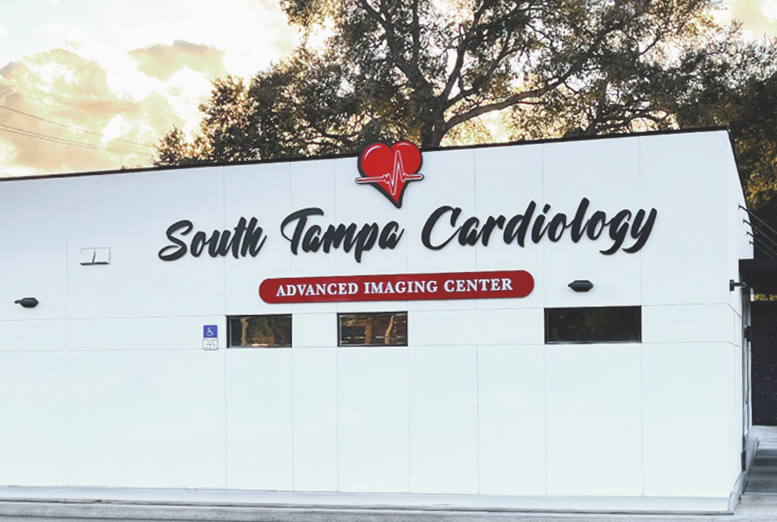
At South Tampa Cardiology, the pressure appeared after image acquisition. Growing cardiac CT volume made manual calcium scoring harder to sustain. The practice evaluated CT VScore+, a Vitrea application that prepares a calcium score automatically, leaving staff to review and validate it. Dr. Alberto Morales described the moment simply: “The timing was ideal.”
Canon’s 2026 account reports a 57% reduction in processing time across 100 institution-selected cases, expressed as a 2.3-fold efficiency improvement. Those figures describe a customer evaluation, with results dependent on workflow, experience and case complexity. They do not establish a corresponding increase in appointments or improvement in patient outcomes.
The broader lesson is practical: measure the work surrounding the machine before prescribing another machine. A department can possess excellent equipment and still spend its scarce attention preparing what that equipment produces. Here, automation moved effort toward checking a prepared result. The clinical judgment remained with the people.
Before Canon, an Iowa researcher wanted a better view
The business began as Vital Images in Fairfield, Iowa, in 1988. Founder Vincent J. Argiro had developed an interest in scientific visualization while studying biology. During his doctoral work, he learned programming and built an image-processing system for research. For the company’s first three years, its 3D software went to academic biomedical researchers.
The subsequent move into clinical medicine gave that capability a different audience. Vitrea received FDA marketing clearance in 1997. By then the proposition had become wonderfully concrete: take CT and MR image data and make human anatomy easier for clinicians to examine. A researcher’s tool had found a place in everyday medical work.
Toshiba announced its agreement to acquire Vital Images in 2011 for approximately $273 million in cash, or $18.75 per share. A decade later, the company adopted the Canon Medical Informatics name, effective October 1, 2021. The acquisition bought an existing visualization business; the rebranding brought it under a common medical technology identity.
A rib cage with the inconvenience removed
Advanced visualization can sound like a promise made by someone who has never had to explain it. Open Rib provides a more entertaining demonstration. Ribs curve. Inspecting them in conventional reconstructed CT views requires repeated adjustments and a sequential search. The application reformats the thoracic rib cage into an unfolded view, placing the ribs together for inspection.

In a Canon case study, clinicians at University Hospital of Nancy in France described adding the processing to their trauma protocol, with the output sent directly to their picture archiving and communication system, or PACS. They reported reading-time reductions of up to 54%, with the document referencing published research. The image arrived where they already read studies.
That last detail deserves attention. A useful feature can become an extra chore if its output waits inside another application. Delivery is part of the product. Open Rib’s appeal lies in combining a different presentation of anatomy with automatic preparation and a familiar destination.
Vitrea’s wider portfolio spans cardiac, vascular, neurological, oncology, musculoskeletal and thoracic imaging. Its multi-modality applications process data from CT, MR and other imaging systems, with 2D, 3D and 4D capabilities. The company describes a vendor-agnostic approach: a health system’s visualization strategy can encompass equipment from different manufacturers.
The expensive question is who does the work
A 3D processing service can live inside the hospital or outside it. Outsourcing offers access to expertise without first building an internal operation. An in-house lab offers direct access to clinicians, local protocol control and a different cost structure. As volumes change, the original decision deserves another look.
Canon’s account of Massachusetts General Hospital includes an estimate that outsourcing 12 cases a day would cost $215,000 annually. That is a particular institution’s calculation, not a Vitrea price. It illustrates the comparison buyers must make between fees that follow volume and the staffing, equipment and software needed to do the work internally.
“You should not know, visually, who performed the study.”
Michelle Kohanski, 3D Lab manager, Massachusetts General Hospital
The same account contains a useful complication: MGH also used an outsourced lab for overnight work. The operational choice allowed an internal daytime service and external coverage to coexist. A hospital without sufficient volume or reliable staffing may find a fully internal model difficult to justify. Even a busy lab needs a sensible answer for the hours its team is absent.
The copyable method is to compare complete operating models. Count cases, account for coverage, include training and infrastructure, and ask how quickly a physician can request a correction. A low per-case fee can conceal coordination costs; an internal service can conceal idle capacity. The appropriate answer depends on the work that actually arrives.
One interface is a surprisingly ambitious request
The company’s enterprise imaging history reveals another source of delay: locating the image. A 2019 account of Johns Hopkins Medicine described multiple PACS clients with different interfaces across facilities. Clinicians wanted a consistent viewer accessible through the electronic medical record. The implementation proceeded in two phases, first centralizing access and then adding data orchestration across locations.
A separate Fairview account concerned access to operational data. Producing reports had required IT tickets and work with analysts; information could arrive after the decision deadline. Vitrea Intelligence supplied self-service access and dashboards, using a year of historical data at implementation. Different customer, familiar nuisance: having information somewhere is insufficient if getting it takes too long.
- 01 / AcquireThe imaging system produces the study.
- 02 / PrepareApplications reconstruct, quantify and format.
- 03 / ReviewClinical staff validate and interpret.
- 04 / DeliverResults enter the clinician’s workflow.
A conceptual workflow, not a measured sequence or a claim that every application performs every step.
Recent announcements extend that standardization argument. In December 2024, Canon described a nonprofit health system consolidating advanced visualization across more than 25 sites. Another announcement covered six sites using a privately managed cloud. The latter matters to buyers: cloud deployment can leave infrastructure under customer management. It does not necessarily mean purchasing a vendor-operated SaaS service.
Software with a service department attached
Canon sells to healthcare organizations whose purchasing decisions involve clinical users and IT teams. Its business combines enterprise software with implementation, education, support and advisory services. VISTA, short for Vitrea Imaging Strategy & Transformation Advisors, formalizes the work around consolidation, workflow optimization and in-house 3D services. Assessment, adoption and ongoing refinement become part of the proposition.
That service layer is plausible given the problem. Standardizing a workflow requires people to agree on protocols and use the tools consistently. Canon’s education offerings include classroom learning and clinical instruction. Its public careers material also supplies a concrete detail about employee life: full-time staff can receive up to 24 hours annually for community service, alongside charitable donation matching.
Canon operates in a market that includes Siemens Healthineers’ syngo.via and Philips’ advanced visualization products. Multi-application platforms are an established category. Canon’s positioning combines Vitrea’s clinical breadth, mixed-vendor support and services for reorganizing imaging work. Whether that combination earns a contract depends on a customer’s existing systems and the costs of changing them.
A bigger network, the same awkward interval
In November 2025, Canon announced a Department of Defense contract covering key facilities in the Defense Health Agency network. The stated scope included cardiac imaging and other specialties, with consolidation intended to improve consistency and access. These are deployment objectives; the announcement does not make them measured results.
Genady Knizhnik became CEO effective January 1, 2026, an appointment announced in February. The company’s stated mission emphasizes timely, efficient and accurate imaging-driven diagnosis. Its current product and services pitch gives that ambition an operational form: prepare the study, make the tools available and help teams use them consistently.
The next time an imaging upgrade is discussed, the useful question may be where a completed scan waits. Canon Medical Informatics has built a business in that interval. Following one study from acquisition to interpretation could tell a buyer more than another hour spent admiring a feature list.
See the work for yourself
Explore Canon Medical Informatics, the Vitrea applications, imaging articles and company news.
Watch the CT VScore calcium-scoring walkthrough and the in-house 3D lab discussion. More videos are on YouTube and in the learning library.