In Clearwater, Florida, the residents of two condominium buildings had a perfectly serviceable guard and an awkward question: how much were they paying for someone to sit beside a gate? The buildings contained 190 units. The entrance was staffed around the clock. Nobody needed to invent a villain. The bill was sufficient.
- Envera combines gates, visitor software and licensed remote guards.
- Communities can move gradually, retaining onsite staff for selected hours.
- Active surveillance adds intervention; passive surveillance preserves evidence.
- The economics depend on the staffing being replaced and the service being bought.
A joint task force investigated alternatives. According to Envera’s account, it estimated that automated security could save approximately $500,000 over five years. The first decision was more cautious than the number sounded: keep an onsite guard for eight hours a day, five days a week, and use remote guarding at other times. Technology arrived as a shift partner.
That modest compromise is a useful introduction to Envera. The company’s proposition becomes easier to understand when you stop looking for a robot in a uniform. It reorganizes where work happens, which tasks can be automated and who answers when a visitor falls outside the rules.
A person at the other end of the driveway
Envera’s Virtual Gate Guard connects a community entrance to licensed security professionals at a remote operations center. Visitors communicate through two-way audio and one-way video. Supported identification and plate-scanning tools check arriving guests against resident-approved lists. An unexpected guest can be referred to a remote guard, who contacts the resident before granting or denying entry.
The gate itself remains decidedly physical. A barrier arm must lift. A camera must see. The system records interactions and maintains visitor logs. Envera brings those components together with the software and people needed to operate them. A homeowner experiences a conversation at the entrance; the association purchases an ongoing service.
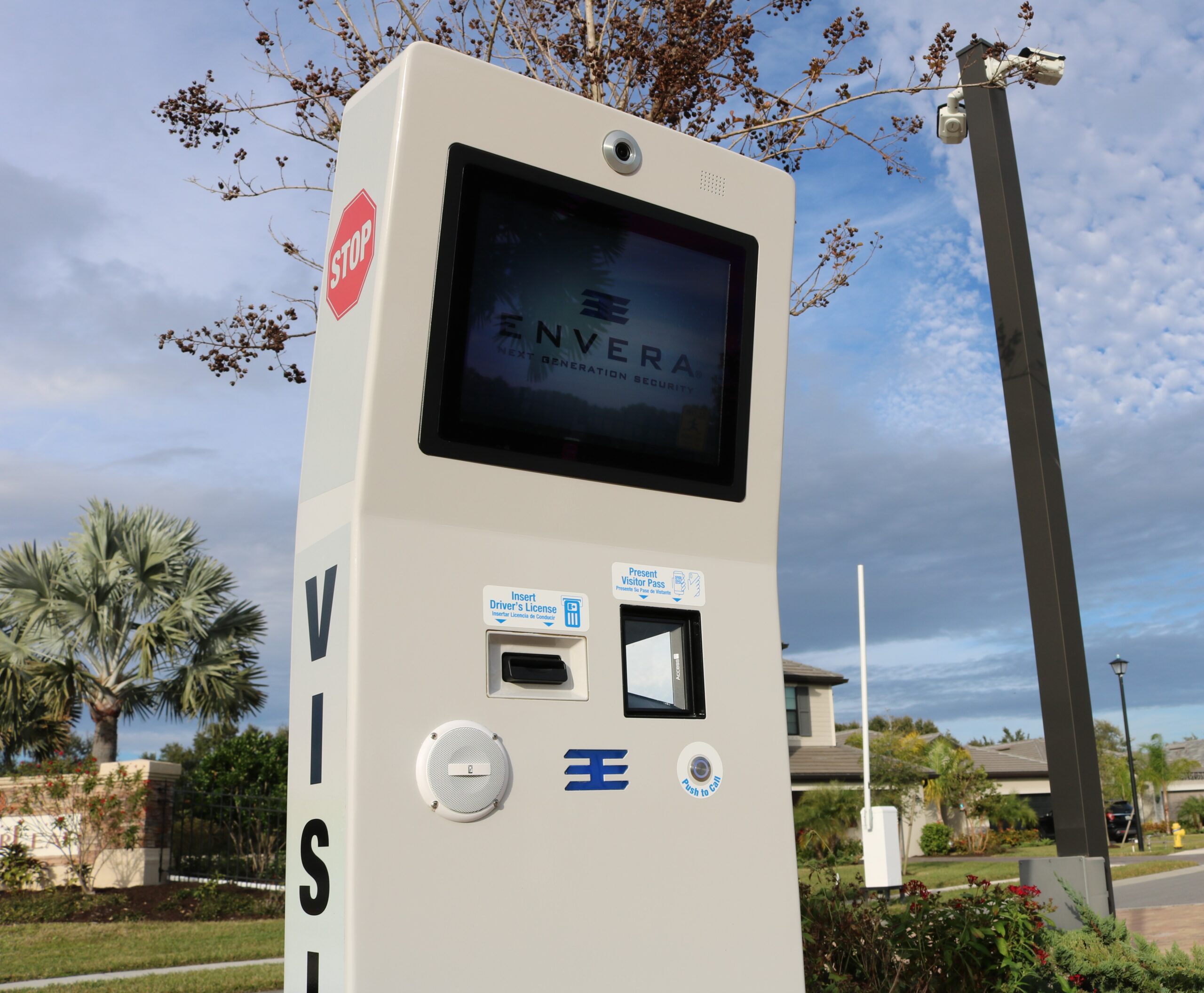
The useful distinction is between routine admission and an exception. An approved recurring visitor need not consume the same attention as someone whose name appears nowhere. Automation can shorten familiar transactions while a human handles the awkward ones. It is a sensible division of labor, provided the lists and connections deserve the trust placed in them.
The chair was the expensive component
Envera competes across an untidy market: staffed guard services, telephone entry boxes, standalone cameras and app-based access platforms. These purchases are often discussed as if they were interchangeable. They allocate responsibility differently. A telephone box asks a resident to answer. A camera preserves a scene. A managed service supplies someone to handle a defined part of the operation.
In an April 2026 comparison, Envera put traditional onsite guard labor at $14,000 to $22,000 per month, before other costs. That is the vendor’s estimate, not a universal market rate. It explains the sales argument: compare remote guarding with the staffing schedule it could replace, rather than with the price of an intercom.
A useful bid comparison therefore starts with hours, responsibilities and equipment. What is included in installation? Who services a damaged barrier? When is live monitoring available? How are incidents escalated? A lower recurring fee is meaningful only after the community knows which work has moved into it.
For an association reluctant to abandon onsite presence, hybrid guarding offers an intermediate arrangement. A local attendant can work selected shifts while remote professionals cover others. The important requirement is continuity: visitor information should survive the change of shift and the change of location.
The guest list is part of the machinery
MyEnvera gives residents tools to register permanent, temporary and one-time guests. Family, caregivers and regular vendors can be entered ahead of time. The company says updates synchronize with its gate system and Guard Module Software, and residents can receive visitor notifications.
This makes a small administrative habit consequential. Registering a guest before arrival changes the transaction waiting at the entrance. The guard has a current instruction instead of a mystery. The resident has fewer interruptions. Convenience comes from doing a little of the work earlier.
Access control extends that logic beyond the driveway. Managers can administer credentials for doors, pedestrian gates, clubhouses and pools through a web-based platform. Cards, fobs, codes and mobile credentials support different arrangements. Permissions can be changed, and access attempts logged. The pool’s closing time becomes a system setting rather than a hope expressed at a board meeting.
A camera that can interrupt
Envera separates active and passive video surveillance. Passive systems record footage for later review. Active monitoring adds trained personnel during scheduled hours, with two-way audio for intervention and escalation to authorities when needed. The distinction matters most when the problem is happening now.
Katherine Cabrera of Academy Development described that difference in a December 2024 testimonial published by Envera. After trespassing at an amenity center, she sought a proposal despite expecting the cost to be prohibitive. She reported that monitored cameras proved affordable for the HOA and that the security firm could contact the sheriff promptly, rather than leaving management to report trouble the following day. The testimonial describes a better workflow, without establishing a general crime-reduction rate.
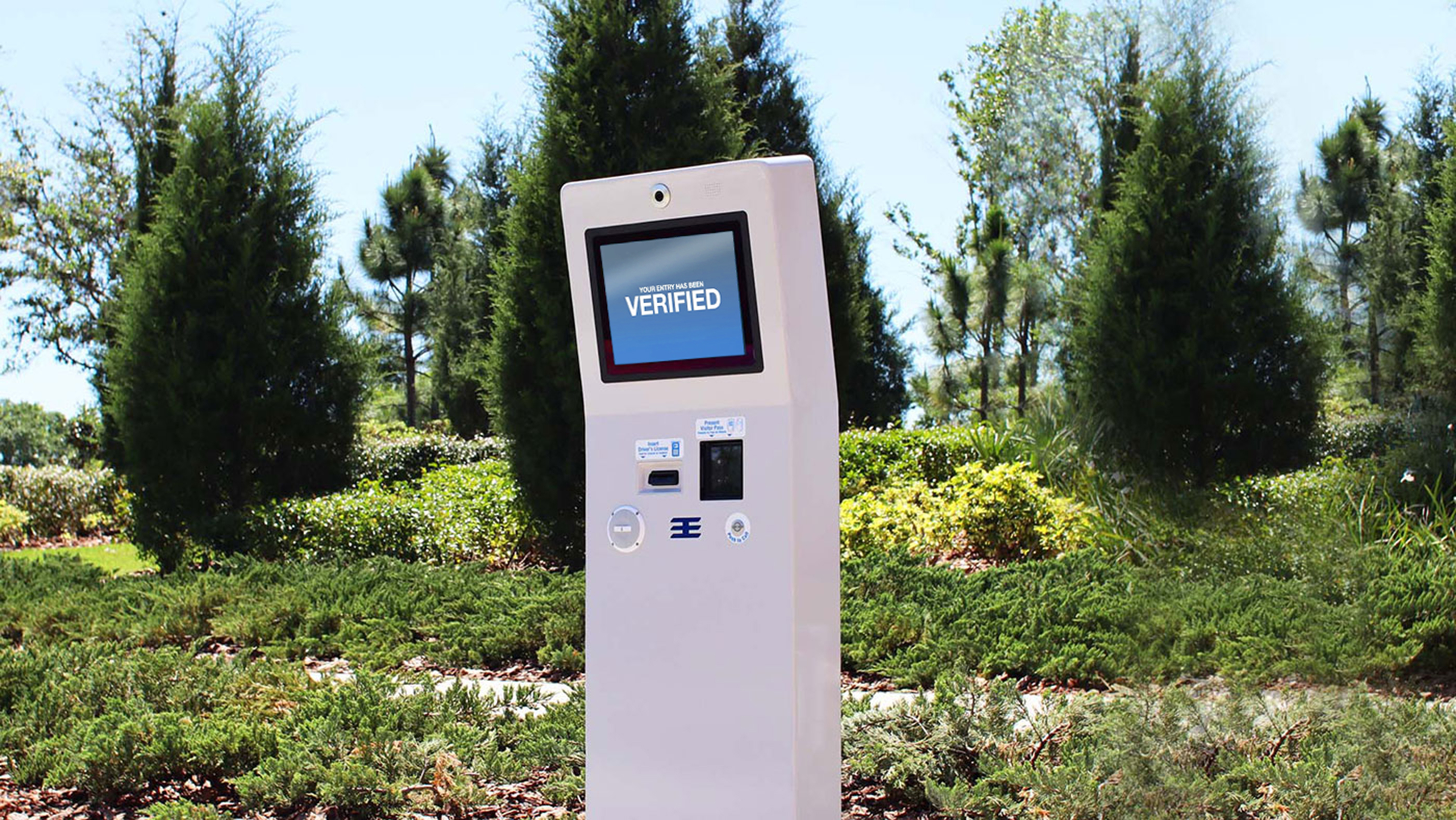
In Envera’s Hernando case study, a 370-home community lost its long-standing attendant coverage through a death and subsequent retirements. A call box became the full-time fallback. Residents raised concerns about minor thefts, suspicious vehicles and trespassing. The HOA installed remote guarding, plate recognition, resident access control and barrier arms.
“Envera had all of the components we needed at a competitive price.”Dan C., board member, in Envera’s Hernando case study
The documented result included notification and downloadable footage after a gate strike. The board also expected annual savings despite increasing coverage from eight-hour attendant days to round-the-clock virtual guarding. Evidence of a damaged gate is a wonderfully unromantic benefit. It gives a manager something firmer than recollection.
The first thing to fix was the telephone
Remote work relocates dependencies. A RingCentral customer case study describes Envera’s previous onsite phone system and local carrier outages that could interrupt calls for a day. Agents sometimes resorted to personal phones, creating another difficulty: residents might not recognize the incoming number.
Envera moved calling and contact-center functions to RingCentral’s cloud platform. The account describes familiar caller identification across devices, Salesforce integration, automated visitor texts and video troubleshooting between field technicians and colleagues. It reports more than 250,000 support-agent calls per month and five years without phone downtime at the time of the case study. Those are vendor-published historical figures, not a promise about future availability.
The lesson travels beyond security: examine the ordinary dependency beneath the impressive feature. A remote guard needs a working conversation. In June 2026, Envera advertised primary and backup satellite internet, with setup starting at $299 and monthly plans from $115. Those are connectivity prices. They belong beside a discussion of outages, not in a claim about what virtual guarding costs.
Growing beyond the empty booth
Founded in 2007 by Addi Aloya, Envera was acquired by Wind Point Partners in November 2022, with management retaining an ownership stake. The acquisition announcement described Florida operations and expansion into Texas. By May 2024, Envera reported seventeen consecutive years of growth.
Its July 2024 acquisition of Applications by Design, or ABDi, widened the offering. ABDi makes configurable community-management and access software for gated neighborhoods, condominiums, apartments and country clubs. Its software supports staffed guards as well as the surrounding administration: guest passes, notifications, identification capture and reporting.
The acquisition makes commercial sense without requiring every community to choose the same staffing model. Envera can sell into the work around the gate even where an onsite guard remains. In December 2025 it named Devon Watson president and CEO, bringing experience in ATMs, payments, cloud computing and self-storage access control.
Envera also sells to residential developers, property managers, condo associations and community development districts. Its developer offering spans construction monitoring and the eventual handoff to an HOA. Its full-service model covers design, installation, integration, servicing and monitoring. For buyers, that creates a clear operational attraction: fewer separate contractors to coordinate when something stops working.
There are practical limits. A remote professional cannot physically patrol the grounds. Passive recording does not supply live intervention. Outages, inaccurate permissions and an unsuitable entrance layout can undermine the arrangement. Buyers need coverage and backup procedures that fit their property, rather than a collection of impressive nouns.
The Clearwater residents offer a useful closing instruction. Start with the task that is expensive or unreliable. Keep enough familiar practice to make the change manageable. Judge the new arrangement by its operation. Envera’s interesting idea is simple enough to copy: put routine information where it can be checked, and keep someone available for the visitor who refuses to fit the form.