A medical record can be scattered across several organisations while the person it describes sits in the waiting room. The hospital has its letters. The GP has another history. A relative knows what happened last Tuesday. Patients Know Best has spent years trying to give that person a usable copy of the pieces, and a say in who gets to see them.
By September 2026, the Cambridge company reported 8 million registered patients. Its name sounds like a provocation aimed at the consulting room. Its product is more practical: a personal health record that collects information from different providers, accepts patients’ own contributions and supports sharing with professionals and carers. The ambition is to make the record travel with the person whose life it describes.
33m+test results released monthly
1 in 3registered patients logged in during July
A doctor on both sides of the desk
Founder and chief executive Mohammad Al-Ubaydli trained as a physician at Cambridge and worked as a staff scientist at the US National Institutes of Health. He also lives with a long-term condition. That combination helps explain the company’s emphasis: the person receiving care has knowledge, responsibilities and a life between appointments.
PKB was established in 2008. Its leadership page identifies accountant Ian Bastow as co-founder and chief financial officer, responsible for finance, legal and human resources matters. This was a medical idea with a business to build around it. Al-Ubaydli’s experience of fragmented information supplied the problem; a sustainable organisation would have to persuade healthcare buyers to pay for addressing it.

The stated mission has three parts: people should have their health information, understand it and use it to make decisions with those caring for them. Access is only the first job. A laboratory value that reaches a phone but leaves its owner bewildered has completed a data transfer; the useful conversation may still be ahead.
“People who access their record can start understanding their health.”Mohammad Al-Ubaydli · September 2026
The information behind the app
For patients, PKB can hold appointment letters, test results, medication information and care plans. People can record symptoms and other health information, exchange secure messages where teams offer that facility, and invite a family member or carer to help. Its sharing controls allow access to be tailored instead of assuming every person involved needs the same view.
A patient preparing for an appointment can check the information already available, bring questions about a result and share relevant records with another professional. A carer can help keep track of correspondence. For clinical teams, questionnaires and shared plans create ways to gather information between visits. These are capabilities, however; the package a patient encounters depends on what the local service has enabled.
PKB’s integration with the NHS App in England dates to 2020. The relationship is easy to misunderstand. The NHS App supplies a familiar route into services, while PKB supplies records and functions behind part of that experience. Registering with PKB can therefore be necessary even for someone who already uses the NHS App. The two products have different jobs.
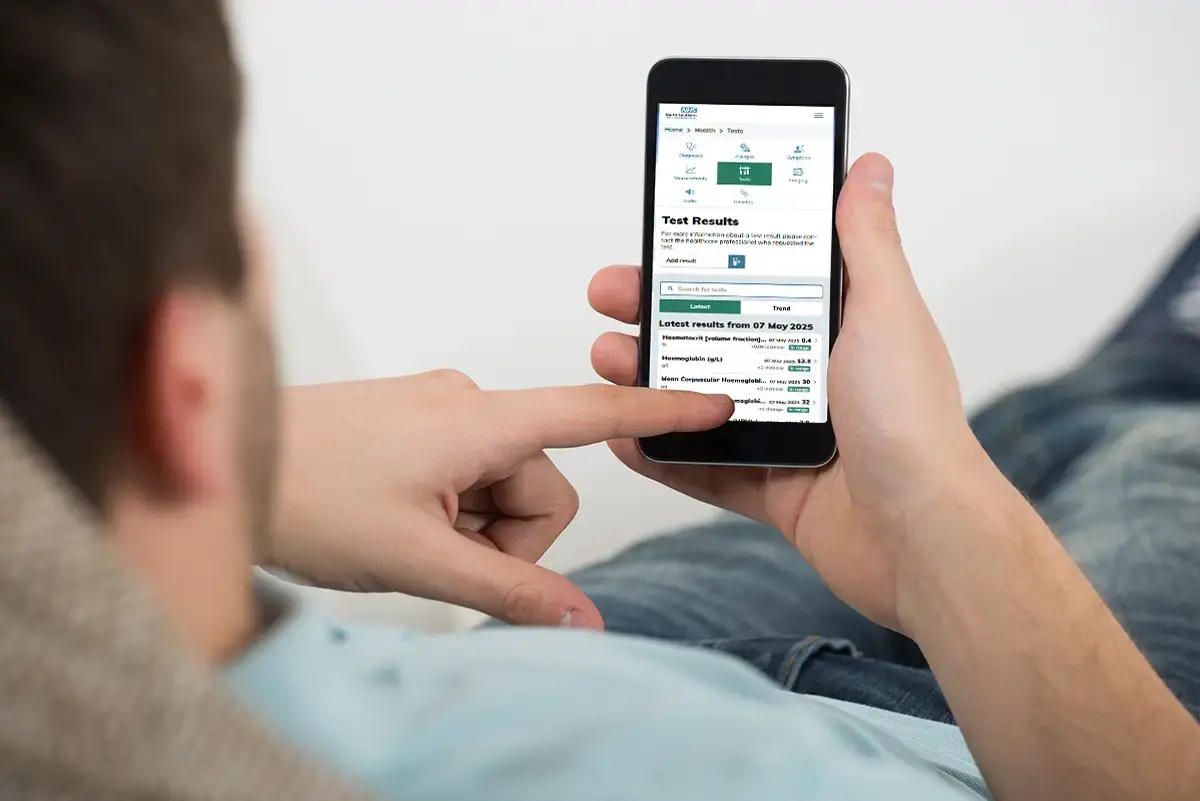
The platform also receives information through integrations with other software. Its developer documentation describes several APIs and warns that teams must check whether the required data types and workflows are supported. That detail matters: an interface labelled “open” still needs implementation work, authentication and a clear agreement about what information will actually become visible.
The pilot was too small for the problem
Early customers included Great Ormond Street Hospital, St Mark’s Hospital and NHS South Devon. By December 2015, PKB said it had customers in more than 60 medical institutions across seven countries. That gave it clinical footholds, but footholds alone did not solve the commercial problem.
The company’s tenth-anniversary history is unusually candid about the constraint. It recalls that PKB had not won its first big contract in 2012. Chairman Richard Smith argued that scattered customers could not sustain the business or deliver the record’s full value. A service intended to connect care needed a buying decision large enough to connect care, too.
North West London supplied an opportunity: a contract intended ultimately to make PKB available to its 2.3 million population. The lesson readers can take is about the unit of sale. A champion in one department can demonstrate usefulness, but regional purchasing gives an information-sharing service a wider field to work in. Integration, procurement and persuasion then become central business functions.
Free to the patient has a price
PKB sells software subscriptions to healthcare organisations. Patients receive the service free at the point of care. The split is consequential: the person using the record does not have to decide whether another month of access is worth a subscription payment.
The public G-Cloud 14 pricing document puts a departmental or service-level licence at £35,459 plus VAT a year. A second department in the same organisation is £29,550; subsequent departments are £23,639 each. Those are published procurement prices, subject to the document’s terms, rather than a quote for every hospital. Organisation, line-of-care and regional models are also available.
One department or service under the published G-Cloud 14 schedule.
The annual price includes hosting, maintenance, training, configuration and various forms of support. Organisation pricing considers size, activity, contract length and commitments around deployment and evidence generation. The document also recognises that adoption will not reach full capacity in year one. Buyers still need people inside their own organisations to change routines; a licence cannot attend meetings or settle local responsibilities.
Outside capital has financed the supplier’s development. Maxfield Capital led a £1 million investment in November 2014. A £3.5 million investment announced in December 2015 was led by Balderton Capital with Maxfield participating. In September 2025, assurance and risk-management company DNV announced a strategic investment to support expanded record functionality and international growth.
Patient control has company
PKB competes in a market that includes hospital portals and shared care records. Epic’s MyChart is a substantial alternative, with Happy Together for viewing information from multiple participating organisations and Share Everywhere for granting temporary access to someone providing care. Patient-directed sharing is not exclusive to PKB.
PKB’s proposition centres on a record spanning organisations and connecting to different electronic patient record systems. That makes its ability to coexist with other software part of the sale. The comparison should turn on the customer’s actual care network: which systems connect, what the patient can contribute, how sharing works, and whether staff can use the information without another round of copying.
A March 2026 partnership with Feedback Medical illustrates the approach. Clinicians can work on referrals and documentation in Bleepa, while patients receive communications and questionnaires through PKB. Answers can return to the clinical workflow. In August, a partnership with Lime Health connected its Emilia patient AI scribe so consultation summaries could be stored in PKB. Both extend what can feed the record.
A trial invitation with a next step
The record can also become a place to discover research. PKB’s work with Heartfelt Technologies on the HF-TRACK heart failure trial provides a small, unusually legible example. Coded information helped identify relevant opportunities, which patients could see inside their accounts. Interested people could then share their records with the research team.
In results published in March 2026, PKB reported that 1,251 patients saw the research banner and 53 clicked to learn more. Sixteen enrolled over four weeks. The company described the recruitment rate as 135% higher than the trial-wide average. This was a small project with a particular comparison, rather than evidence that every study would achieve the same improvement.
The practical lesson is modest and useful: put a relevant invitation where the intended participant already has a reason to visit, then make the next action clear. The record supplies context, and the patient chooses whether to take the next step. Recruitment still requires people to notice, understand and act.
The hospital still decides what arrives
The limits appear in NHS guidance. University Hospitals of Derby and Burton says PKB features differ between clinical teams. It describes access to a limited selection of hospital-ordered blood results, with a seven-day delay regardless of outcome. A platform capable of rapid delivery can still present an incomplete or delayed picture because of local decisions.
Maidstone and Tunbridge Wells likewise describes a 28-day delay for radiology reports and tells patients that choosing not to use its portal will not affect their care. These details matter more to an anxious person checking a phone than a supplier’s feature list. Better access needs explanations, usable support and another route for people who cannot use the digital service.
PKB’s own organisation reflects its social-enterprise identity. It describes itself as a B Corporation, added mission references to its articles during the 2015 investment and operates as a remote company. Its careers material discusses flexibility around personal commitments; its team page emphasises experience of giving and receiving care. Those choices make the mission more concrete, though customers will judge the service through their own experience.
The next test is whether more records lead to more useful participation. PKB reported that over 5 million patients had requested GP data by September 2026, following the feature’s May 2025 launch. That suggests an appetite for bringing the pieces together. The lasting value will be found in ordinary moments: a letter located, a carer included, a question prepared before the appointment begins.