The Startup That Turned Grandma's TV Into a Caregiver
A failed universal-remote company rebuilt itself around one uncomfortable truth: the hardest part of caring for aging parents is the 300-mile drive to fix their TV. JubileeTV turns that TV into the caregiving hub instead.
There is a very specific kind of phone call that defines the modern middle-aged American. It comes from a parent, three states away, and it is about the television. The screen is blue. The volume is stuck. The show that was on yesterday is gone. And you, the adult child, cannot do anything about it except talk them through a remote with forty-two buttons, over the phone, again. JubileeTV is a company built entirely around ending that phone call.
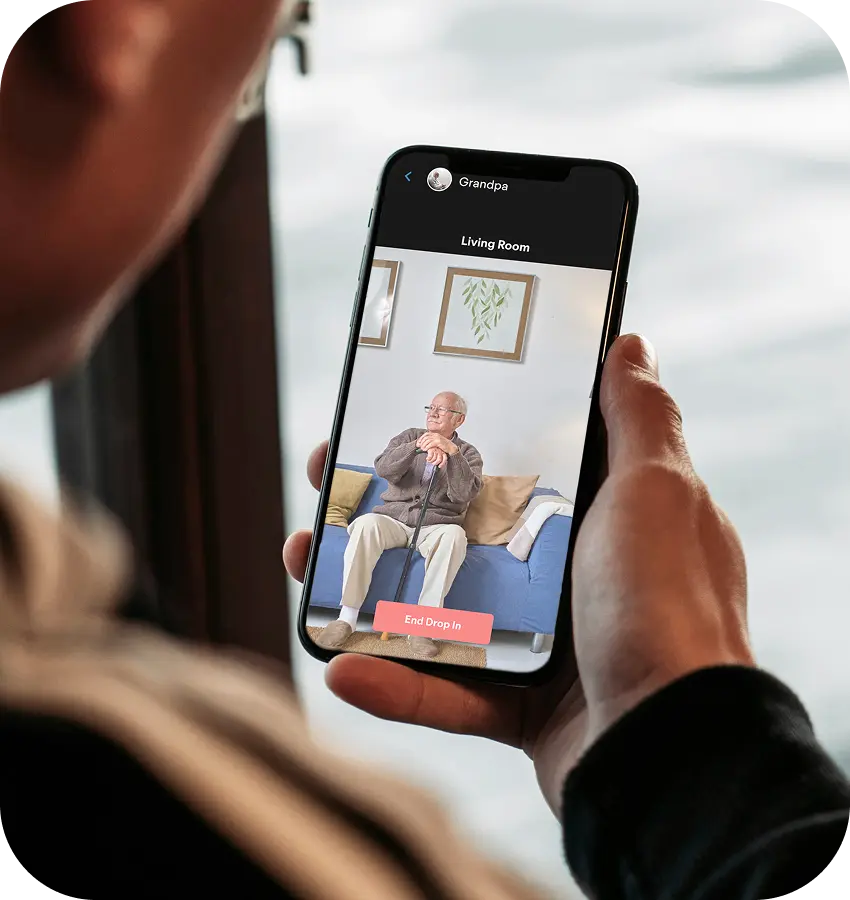
The pitch is almost stubbornly simple. A small console plugs into the HDMI port of the television your parent already owns. You, the caregiver, get an app on your phone. From that app - from a coffee shop, an office, an airport - you can change the channel, fix the input, launch a show, start a video call that fills their entire living-room wall, or send a reminder to take a pill. Your parent learns nothing new. The TV they have watched for twenty years keeps being the TV they have watched for twenty years. It just quietly becomes a caregiving device.
"Millions of Americans care for aging family members from a distance, but we lack senior-first technology solutions to meet the needs of these families."Ashish D. Aggarwal, Co-Founder & CEO
A company that failed at one thing, then found another
JubileeTV did not start as JubileeTV. It started in 2015 as Caavo, a startup with a genuinely ambitious and slightly doomed mission: to fix the universal remote. Caavo built an HDMI hub and a smart remote meant to corral every streaming box and cable feed into one clean interface. In 2018 its Control Center hardware was named one of Time magazine's Best Gadgets. It was clever. It had backers most hardware startups only dream of - Warner Media, Sky, Hearst Ventures, Greylock. It also lived in one of the most brutal, low-margin corners of consumer electronics, competing with Roku, Amazon, and every TV maker on earth.
What saved the company was noticing who actually loved the product. When the technology moved into senior living facilities around 2021, a different story emerged. The people who most needed a television made simple were not gadget enthusiasts. They were older adults - and, just as importantly, their far-away children, who spent an astonishing amount of their caregiving energy on tech support. The team had spent a decade and more than 70 patents learning how to control any television remotely. It turned out that was the exact skill a caregiver needed.
So in August 2024, the company relaunched as JubileeTV, calling itself the first app-to-TV caregiving system. Same hardware DNA, same patents, radically different customer. The pivot is the whole story: it is a case study in what happens when a hardware company stops asking "what can our device do" and starts asking "who is already grateful for it."
The problem, sized honestly
The market JubileeTV walked into is enormous and largely unbuilt. The company cites roughly 53 million family caregivers in the United States, many of them supporting a parent from another city. More than half of Americans in their forties are living the "sandwich generation" squeeze - raising kids and caring for aging parents at the same time. And underneath the medical and financial weight of that role sits a stubborn layer of small logistics: the TV, the reminders, the daily "are they okay" that has no clean product to answer it.
Most technology aimed at this problem makes the same bet: give the senior a new device and teach them to use it. Tablets, smart displays, dedicated video-call gadgets. Some are good. All of them ask an 80-year-old to adopt an unfamiliar interface, which is exactly the thing that tends to fail at the worst moment. JubileeTV made the opposite bet, and that bet is the reason to pay attention.
"There was an immediate change in my mom when we installed it. She was happier, more engaged, and had more control over her life."Eric Luke, early user
Why the television, of all things
The insight is almost boring in its obviousness, which is usually a sign it is right: the best interface for an aging adult is the one they never stopped using. The average older American spends hours a day with the television on. It is the most familiar object in the house. JubileeTV's whole design philosophy is to hide behind that familiarity rather than compete with it.
That shows up in the details. Video calls auto-answer and fill the entire screen, so nobody has to find a green button or hold a phone at arm's length - the caregiver simply appears, life-sized, in the living room. There is an optional six-button remote for people with dementia or dexterity challenges, stripping control down to only what matters. And the whole experience is designed to be run from the caregiver's side, so the senior can be supported without being managed.
Privacy you can see, not just toggle
Putting a camera in a parent's living room is a trust problem, and JubileeTV treats it like one. The camera ships with a physical lens cover and a privacy indicator light, plus encrypted video calls - privacy signals a person can point at, not a checkbox buried in a settings menu.
What you can actually do with it
Strip away the mission language and JubileeTV is a bundle of small superpowers for the person holding the phone. You can fix the TV remotely when your dad calls confused about the input. You can mirror their screen to see exactly what they see. You can start a full-room video call. You can schedule medication and appointment reminders that appear on the TV. You can run quiet, one-way wellness check-ins, and get activity alerts driven by motion and audio sensing. Multiple family members can share one account, so caregiving stops being one exhausted person's job.
The company reports that most of its users engage with the product daily, and that a large majority say they would be genuinely disappointed to lose it - the kind of retention signal that usually means a product has stopped being a gadget and started being a habit.
The business: hardware plus a membership
JubileeTV sells direct to consumers and stacks a subscription on top of the box. Families buy the console, then pay an ongoing membership that unlocks the app, remote control, video calling, and support. At launch that was framed as a hardware fee plus about $29 a month; current plans run in the range of roughly $39 monthly, $389 yearly, or a one-time all-in plan near $789, with a money-back guarantee. It is sold on getjubileetv.com and Amazon, and distributed through partners including Lively, the senior-focused brand under Best Buy Health. The model is U.S.-only.
That hardware-plus-care structure is the quietly interesting part. It gives JubileeTV a recurring relationship with the caregiver, room to keep adding software features, and a reason for families to stay - the switching cost is not the box, it is the daily habit built around it.
How it stacks up
The senior-connection shelf is crowded, but most of it lives on a screen the parent has to adopt. That is the line JubileeTV draws.
| Approach | New device to learn? | Fills the TV | Remote TV fixes |
|---|---|---|---|
| JubileeTV | No - uses their TV | Yes | Yes |
| Smart display (Echo Show) | Yes | No | No |
| Senior tablet (GrandPad) | Yes | No | No |
| Photo frame (Aura) | Yes | No | No |
None of these are strictly wrong; they solve neighboring problems. But JubileeTV is the only one that treats the existing television as the platform, which is both its clearest advantage and the reason it is harder to copy - the value is in a decade of patents for controlling any TV, not in another slab of glass.
Where it goes from here
The company has the ingredients that make investors and press lean in: a real market ache, a defensible IP position, and a product with the kind of daily-use stickiness that is rare in hardware. Fast Company named it a World Changing Idea in 2025, and CEO Ashish Aggarwal has become a regular voice at longevity and AgeTech gatherings, framing senior isolation and the caregiver shortage as a design problem the industry has mostly ignored.
What is worth stealing here is not the console. It is the strategic move underneath it: when your product is struggling, find the customer who is already grateful, and rebuild the company around them. Caavo could not win the remote wars. JubileeTV might win something better - the boring, enormous, deeply human job of helping a family keep an eye on the people they love, through the one screen those people never turned off.